Crime Solvers Central
302 Cases Solved. Advancing justice for missing persons, unsolved homicides, unidentified and unclaimed remains.

Case Description

Any updates on this case? Let us know!
Summary based on 3 sources
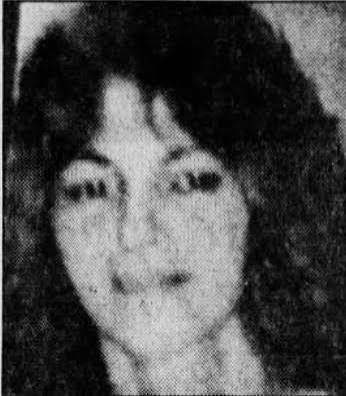
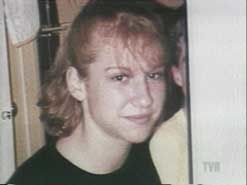
In the final months of 1991, Nicole Sassoon was a 21-year-old woman navigating a life of some uncertainty in the Montreal area. She had a job in the borough of LaSalle but lacked a permanent home. For a time, she stayed in an apartment on Gravel Street in LaSalle, but her life was transient, and she moved between different places. This instability made it difficult for people to keep track of her, a vulnerability that would soon become a central element in the story of her disappearance and death. The last confirmed sighting of Nicole was in late November 1991 at the Motel Colibri on St-Jacques Street in Montreal, a detail that marks the last known moment of her life before she vanished.

For three months, Nicole’s absence was not officially noted. The precariousness of her living situation meant there was no single place where she was expected to be. It was not until February 1992 that her father formally reported her disappearance to the police, launching an official investigation into her whereabouts. For months, investigators had little to go on. There were no transactions, no phone calls, no chance encounters with acquaintances. It was as if Nicole had simply ceased to be, leaving behind a trail that had gone cold almost as soon as it began.

The search for the missing young woman came to a tragic end on June 3, 1992. Her body was discovered on the shore of the St. Lawrence River, near the turning basin of the Côte Sainte-Catherine lock in the Montérégie region. The location, part of the St. Lawrence Seaway, is a place of transit for massive ships, its waters deep and powerful. An autopsy was performed, and the findings confirmed investigators' worst fears: Nicole Sassoon had been murdered. Due to the condition of her remains, the coroner could only establish a wide window for her time of death, estimating it occurred between three and twelve months prior to the discovery.

The investigation into the female victim's homicide was taken over by the Sûreté du Québec, the provincial police force for Quebec. From the outset, detectives were faced with significant challenges. The long period between when Nicole was last seen and when her body was found meant that forensic evidence was limited. Investigators from the Unité des crimes contre la personne (Crimes Against the Person Unit) made a strategic decision to not publicly release the specific cause of her death, hoping the information could be used to verify a future confession or trip up a potential suspect in an interview.

Over the years, Nicole's case file has remained open, but leads have been few. In March 2013, more than two decades after her death, the Sûreté du Québec's Unité des crimes non résolus (Unsolved Crimes Unit) made a public appeal for new information. They hoped that the passage of time might encourage someone with knowledge of the crime to finally come forward. "If someone thinks of something, even if they believe it's not relevant, they shouldn't hesitate to share it with us because you never know," said SQ spokesperson Joyce Kemp at the time. "It could restart the investigation." Despite this appeal, no significant breakthroughs were announced.

As of May 2026, Nicole Sassoon’s murder is still an unsolved cold case. The identity of her killer and the specific circumstances that led her from the Motel Colibri to the shores of the St. Lawrence River remain a mystery. Her story is a stark reminder of how a person can slip through the cracks of society, her absence unnoticed for months, making the pursuit of justice for her death incredibly difficult. Investigators continue to believe that someone, somewhere, holds the key to solving this crime.

The Sûreté du Québec asks that anyone with information regarding the murder of Nicole Sassoon contact their Centrale de l'information criminelle at 1-800-659-4264.