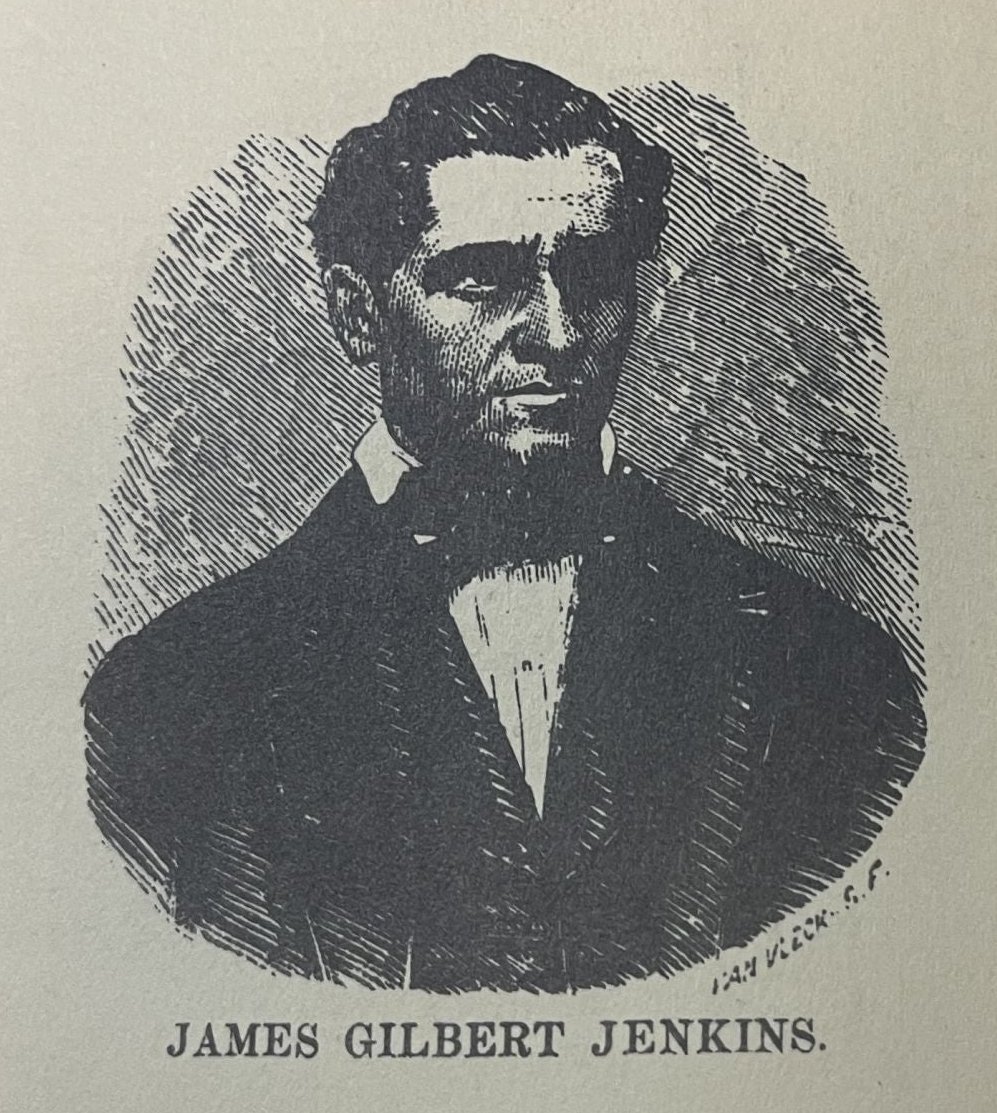
James Gilbert Jenkins: The Murderer Who Claimed Eighteen Victims
Early Life and Introduction to Crime
James Gilbert Jenkins was an American outlaw, highway robber, horse thief, and self-confessed serial killer whose criminal activities occurred during the violent and unsettled years preceding and during the American Civil War. Historical records differ regarding his exact birth year and birthplace, but he was reportedly born around 1834 or 1835 in North Carolina and spent part of his childhood in Gentry County, Missouri.
According to the autobiographical account published shortly before his execution, Jenkins was approximately nine years old when his father placed him in the care of a man named John Forbes. Forbes reportedly promised to educate the boy while employing him to care for and race horses. Instead, Forbes was allegedly a thief and highwayman who introduced Jenkins to criminal behavior. Jenkins later portrayed this experience as the beginning of a life characterized by resentment, alcohol abuse, theft, robbery, and murder.
Jenkins traveled extensively and claimed to have committed crimes in Missouri, Illinois, Indiana, Virginia, Arkansas, Tennessee, Texas, New Mexico, Nebraska, Iowa, and California. His offenses reportedly included stealing horses, robbing travelers, breaking into homes, and killing people who resisted him or whose deaths served his immediate interests. Many of these events occurred in isolated frontier areas where reliable records were limited and law enforcement was poorly organized.
Claims of Eighteen Murders
While awaiting execution in Napa County, California, Jenkins gave an account of his life to Napa County Sheriff C. H. Allen. His statements were recorded and arranged for publication by R. E. Wood in a 56-page pamphlet titled
Life and Confessions of James Gilbert Jenkins, the Murderer of Eighteen Men. The work was published in Napa City in 1864.
Jenkins claimed responsibility for killing eighteen men: eight white men and ten Native American men. He described a criminal life that stretched across several states and territories, but most of the alleged victims were not identified by name. Exact dates and locations for the majority of these killings cannot be independently verified. Because the principal account came from Jenkins himself, historians must distinguish between the murder for which he was convicted and the additional deaths he claimed in his confession.
His alleged killings appear to have been opportunistic rather than part of a single organized pattern. Jenkins reportedly killed during robberies, personal disputes, frontier encounters, and efforts to avoid identification or capture. Firearms were his principal weapons. His account presented violence as a routine part of his travels, with victims frequently chosen because they possessed money, horses, weapons, or other property he wanted.
...
MEMBER ACCESSContinue reading the complete profile
Unlock the full profile for James Gilbert Jenkins, complete victim information, available sources, videos, and member discussions.
Unlock Full Access — $3.97/month Already a member? Log in