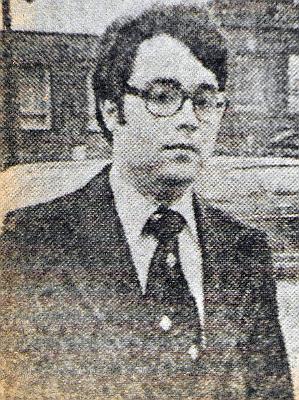
Lee Roy Hargrave Jr.: The Suspected "Lidocaine Killer"
Lee Roy Hargrave Jr. was a nurse's aide at Petersburg General Hospital in Petersburg, Virginia, who became the center of a disturbing investigation into a series of unexpected patient deaths during the summer of 1974. Hargrave was ultimately convicted of only one murder, so he is more accurately described as a suspected serial killer rather than a legally confirmed serial killer. Authorities nevertheless charged him with five additional murders after tests reportedly showed lethal concentrations of the heart drug lidocaine in other patients who had died while he was working.
The Unusual Deaths at Petersburg General Hospital
In 1974, Hargrave was a young nurse's aide working in the coronary care unit at Petersburg General Hospital. He had previously hoped to become a physician and had attended college, but he left school and returned to hospital work. By the spring of 1974, he was working the overnight shift, generally from 11:00 p.m. until 7:00 a.m.
During May and June 1974, hospital administrators became concerned about an unusual rise in deaths among patients in the coronary unit. A number of patients who appeared to be recovering suddenly suffered cardiac emergencies during the night. Hospital personnel reviewed the deaths and noticed that Hargrave had been working during an unusually large number of them. He had also reportedly been the employee who discovered or called attention to many of the emergencies.
The pattern became particularly alarming in June. Patients who were not expected to die suddenly went into severe medical distress. Because these were hospital patients with heart problems, an unexpected cardiac arrest could initially appear to have resulted from natural disease. That made the suspected method especially difficult to recognize immediately.
Lidocaine as the Suspected Murder Weapon
The investigation eventually focused on lidocaine. Although lidocaine is commonly known as a local anesthetic, it also has medical uses involving abnormal heart rhythms. In sufficiently excessive quantities, however, it can produce severe toxicity, including seizures, dangerous changes in heart rhythm, circulatory collapse, and death.
Investigators concluded that certain patients had received lidocaine even though the drug had not been prescribed for them. This was critical because lidocaine was available in the coronary care area for legitimate emergency treatment. Someone working inside the hospital could therefore have access to a substance capable of producing a medical crisis that might initially resemble complications of heart disease.
...
MEMBER ACCESSContinue reading the complete profile
Unlock the full profile for Lee Roy Hargrave, complete victim information, available sources, videos, and member discussions.
Unlock Full Access — $3.97/month Already a member? Log in