Crime Solvers Central
302 Cases Solved. Advancing justice for missing persons, unsolved homicides, unidentified and unclaimed remains.

Case Description

Any updates on this case? Let us know!
Summary based on 2 sources
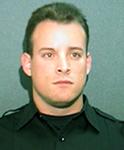
Quincy Bernard Brown was a dedicated, 37-year-old Petty Officer First Class in the U.S. Navy with a career spanning over 19 years. A married man and father, his wife was also a career sailor, a First Class Hospital Corpsman. Those who knew Quincy described his character as completely at odds with the violent acts he would be falsely accused of after his death. He had no history of violence and was serving honorably at Oceana Naval Air Station in Virginia Beach, Virginia, where he was temporarily assigned to the quarterdeck. It was there he worked alongside a fellow petty officer, Elise Makdessi, a connection that would tragically place him in the center of a sinister and deadly plot.

On the evening of May 14, 1996, police in Virginia Beach received a frantic 911 call from Eddie Makdessi, Elise's husband. When officers arrived at the couple's apartment, they discovered a horrific scene. Quincy Brown was found on the bedroom floor, dead from three gunshot wounds to his chest. Nearby, Elise Makdessi was tied spread-eagled to the four-poster bed, barely alive. She had been brutally stabbed multiple times and her throat was cut. She died on the way to the hospital. Eddie Makdessi told police a story of a home invasion, claiming he arrived home with his wife to find Quincy Brown, who he said sexually assaulted and stabbed Elise. Makdessi claimed he was knocked unconscious and, upon waking, shot Brown in a desperate act to save his wife.

The initial narrative of a husband defending his wife from a violent intruder quickly began to fall apart under the scrutiny of the Virginia Beach Police Department and the Naval Criminal Investigative Service (NCIS), who were called in because two Navy personnel were dead. Investigators found a videotape made by Elise before her death, in which she alleged sexual harassment by coworkers, including Quincy Brown. However, the forensic evidence from the complex and bloody crime scene directly contradicted Eddie Makdessi’s version of events. Blood spatter analysis showed that Quincy Brown was shot first while kneeling, and then twice more as he fell to the floor. There was no evidence that Brown had ever held the knife used to kill Elise.

The investigation uncovered a chilling scheme of premeditated murder for financial gain. Just a month before the killings, Eddie Makdessi had taken out a $700,000 life insurance policy on his wife. The motive became clear: Makdessi had concocted an elaborate plot to murder his wife for the insurance payout. He lured Quincy Brown, an innocent coworker, to the apartment that night with the intention of killing him and framing him for Elise's murder. The false allegations of sexual harassment were part of the elaborate setup to make the frame-up believable. Investigators concluded that Eddie Makdessi shot Quincy Brown and then viciously stabbed his own wife to death.

By the time a grand jury returned two indictments for first-degree murder in 2001, Eddie Makdessi had collected the insurance money and fled the United States. An international manhunt ensued, and the Diplomatic Security Service eventually located him in Russia. With no extradition treaty in place, his return was complicated. However, in July 2003, after Makdessi voluntarily approached the U.S. Embassy in Moscow, he was returned to Virginia by U.S. Marshals to finally face justice.

The trial took place in March 2006, nearly a decade after the murders. Prosecutors presented the overwhelming forensic evidence that exposed Makdessi's lies. A jailhouse informant also testified that Makdessi had confessed to the killings while incarcerated. The jury found Adib "Eddie" Ramez Makdessi guilty of the first-degree murders of both Quincy Brown and Elise Makdessi. He was sentenced to two consecutive life terms in prison and fined over $200,000. The case, which had spanned a decade and two continents, was officially closed, bringing a measure of justice for the senseless murder of a decorated Navy sailor who was tragically in the wrong place at the wrong time.