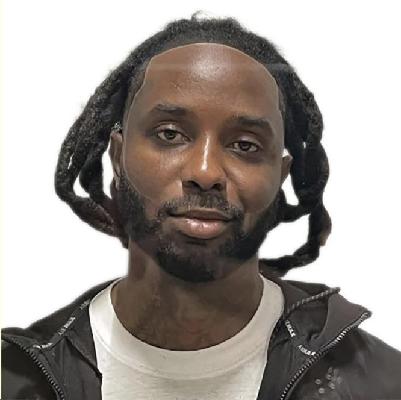
Christopher Sherman Eney was a decorated U.S. Army veteran who served as a Green Beret medic in the Vietnam War before dedicating his life to law enforcement. A 37-year-old white man, he had served for twelve years with the United States Capitol Police, where he was a respected sergeant. He was an original member and team leader of the force's elite Containment and Emergency Response Team (CERT), a specialized unit similar to a SWAT team, and was also assigned to the House Plainclothes Division, providing security in the House Galleries. Colleagues remembered him as an exemplary officer and one of the best supervisors on the department. At home in West Hyattsville, Maryland, he was a husband to his wife, Vivian, and a father to their two young daughters, Shannen and Heather. Neighbors described him as a family man who attended the Church of the Atonement and could be seen just weeks before his death painting the trim on his family’s brick house.
On the afternoon of August 24, 1984, Sergeant Eney and his CERT colleagues were conducting a routine training drill on Capitol Hill. The exercise, designed to prepare the team for hostage situations, took place on the fourth floor of a vacant six-story brick building at 128 C Street NE in Washington, D.C. The team had been using 9mm automatic pistols loaded with blank rounds for the formal portion of the training. Near the conclusion of the drill, around 3:00 p.m., the officers reloaded their weapons with live ammunition. For reasons that were never fully explained, Sergeant Eney and another officer, John Gott, decided to run through one additional exercise. During this impromptu drill, Officer Gott’s weapon accidentally discharged.
A single bullet struck Sergeant Eney in the lower back. He was rushed to the Medstar Unit at Washington Hospital Center, but the damage was catastrophic. He died of massive abdominal injuries at 4:05 p.m., approximately one hour after being shot. His death was the first line-of-duty fatality in the history of the U.S. Capitol Police, which was founded in 1801. The loss sent a wave of shock and grief through the close-knit federal agency. Capitol Police Chief James M. Powell noted at the time that Eney and Officer Gott were not just colleagues, but close friends, as were their wives.
The investigation was handled jointly by the District of Columbia's homicide squad and the U.S. Capitol Police. Officer Gott, a 32-year-old who had also been on the force for 12 years, was placed on administrative leave. From the outset, officials stated that they considered the shooting a tragic accident. No criminal charges were filed, and the incident was officially ruled an inadvertent death that occurred during training. The focus remained on the profound loss of a dedicated officer and the inherent dangers of law enforcement work, even during practice drills.
In the years that followed, Christopher Eney’s sacrifice was not forgotten. His name is engraved on the National Law Enforcement Officers Memorial in Washington, D.C. The U.S. Capitol Police have held numerous ceremonies to honor his memory, including on the 25th and 40th anniversaries of his death. In 2009, Police Chief Phillip Morse called Eney a hero who made the ultimate sacrifice, and it was announced that a training venue at the Federal Law Enforcement Training Center in Cheltenham, Maryland, would be named in his honor.
The tragedy spurred his widow, Vivian Eney Cross, to become a national advocate for the families of fallen officers. She served as the National President of Concerns of Police Survivors (C.O.P.S.) and was a pivotal leader in the campaign to create the National Law Enforcement Officers Memorial. Her words, chosen for the monument, offer a lasting tribute to all who have served and sacrificed. Engraved in stone, the quote reads: “It is not how these officers died that made them heroes, it is how they lived.” Through her work, the legacy of Sergeant Eney has been transformed into a source of support and solace for countless law enforcement families across the nation.