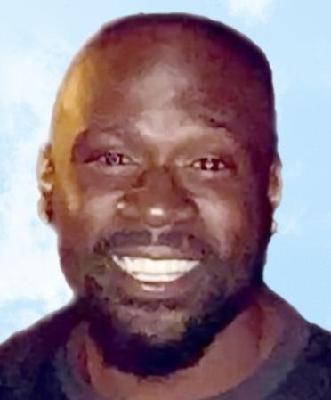
James Exavier Richardson, a talented 17-year-old running back for the Ballou Senior High School football team in Washington, D.C., was a popular student known to friends and family as "J-Rock" and "Bam Bam." He was a key player who had helped his team reach the city's championship game, the Turkey Bowl, in the previous season. Despite his success on the field, James struggled with a long-running and violent feud between young people from his Condon Terrace neighborhood and those from the rival Barry Farm area of Southeast Washington. The conflict was so serious that school counselors had tried to arrange a transfer for James to another school, believing his presence inflamed tensions. His father later said his son had feared for his life and had stayed home from school for six weeks before the shooting.
On the morning of Monday, February 2, 2004, that feud erupted inside the walls of Ballou High. At about 10:30 a.m., during the change between classes, James became involved in a fistfight with another student, 18-year-old Thomas J. Boykin, in a vestibule near the first-floor cafeteria. Witnesses said that during the brawl, Boykin pulled out a handgun and fired several shots. The gunfire sparked pandemonium, sending students scrambling for safety and plunging the school into a lockdown. James, a Black / African American junior, was struck by bullets in the chest, arm, and leg. He was rushed to the Washington Hospital Center, where he died from a gunshot wound to the chest at 11:32 a.m. An 18-year-old student, who was a witness, was also grazed in the leg by a bullet.
The Metropolitan Police Department launched an immediate investigation, with Police Chief Charles H. Ramsey identifying the shooting as a result of the ongoing neighborhood dispute. That evening, police obtained a first-degree murder warrant for Thomas J. Boykin, who surrendered to authorities the next day. Boykin was initially charged with second-degree murder while armed. The case highlighted deep concerns about school security and the intractable nature of neighborhood-based violence in the city.
The case against Thomas Boykin went to trial in D.C. Superior Court. Prosecutors presented eyewitnesses and surveillance footage, arguing that Boykin had gone to school with a plan to kill James after a run-in a few days earlier. Boykin testified in his own defense, claiming he acted in self-defense. He said he and other students from Barry Farm felt outnumbered and threatened at Ballou. He admitted to punching James first but claimed that during the fight, he saw James reach for something and, fearing it was a weapon, "panicked" and started shooting. In December 2004, a jury acquitted Boykin of first- and second-degree murder but deadlocked on the lesser charge of manslaughter, with a 10-2 split in favor of conviction.
Rather than face a retrial for manslaughter, Boykin pleaded guilty to the charge in March 2005. At his sentencing in June 2005, he apologized to James's family, stating he had made the biggest mistake of his life. In a remarkable moment of grace, James's mother, Michelle Richardson-Patterson, told the court she had forgiven Boykin. After the judge sentenced Boykin to 16 years in prison—10 for manslaughter and six for a weapons offense—Richardson-Patterson approached Boykin's mother, Pearl Boykin. The two mothers embraced and prayed together for peace between their neighborhoods.
James Richardson was mourned by his parents, William and Michelle, six brothers, and four sisters. His funeral was held on February 7, 2004, at the Paramount Baptist Church. His death was the first fatal shooting inside a D.C. public school since 1996 and prompted an overhaul of the school system's security, which was taken over by the D.C. police. The case remains a tragic example of how neighborhood rivalries can escalate into devastating violence, ending the promising life of a young athlete.