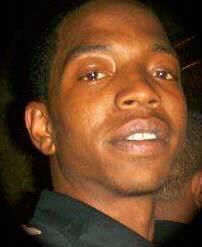
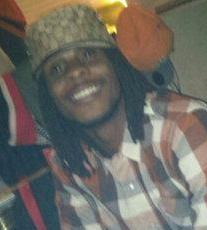
Samuel Walker, a cheerful and funny 13-year-old African-American boy known to his friends and family as "Lil' Sam," was remembered for his energetic personality and for always making people laugh. His aunt, Maribell Ruiz, described him as "a little man in the house" who helped his mother and everyone around him. Samuel had recently graduated from Jensen Elementary Scholastic Academy and was preparing to start his freshman year at Manley High School. He loved playing tag with his friends and was considered a "class clown" by those who knew him well.
On the evening of July 25, 2014, Samuel's young life was cut short. He had just finished a day at summer school and, around 6 p.m., was with a group of friends outside the California Food Mart, a convenience store at the corner of South California Avenue and West Lexington Street in Chicago's East Garfield Park neighborhood. Witnesses said some of the children had been playing tag just before the shooting. Suddenly, a tan, four-door Cadillac pulled up. A man got out of the passenger side, reached over the roof of the car, and opened fire on the group. Another person fired from inside the car. The vehicle then sped away. Samuel was struck in the head and died at the scene.
The gunfire wounded six other people. The victims included a 25-year-old man who suffered a graze wound to his abdomen, a 20-year-old man, a 15-year-old boy, and three 14-year-old boys. A friend of Samuel's, Antonijah Johnston, had been speaking with him just minutes before the attack. She later described the horrific scene, finding him on the ground, gone. His aunt believed he was likely just going to the store to get some chips, as he often did, when he was caught in the crossfire. In a tragic and devastating turn of events, Samuel's 34-year-old father, Sam Walker Sr., was shot and killed just days later on July 31 in what police believed was an unrelated, possibly gang-related incident in the Humboldt Park neighborhood.
The Chicago Police Department launched an investigation into the mass shooting. Detectives located the getaway car, a 2001 Cadillac, about a mile from the crime scene in the 3100 block of West Washington Boulevard. The vehicle had been set on fire, with minor damage to the carpet in the back. Investigators recovered shell casings from inside the car and found a bottle of charcoal lighter fluid nearby. A crucial break in the case came from forensic evidence; detectives were able to lift fingerprints from the vehicle belonging to three men. A surveillance video also captured the Cadillac pulling up to the store and a passenger getting out to shoot over the roof.
In October 2015, more than a year after the shooting, Cook County prosecutors announced charges against three men. Joshua Almore, Anthony Harris, and Anthony Lyons, all 23 years old at the time, were each charged with first-degree murder and attempted murder. Prosecutors alleged that Lyons was the getaway driver, while Almore and Harris were the shooters. The motive appeared to be a gang-related attack, with the men targeting a group they believed to be rival gang members. An informant, who was Almore's cellmate in Cook County Jail on a separate charge, told investigators that Almore had confessed to his role in the shooting.
According to prosecutors, Almore admitted to his cellmate that he was a member of the Flyboy gang, an offshoot of the Gangster Disciples, and that he and the others had gone out that night looking for members of the rival Cali Boy gang to shoot. Fingerprints from Almore and Harris were found on the exterior of the Cadillac, and Lyons' prints were on a passenger door. Harris's DNA was also found on a lighter left inside the car. At the time the charges were announced, all three men were already in custody for other violent crimes.
A Cook County judge ordered Joshua Almore, Anthony Harris, and Anthony Lyons to be held without bond. They were due back in court later in October 2015. The case highlighted the devastating impact of gang violence on Chicago's communities, tragically ending the life of a beloved 13-year-old boy who, according to his family and friends, was simply in the wrong place at the wrong time. His aunt expressed her frustration, stating that city leaders couldn't devise a solution for street violence without having lived that life themselves. The case remains a painful memory of a summer marked by violence and the profound loss of a young life full of promise.