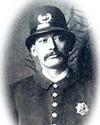
Silas Stillman Soule was a man of unyielding principle, an abolitionist from his youth who became a respected Union Army officer. Born in Bath, Maine, to an anti-slavery family, Soule's formative years in Kansas were spent as a teenage conductor on the Underground Railroad and supporting John Brown's movement. This early dedication to justice would define his brief but impactful life. After moving to Colorado during the Gold Rush, he enlisted in the 1st Colorado Infantry at the start of the Civil War, eventually rising to the rank of Captain in the 1st Colorado Cavalry. He was known for his "devilish sense of humor," sharp wit, and a wisdom that belied his years.
Captain Soule's defining moment came on November 29, 1864, at Sand Creek in the Colorado Territory. His commander, Colonel John M. Chivington, ordered an attack on a peaceful encampment of Cheyenne and Arapaho people. Soule, commanding Company D, vehemently protested the order, recognizing it as murder. As the massacre began, he commanded his men to hold their fire, a courageous act of defiance that saved them from participating in the slaughter of more than 200 people, mostly women, children, and the elderly. In the aftermath, Soule's conscience would not let the atrocity stand. He wrote detailed, damning letters about the massacre and, in early 1865, provided crucial testimony against Chivington at a military hearing, describing the horrific violence he had witnessed. This act of whistleblowing destroyed Chivington's political ambitions but placed Soule's own life in grave danger.
Despite the threats and several attempts on his life, Soule remained in Denver, taking a position as Provost Marshal, or head of the military police. On April 1, 1865, he married his sweetheart, Hersa Coberly. Their happiness was tragically short-lived. On the night of April 23, 1865, just three weeks after his wedding, the 26-year-old Soule was on duty when he heard gunshots near his home. He went to investigate the disturbance. Near what is now the intersection of 15th and Arapahoe streets, he was ambushed. Soule faced his attacker, a private from the Second Colorado Cavalry named Charles W. Squier. Both men fired. Soule's shot wounded Squier in the arm, but Squier's bullet struck Soule in the right cheek, killing him instantly. He died on the street before help could arrive.
Squier, who had served under Chivington, dropped his pistol and fled with an accomplice, William Morrow. The city was thrown into an uproar by the assassination of the well-liked officer. A manhunt for Squier ensued, and he was eventually captured in New Mexico by Lieutenant James Cannon, a friend of Soule's, and returned to Denver for a court-martial. Justice, however, would remain elusive. Before the trial could begin, Squier escaped from jail. In a suspicious turn, Lieutenant Cannon, the man who had apprehended him, was found dead in his Denver hotel room from a suspected poisoning or staged drug overdose.
Though it was never officially proven in court, the widespread belief was that Squier had been hired by supporters of Colonel Chivington as retribution for Soule's damning testimony. Squier was never recaptured. He fled to New York and later Central America. In 1869, his legs were crushed in a railroad accident, and he died from gangrene, taking the full story of the conspiracy to his grave. Silas Soule was buried with full military honors in Denver's Riverside Cemetery, where his grave remains a site of remembrance.
Years later, Soule's courageous stand is not forgotten. In November 2010, a memorial plaque was installed at the site of his murder in downtown Denver, detailing his refusal to participate in the Sand Creek Massacre and his subsequent testimony. The plaque notes that his "murderers were never brought to justice." Descendants of the Sand Creek survivors and others participate in an annual Sand Creek Massacre Spiritual Healing Run, which stops at both the memorial plaque and Soule's grave to pay respects to the man who chose integrity over orders, and paid the ultimate price for telling the truth. The case remains officially unsolved, a historic assassination believed to be a direct consequence of one man's profound moral courage.