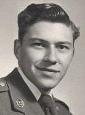
John Spellman was a man who had built a life and a reputation on the foundations of hard work and integrity. At 41 years of age, the White / Caucasian patrolman was a seasoned lawman, having started his career in 1885 as a deputy sheriff in the booming, wild-west mining town of Telluride, Colorado. He had moved west from his hometown of Beloit, Kansas, at the age of 20 and found he had a natural aptitude for the often-dangerous work of law enforcement. His reputation for honesty led to an appointment in 1901 as the master of the guard at the Colorado State Penitentiary in Cañon City. However, a shift in political tides two years later cost him his job, and with a family to support, Spellman sought better opportunities in the state's capital.
He moved to Denver with his wife, Mary, and their young son, John Raymond. On December 8, 1903, he pinned on star number 105 and took the oath of office as a patrolman for the Denver Police Department. For three years, he walked a beat on the night shift for $85 a month, patrolling a section of the city that most respectable family men avoided after dark. He was known as a dedicated and hardworking officer, committed to bringing order to the rougher parts of Denver. His family lived at 1767 Logan Street, just a couple of blocks from the Immaculate Conception Cathedral.
On the night of Monday, June 18, 1906, Patrolman Spellman was walking his beat on 19th Street. Shortly after 11 p.m., he encountered three men—identified as Carse, Turner, and West—causing a disturbance. After issuing a warning, Spellman moved to arrest them. He grabbed Turner and West by their collars and began walking them toward a police callbox to summon a wagon. Carse, who had remained just out of the officer's reach, suddenly drew a revolver.
Standing behind the other two men, Carse fired three shots into Spellman's chest and abdomen. The patrolman staggered backward about ten feet and collapsed near the doors of Vance's Saloon at 919 19th Street, into the arms of the proprietor, Vance Schneider. The three assailants fled in different directions into the night. A police ambulance arrived, but it was too late; Patrolman John Spellman was dead. An autopsy would later reveal that the first bullet had pierced his heart, killing him instantly. The second shot entered below his left arm, and the third merely bruised his chest before falling into his vest pocket.
The investigation by the Denver Police Department was swift. Within hours, all three suspects were in custody. One of the men, West, was quickly cleared of involvement and released, as he had only met the other two moments before the shooting. The remaining suspects, Turner and Carse, both pointed the finger at the other. However, witness testimony, including from an employee of the nearby Crystal Theater, strongly indicated that Carse was the gunman.
In July, Turner went to trial for the murder but was acquitted and subsequently ordered to be held as the prosecution's key witness for Carse's trial. In October, Carse was convicted of second-degree murder for the killing of Patrolman Spellman. He was sentenced to a term of ten to fifteen years in the state penitentiary. He was ultimately paroled in 1912.
Funeral services for John Spellman were held on June 20, 1906, at the Roman Catholic Immaculate Conception Cathedral. His wife, Mary, and son, Raymond, accompanied his coffin on a Union Pacific train back to Beloit, Kansas, where he was laid to rest in the family plot at St. John Catholic Cemetery. In addition to his wife and son, Spellman was survived by his parents, five brothers, and three sisters. His wife and son remained in Beloit for a time before eventually moving to Utah. The case is considered closed, with the conviction of the man responsible for ending the life of a dedicated officer and family man.