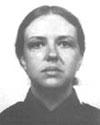
Debra Sue Corr was a trailblazer, a dedicated officer who was one of fewer than ten women on the Aurora Police Department force in Colorado in the early 1980s. Born in Colorado Springs and raised in Loveland, she graduated from Loveland High School in 1973 and earned a scholarship from the Loveland Police Department to attend Trinidad State Junior College. She joined the Aurora Police Department in May 1980, graduating second in her academy class of 26 recruits just a few months later. At 26 years old, she was building a life and a career, married to a Denver police officer, Peter Corr, and was known for her enthusiasm and love for her job.
On the night of June 27, 1981, Patrolwoman Corr was on patrol alone when she conducted a traffic stop near the intersection of East Colfax Avenue and Moline Street in Aurora. During the stop, she attempted to arrest the male driver, Joe Michael Ervin. A violent struggle broke out, and Ervin managed to gain control of Officer Corr's service weapon. He fatally shot her, making her the first officer, and only woman, in the history of the Aurora Police Department to be killed in the line of duty.
A 19-year-old Aurora Police Explorer Scout, Glen Spies, was driving home from his shift when he saw the confrontation and stopped to help. As he tried to intervene, he heard Officer Corr scream for help, followed by gunfire. Ervin then shot Spies in the back before fleeing the scene. Spies survived his injuries and was later awarded the Aurora Police Medal of Valor for his bravery. Law enforcement quickly tracked Ervin to his home, where they found him trying to saw off the handcuff that Officer Corr had managed to secure on one of his wrists during their struggle.
Ervin was arrested and taken to the Adams County Detention Center. However, on July 1, 1981, just four days after murdering Officer Corr, Joe Michael Ervin committed suicide in his jail cell, hanging himself with a towel. He left behind a note expressing remorse but took the full scope of his violent history to the grave. With the death of the sole suspect, the tragic case of Officer Corr's murder was considered closed, a painful chapter for her family, her department, and the community. She was posthumously awarded the Aurora Police Medal of Honor.
For four decades, the story remained a stark but seemingly complete account of a dedicated officer's ultimate sacrifice. Then, in January 2022, a stunning breakthrough in a series of cold cases brought a new, chilling dimension to Debra Sue Corr's death. Investigators with the Denver Police Department, using advancements in DNA technology and genetic genealogy, announced they had identified her killer, Joe Michael Ervin, as a serial killer. His DNA posthumously linked him to the unsolved murders of four other women in the Denver metropolitan area between 1978 and 1981.
The victims were identified as Madeleine Furey-Livaudais, 33, stabbed to death in her home in December 1978; Dolores Barajas, 53, stabbed while walking to work in August 1980; Gwendolyn Harris, 27, found stabbed just a block from Ervin's residence in December 1980; and 17-year-old Antoinette Parks, who was six to seven months pregnant when she was stabbed to death in January 1981. The revelation provided long-awaited answers to the families of these four victims and recast Officer Corr's final act as one of profound heroism. The families of Ervin's other victims credited her with preventing him from killing anyone else. "With her sacrifice, [Corr] prevented him from killing anyone else, and it's clear he wasn't going to stop on his own,” said the daughter of Madeleine Furey-Livaudais.
The case is now considered closed by law enforcement as of January 2022. Debra Sue Corr is remembered and honored at the Aurora Municipal Center's Memorial Courtyard and her name is inscribed on the National Law Enforcement Memorial in Washington, D.C. Her brave intervention during a routine traffic stop not only cost her own life but ultimately stopped a serial killer, bringing a measure of closure to multiple families decades later.