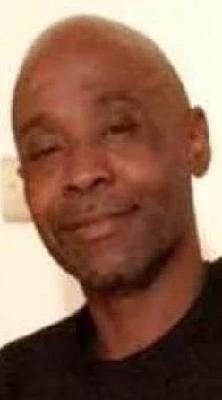
Jhakel Clark, a 15-year-old Black teenager remembered for the joy he brought to his family, was a student at John Marshall Harlan Community Academy High School in Chicago. To his friends, he was known as "6 Kellz." His aunt later wrote about the happiness he gave her, saying, "HE WAS/IS MY 1ST NEPHEW. THERE ARE NO WORDS TO DESCRIBE THAT JOY. AND THE PAIN WHEN I LOST HIM..." A childhood friend recalled knowing Jhakel from their early years at New Hope Lutheran and Marquette Elementary School. His grandmother also left a heartfelt message on an online memorial: "Grandma love and miss our time together. Sleep on my ANGEL." These memories paint a picture of a loved young man whose life was deeply intertwined with his family and community.
On the afternoon of Friday, November 28, 2014, the day after Thanksgiving, Jhakel was with two other teenagers in the Chicago Lawn neighborhood on the city's Southwest Side. Around 3:30 p.m., as the group stood on the sidewalk in the 3100 block of West 64th Street, a gunman approached on foot and opened fire. The sudden burst of violence shattered the afternoon, leaving three young victims in its wake. Jhakel was shot in the head and was pronounced dead at the scene. His home was just a few blocks away on the 6500 block of South Fairfield Avenue.
The other two victims, a 14-year-old boy and a 16-year-old boy, were also injured in the attack. The 14-year-old was shot in the leg and transported to Advocate Christ Medical Center in Oak Lawn, where his condition was stabilized. The 16-year-old sustained a graze wound to his hand and was taken to Holy Cross Hospital, where he was treated and released. The shooting was part of a violent holiday weekend in Chicago that saw multiple people killed and wounded across the city, highlighting a persistent struggle with gun violence that disproportionately affects its youth.
The Chicago Police Department launched an investigation into the triple shooting, with detectives from Area Central leading the inquiry. The Cook County Medical Examiner’s Office confirmed Jhakel's identity and ruled his death a homicide from a gunshot wound. In the immediate aftermath, police stated that no one was in custody and had not released a description of the shooter. The motive for the shooting was not publicly identified.
In the years since Jhakel's murder, there have been no public announcements regarding any arrests or charges filed in connection with the case. The investigation appears to have stalled, leaving his family and community without justice or answers. His death is one of countless unsolved homicides in Chicago, a painful statistic representing a life cut short and a family left to navigate a future without their son, nephew, and friend. The lack of resolution compounds the grief for those who knew and loved him.
Jhakel's memory is preserved through online tribute pages where friends and family continue to light virtual candles and share messages of love and loss. These digital memorials serve as a space for collective grieving and a testament to the lasting impact he had on those around him. His aunt’s words, capturing both the immense joy he brought and the profound pain of his absence, echo the sentiments of a family forever altered by a single act of violence. As of now, the case of Jhakel Clark's murder remains open and unsolved.