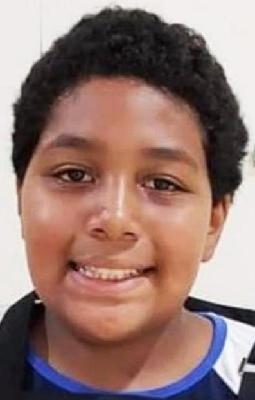
Terrell G. Campbell was a boy caught between his family’s hopes for a safer life and the powerful pull of the streets he grew up near. Known as "Booda" to his mother, the 16-year-old Black teen was also an aspiring rapper who went by the name Boss Rell. His family had worked hard to move away from the violence of the Ida B. Wells housing projects in Chicago, buying a home in the quiet Chatham neighborhood. But Terrell couldn't stay away from his old friends in Bronzeville. His mother, Yolanda Martin, had already buried one son, Tyray, who was killed by a stray bullet at age 13 in 2000. She often warned Terrell he could end up the same way, a conversation she felt was connecting, but she wasn't sure if he truly understood the danger.
On the night of January 13, 2015, a month after his sixteenth birthday, Terrell snuck out of his family's new home and returned to Bronzeville. At about 9:50 p.m., he was walking through a vacant lot in the 300 block of East Pershing Road when he was ambushed. According to police, at least two individuals approached him and opened fire. His stepfather, Michael Martin, later heard from people in the neighborhood that Terrell had been cornered, with assailants coming from two different directions. The gunmen fired more than a dozen rounds, striking Terrell in the chest, abdomen, and legs. He was rushed to Northwestern Memorial Hospital, where he was pronounced dead.
The Chicago Police Department investigated the shooting, believing it to be gang-related. Authorities said Terrell was part of one of the many small, fractured gangs that claimed territory in the South Side neighborhood. Police noted that two of his friends had been killed in the area the previous summer. In rap videos posted online, Terrell, as Boss Rell, could be seen waving a handgun and warning rival factions. His mother saw the videos but thought he was just performing. His older sister, Bianca, insisted he wasn't a "gang banger," but part of a group of boys that was more like a family. She believed jealousy over his talent, his nice clothes, and the attention he got from girls may have led to his death.
In the days following the murder, friends and family gathered in the cold on the 3900 block of South Prairie Avenue to remember Terrell. They spelled out his nickname, "Boss Rell," with tea candles on the sidewalk, placing posters on a black wrought-iron fence. His mother stood at the memorial, struggling with the image of her son as a hardened teen involved in gangs. She had tried for years to escape the cycle of violence, moving her family to what she hoped would be a peaceful life. "I thought, you know, it would change stuff but my son and them couldn’t stay away from their friends," she said. His stepfather lamented, "These streets, really, he got the lusting for the streets... And they got my son, man."
The loss was a devastating echo of a past tragedy for the family. Yolanda Martin had been determined to leave the projects after her first son was killed. She saved money from her job, married, and bought the house in Chatham, a world away from the constant threat of violence she knew. She tried to use her older son's death to warn Terrell, telling him, "You gon’ end up just like your brother and your brother didn’t do anything."
As of the latest reports, no arrests have been made in connection with Terrell Campbell’s murder. The case remains unsolved, another name in a year that saw a significant spike in gun violence across Chicago. His death highlights the complex struggles of youth in neighborhoods torn by turf disputes and the profound grief of a family that lost a second son to the very streets they tried so hard to leave behind.