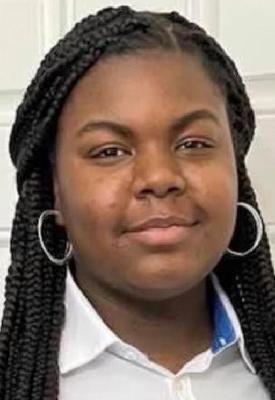
A woman's head is found inside of a bag in a lagoon Quesola Mimms, a 20-year-old African-American woman from Chicago, Illinois, was a young mother preparing for a new chapter in her life when she disappeared in September 2016. Known affectionately to family and friends as "KeKe," she lived with her mother in the 700 block of East 105th Place on Chicago's South Side and was raising an 18-month-old daughter. She had recently secured a job at a local factory and was looking forward to beginning work. However, what should have been an exciting time for her family turned into a devastating tragedy when she vanished without explanation, leaving behind a mystery that would soon become a homicide investigation.
On September 21, 2016, Quesola left the home she shared with her mother, Rosalyn Mimms. She was reportedly preparing to begin her new factory job, but she never arrived at work. That day marked the last known contact she had with her family. When she failed to return home, her loved ones became increasingly concerned about her whereabouts. Although Chicago police later stated that no official missing-person report had been filed, her family maintained that they had reported her disappearance. For the next two days, her whereabouts remained unknown.
On September 23, 2016, at approximately 10:00 a.m., a worker conducting routine maintenance at the McKinley Park lagoon, located near 2210 West Pershing Road on Chicago's Southwest Side, made a horrifying discovery. Inside a bag in the water was a severed human head. Chicago police responded to the scene and began investigating the circumstances surrounding the discovery. Investigators searched the lagoon for additional remains, including using specialized personnel and conducting further examinations of the water. Despite extensive efforts, they were unable to recover the remainder of the victim's body.
Initially, investigators did not know the identity of the person whose remains had been discovered. Authorities subsequently released a forensic reconstruction depicting what the victim might have looked like, hoping someone would recognize her. When Rosalyn Mimms saw the image on television, she immediately feared that it represented her missing daughter. Her concerns were eventually confirmed when the Cook County Medical Examiner's Office positively identified the remains as belonging to Quesola on November 16, 2016, nearly two months after the discovery.
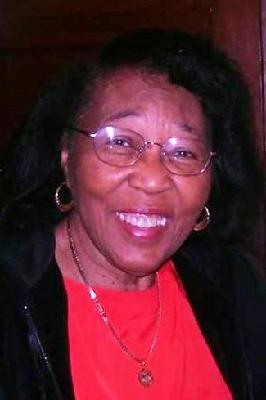
The identification devastated Quesola's family, who had been hoping for answers about her disappearance. Her grandmother, Dorothy Mimms, described her as a kind young woman. Family members struggled to understand why anyone would want to harm her. The circumstances were especially heartbreaking because her daughter was too young to understand why her mother was no longer coming home. Community activist and crisis responder Andrew Holmes, who assisted the family, publicly described how the little girl continued asking for her mother. Following the tragedy, the child remained in the care of her grandmother.
The investigation presented significant challenges because only Quesola's head had been recovered. Authorities drained the McKinley Park lagoon in an attempt to locate the remainder of her body, but the search was unsuccessful. Without the rest of her remains, investigators faced additional difficulties determining precisely how she had been killed, where the homicide occurred, and whether the lagoon was simply the location where her remains had been discarded. The limited physical evidence also created obstacles for her family, who wanted to make funeral arrangements and properly lay their loved one to rest.
On December 22, 2016, the Cook County Medical Examiner's Office officially classified Quesola's death as a homicide. Although the manner of death was established, the medical examiner did not specify the exact cause, recording the homicide as having occurred by unspecified means. The date and location of the fatal attack were never publicly established. September 21 remained the last confirmed date of family contact, while September 23 was the date her remains were discovered.
As investigators worked to reconstruct Quesola's final movements, another detail emerged from police records. On September 12, 2016, approximately nine days before she disappeared, she had filed a police report concerning criminal damage to property. Investigators were aware of the incident, but a police source indicated that it was not believed to involve violence or a domestic-related dispute. No publicly available evidence established a connection between that earlier incident and her murder. Authorities did not disclose a specific motive or identify anyone responsible for her disappearance and death.
On November 16, 2016, Andrew Holmes joined other community advocates near the McKinley Park lagoon to appeal for public assistance. Speaking on behalf of Quesola's grieving family, he urged anyone who had seen her during her final days or knew who she had been with to contact investigators. A reward of $2,000 was publicized for information leading to the arrest and conviction of the person responsible. Holmes emphasized the cruelty of the crime and the suffering experienced by a family that had not only lost a loved one but also had been denied the opportunity to recover her complete remains.
The investigation unfolded amid heightened public attention surrounding another disturbing Chicago homicide involving human remains discovered in a park lagoon. In November 2016, authorities announced charges against Kamel Harris in connection with the murder and dismemberment of two-year-old Kyrian Knox, whose remains had been discovered in Garfield Park lagoon in September 2015. Although the cases attracted comparisons because of the circumstances in which remains were found, they involved different victims and locations. No publicly established evidence connected Harris or the Knox investigation to Quesola's murder.
Despite investigative efforts and appeals for information, no suspect was publicly identified in Quesola's case. Police did not announce an arrest or disclose evidence sufficient to establish who killed her, where the crime occurred, or why she was targeted. Publicly available reporting through 2026 has not established that anyone was charged, prosecuted, or convicted in connection with her death. The case has continued to be described as an unsolved homicide, with no confirmed resolution announced.
The passage of time has left significant questions unanswered. Investigators have not publicly established what happened after Quesola left her mother's home on September 21, who she may have encountered, or how her remains came to be placed in the McKinley Park lagoon. Her family's efforts to obtain answers have centered on discovering the circumstances of her final hours, identifying the perpetrator, and recovering the rest of her remains. The absence of those answers has compounded the grief surrounding her death.
Quesola Mimms was a young mother with plans for employment and a future she hoped to build for herself and her daughter. Instead, her life ended under brutal circumstances, and her family was left searching for answers about the person responsible. Her murder remains an enduring Chicago cold case, remembered not only for the shocking circumstances of the discovery but also for the daughter, mother, grandmother, and other loved ones whose lives were forever changed. Anyone with credible information concerning her disappearance, the location of her missing remains, or the identity of her killer is encouraged to contact the Chicago Police Department so that investigators may have an opportunity to bring accountability and long-awaited answers to her family.