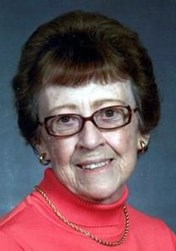
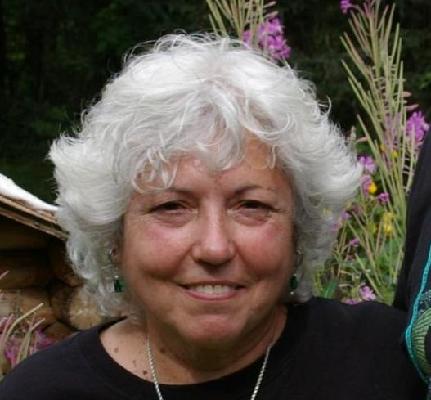
Do you know who murdered Patricia Ann Phelps? On the evening of August 9, 2017, Patricia Ann Phelps, a 48-year-old White woman, lost her life in a violent incident in the Spenard neighborhood of Anchorage, Alaska. Patricia was walking along West 36th Avenue near Oregon Drive when a confrontation involving gunfire caused a vehicle to accelerate away from the scene. The fleeing vehicle struck Patricia, killing her before emergency responders could save her. Investigators later determined that she had no involvement in the confrontation and had simply been in the wrong place when the violence erupted.
At approximately 8:58 p.m., Anchorage police dispatchers began receiving multiple reports of gunshots near the intersection of West 36th Avenue and Oregon Drive. Responding officers discovered Patricia lying in the yard of a multiplex residence in the 1800 block of West 36th Avenue. She was pronounced dead at the scene. Investigators determined that the vehicle involved had also crashed through a fence and struck the residential building. Officers interviewed the driver, passengers, and several witnesses while attempting to reconstruct the circumstances surrounding the gunfire and fatal collision.
Initially, authorities believed Patricia had suffered both a gunshot wound and injuries from being struck by the vehicle. However, an autopsy revealed that she had not been shot. On August 15, 2017, the Anchorage Police Department confirmed that her cause of death was blunt force trauma resulting from the vehicle striking her. Investigators emphasized that Patricia was an innocent bystander and that the shooting incident appeared to be connected to drug-related activity involving other individuals.
As detectives worked to identify those responsible, they released photographs of two individuals they wanted to question. One was a person of interest who had reportedly left the scene on a motorcycle, traveling through an alley toward West 33rd Avenue. The second was a potential witness who had been walking with Patricia shortly before the fatal collision. That individual was last seen heading east along West 36th Avenue toward Minnesota Drive. Police sought assistance from residents who might have witnessed the confrontation or captured relevant surveillance footage. Despite receiving tips, investigators initially struggled to identify and establish the roles of everyone involved.
For nearly four years, Patricia's death remained an unresolved homicide. The investigation eventually gained momentum through the Anchorage Police Department's Cold Case Unit, which reconstructed the events leading to the fatal collision. Investigators developed evidence implicating two Anchorage men, Darin Lee Jones and Shawn Michael Phillips, in the confrontation that had caused the vehicle to flee.
According to court documents released in 2021, the events began with a dispute allegedly involving drugs and property. At the time, Jones was on parole following an earlier murder conviction. On August 3, 2017, he had left Akeela House, a residential substance abuse treatment facility, without authorization after his roommate was stabbed. Jones was reportedly under investigation in connection with that stabbing.
Six days later, on the evening Patricia was killed, a witness reportedly overheard Jones speaking with Phillips by telephone and indicating that he would handle a situation. According to the prosecution's account, Jones subsequently put on a bulletproof vest, mounted his red Harley-Davidson motorcycle, and traveled to Phillips' garage on Wyoming Drive in Anchorage. Another witness reported hearing Phillips instruct Jones to retrieve property from an individual known as "Tundra." Investigators alleged that Phillips provided Jones with a firearm and methamphetamine before Jones departed on a black sport-style motorcycle belonging to Phillips.
A short distance away, Jones allegedly confronted the occupants of a dark Toyota 4Runner on West 36th Avenue while searching for someone. The individual known as Tundra was reportedly standing nearby. Prosecutors alleged that Jones began firing into the occupied SUV, which contained four people. As bullets struck or threatened the vehicle, its occupants ducked, and the driver accelerated in an attempt to escape the gunfire. The SUV then crashed through a fence and struck Patricia as she walked nearby. The collision caused her fatal injuries, and the vehicle continued into the residential property.
Investigators alleged that Jones fled on the motorcycle and returned to Phillips' residence, where surveillance footage appeared to show him attempting to hand a firearm to someone before leaving again. Witnesses later placed him at a residence on Waldron Drive. The following morning, Anchorage police responded to a hostage situation at that location. According to court documents, Jones had struck another individual in the head with a hatchet. Officers eventually arrested him following a standoff. During a search of the residence, police recovered a firearm that a ballistics examination subsequently connected to shell casings found at the scene of the August 9 shooting.
This evidence became central to the homicide investigation. Prosecutors argued that although Patricia had not been the intended target of the gunfire, the alleged criminal actions of Jones and Phillips had directly caused her death. Assistant District Attorney Patrick McKay explained that Alaska law recognizes the legal principle of transferred intent, under which an individual intending to kill one person can potentially be held responsible for first-degree murder when those actions instead cause another person's death. The prosecution relied on that principle in pursuing the most serious charge against Jones.
On May 28, 2021, an Anchorage grand jury indicted Darin Lee Jones, then 54, and Shawn Michael Phillips, then 52, in connection with Patricia's death. Jones was indicted on one count of first-degree murder, three counts of second-degree murder, one count of attempted first-degree murder, one count of manslaughter, one count of first-degree weapons misconduct, one count of first-degree robbery, seven counts of third-degree assault, and one count of third-degree weapons misconduct.
Phillips was indicted on three counts of second-degree murder, one count of manslaughter, one count of first-degree weapons misconduct, one count of first-degree robbery, seven counts of third-degree assault, and one count of third-degree weapons misconduct. Prosecutors alleged that his involvement in supplying the firearm and participating in the underlying confrontation made him criminally responsible for the resulting violence and Patricia's death.
Following the indictments, authorities confirmed that both defendants were in the custody of the Alaska Department of Corrections. Jones initially faced bail of $1 million cash, while Phillips' bail was initially set at $500,000 cash. Prosecutors stated that each murder count could carry a sentence of up to 99 years in prison. The grand jury also identified two special circumstances associated with Jones' first-degree murder charge that could require a mandatory 99-year sentence if established at trial.
The defendants' criminal histories also attracted attention. Jones had previously pleaded guilty to second-degree murder in connection with the killing of Shane Rogers, his former coworker and occasional roommate, in 2000. Additionally, court records described Phillips' involvement in concealing and burning the body of another homicide victim in November 2017, several months after Patricia's death. Those earlier incidents were separate from the charges arising from her killing.
Although the 2021 indictments represented a significant development, the publicly available reporting reviewed does not establish whether Jones or Phillips subsequently entered guilty pleas, went to trial, were convicted, or received sentences specifically for Patricia's death. The indictment charges remain allegations unless established through a guilty plea or court verdict, and the final judicial disposition could not be confirmed.
Patricia Ann Phelps' death illustrates how violence arising from a confrontation between other individuals can have devastating consequences for an uninvolved bystander. She was simply walking through an Anchorage neighborhood when gunfire triggered a chain of events that ended her life. What initially appeared to be a chaotic combination of a shooting and a fatal vehicle collision eventually became a complex murder prosecution built on witness statements, surveillance evidence, forensic findings, and years of investigative work. Nearly four years after the tragedy, authorities identified and charged two individuals they believed were responsible for creating the circumstances that led to her death, bringing a measure of progress to a case that had remained unresolved for years.