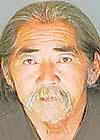
Joseph Kahahawai Jr. was a Native Hawaiian man born on December 25, 1909, in rural Maui. His family later moved to Honolulu, where he grew up in the Kalihi-Palama area. After his parents divorced, he lived with his mother but remained close to his father. He attended Saint Louis School on an athletic scholarship, building a positive reputation as a football player nicknamed "Kalani." The Great Depression forced him to leave school before graduating, and he worked various jobs to get by. A 22-year-old prizefighter who boxed professionally as "Joe Kalani," he was also a member of the 298th Infantry Regiment and the Territorial National Guard. To his friends, he was the leader of a loose-knit group they called the "School Street gang." To his family, he was "Joe," a beloved young man whose name and legacy they would fight to keep alive for generations.
In September 1931, Kahahawai’s life was irrevocably altered when he and four other young local men—Ben Ahakuelo, Horace Ida, Henry Chang, and David Takai—were wrongfully accused of raping Thalia Massie, the 20-year-old wife of a U.S. Navy lieutenant stationed at Pearl Harbor. The five men, who became known as the "Ala Moana boys," were from Honolulu's working-class neighborhoods. Despite major inconsistencies in Massie's story and a complete lack of physical evidence connecting them to the crime, they were brought to trial in November 1931. The racially charged case ended in a mistrial after the jury remained deadlocked. The defendants were released on bail to await a second trial, an outcome that outraged many in the white community, particularly those connected to the U.S. Navy.
On the morning of January 8, 1932, Joseph Kahahawai was kidnapped in Honolulu. He was lured into a car by Albert O. Jones, a Navy enlisted man, who presented a forged summons claiming Kahahawai was needed for questioning. He was driven to a rented bungalow in the Mānoa neighborhood, followed by a second car carrying Thalia Massie's mother, Grace Fortescue; her husband, Navy Lieutenant Thomas Massie; and another enlisted man, Edward J. Lord. At the house, the group tried to force a confession from Kahahawai at gunpoint. During the violent interrogation, Thomas Massie shot him once in the chest with a .32 caliber pistol. The bullet severed his pulmonary artery, and he was left to bleed to death.
The killers wrapped Kahahawai's naked body in a sheet and drove toward Maunalua Bay, intending to dump his body in the ocean. Their plan was thwarted when a police officer, who recognized their car from the kidnapping report, forced them off the road. Kahahawai's body was discovered on the floor of the vehicle. Police arrested Fortescue, Massie, and Lord at the scene and apprehended Jones shortly after at the Massie house. At the bungalow, investigators found two handguns, bloodstains, Kahahawai's clothing, and the fake summons used in the abduction. While awaiting trial for murder, the four were held not in a jail cell but in comfortable quarters aboard a decommissioned Navy ship, the USS Alton.
The trial began on April 4, 1932, attracting sensational national attention. The courtroom was filled daily with reporters and Kahahawai's grieving parents. After deliberating for nearly two days, the jury, which included six white men, two Chinese men, and four part-Hawaiian men, found all four defendants guilty of the lesser charge of manslaughter. On May 4, 1932, a judge sentenced each to ten years in prison with hard labor. The verdict and sentence sparked fury on the mainland and among Hawaii’s white population. Under immense pressure from the U.S. Navy, which threatened to impose martial law on the territory, Governor Lawrence M. Judd commuted their sentences to just one hour, to be served in his office at ʻIolani Palace. Days later, all four left Hawaii, never to be retried.
Joseph Kahahawai's funeral was one of the largest ever held for a Native Hawaiian not of royal lineage, with over two thousand people in attendance. Following a Requiem Mass at the Cathedral Basilica of Our Lady of Peace, a procession of more than a hundred cars traveled to Puea Cemetery in Kalihi-Palama, where he was laid to rest on January 10, 1932. At the service, his father told the crowd that his son had sworn an oath to him that he was innocent of the rape accusation. His innocence was later confirmed. An independent investigation by the Pinkerton Detective Agency concluded it had been impossible for the five accused men to have committed the assault, and all charges against the surviving men were dropped in 1933. In 2006, Kahahawai and the others were posthumously declared not guilty.
Decades after his murder, Joseph Kahahawai's family began to speak publicly about the profound injustice. His younger brother, born just 11 months after the killing, was given the same name to carry on his legacy. His nieces and other family members continue to visit his grave, which is marked with the Hawaiian word "Hoʻomanaʻo," meaning "to remember." The case remains a painful and pivotal event in Hawaiian history, a stark illustration of the deep racial and social divisions of the era. As of January 2024, his family continues to honor his memory, ensuring that the story of his life and tragic death is never forgotten.