Crime Solvers Central
302 Cases Solved. Advancing justice for missing persons, unsolved homicides, unidentified and unclaimed remains.

Case Description

Any updates on this case? Let us know!
Summary based on 3 sources
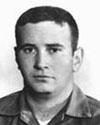
The day was Memorial Day, May 26, 1975, and a sense of holiday calm rested over the burgeoning city of Huntsville, Alabama. For Investigator Kenneth McDonald, a 23-year-old with the Madison County Sheriff’s Office, the day began not with parades or backyard barbecues, but with the routine of law enforcement. He was part of an intelligence unit, and that morning, he and his colleagues were positioned on a stakeout at the local bus station, the air thick with the quiet anticipation of a potential breakthrough. The day before, a Sunday, had been a more relaxed affair for the young male officer; he had met with a friend and fellow officer to discuss renting a small garage apartment, the two of them sharing a beer and reflecting on the promising, yet unpredictable, path of their chosen careers.

That sense of normalcy was shattered when a frantic call for help crackled over the police radio. Two fellow Madison County deputies were under fire in the rural northern part of the county. Responding to the urgent summons, McDonald, along with a host of other officers from various local agencies, sped toward the unfolding crisis. The scene that greeted them was one of chaos and confusion. An elderly man, for reasons that remain obscured by the passage of time, had begun shooting at a utility worker. The situation had escalated rapidly into a dangerous and disorganized firefight.

As officers descended on the property, a running gun battle ensued. The suspect was mobile, and the responding lawmen scrambled to contain the threat. In the midst of the tense and fluid exchange of gunfire, a tragic miscalculation occurred. A fellow officer, caught in the tumult of the search for the armed man, fired his weapon, and the bullet found an unintended target. Investigator McDonald was mortally wounded, his life cut short not by the hand of a criminal, but by the chaos of a volatile and poorly organized confrontation.

The search for the initial shooter became, as one officer present would later recall, "somewhat disorganized" in the aftermath of the friendly fire incident. The loss of one of their own cast a pall over the already tense scene. Kenneth McDonald, a young man just beginning to build a life and a career dedicated to protecting his community, was gone. The tragic irony of his death—a peacemaker falling to a comrade's bullet in the heat of a call to protect another—would leave a lasting scar on the local law enforcement community.

In the years that followed, the memory of Investigator McDonald's sacrifice was not forgotten. His death served as a catalyst for change within the law enforcement agencies of Madison County. Both the Sheriff's Department and the Huntsville Police Department, recognizing the need for specialized and highly trained units to handle such volatile situations, moved to create their own S.W.A.T. teams. The case of Kenneth McDonald’s death, while not a criminal matter in the traditional sense, remains a somber chapter in the history of Huntsville law enforcement. It stands as a stark reminder of the inherent dangers of police work and the split-second decisions that can have irreversible consequences. The file on his death may be closed, but the questions of that day—the precise sequence of events, the name of the man who sparked the chaos—have faded into the quiet annals of the city's past, leaving behind the enduring story of a young officer who gave everything.