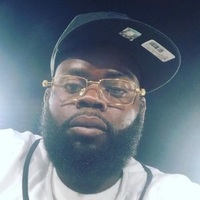
Fredric “Micky” Rogers, a 31-year-old African American man from Fairfield, Alabama, was the victim of a brutal homicide on January 12, 2008, in Birmingham. His life ended under disturbing circumstances when his body was discovered inside a burning automobile in the Wylam neighborhood. What initially appeared to be an ordinary vehicle fire quickly became a homicide investigation after emergency personnel discovered his remains and authorities determined that he had suffered a fatal gunshot wound.
Fredric was born on March 10, 1976, in Linwood, California, to Marie B. Rogers and Fredric McClain. When he was approximately two years old, his mother moved the family back to Fairfield, Alabama, where he spent the remainder of his life. He grew up surrounded by relatives and became part of the local community. He was baptized at St. Mary's Catholic Church, attended St. Mary's Elementary School, and later graduated from Fairfield High School. As an adult, he worked at an OfficeMax warehouse. Known affectionately as “Micky,” he maintained connections with family members, longtime friends, and others who knew him throughout his childhood and adulthood.
On the morning of January 12, 2008, Birmingham firefighters responded to a vehicle fire near the intersection of 15th Avenue and Jersey Street in the Wylam community. When emergency responders arrived, they discovered a burning Cadillac containing Fredric's body. The circumstances immediately raised concerns that something far more serious than an accidental fire had occurred. An examination by the Jefferson County Coroner's Office subsequently established that Fredric had died from a gunshot wound, confirming that his death was a homicide rather than a fatality caused solely by the vehicle fire.
A retrospective account published by The Birmingham Times in October 2014 provided additional information about the circumstances surrounding the killing. According to that report, Fredric had been shot at a separate location before his body was placed inside the vehicle, which was subsequently set on fire. The burning automobile was discovered at approximately 7:30 a.m. The report suggested that the shooting and the burning of the vehicle were separate stages of the crime, although it did not identify where the initial shooting occurred or explain how investigators established the sequence of events.
The discovery of his body inside the burning vehicle presented investigators with a particularly troubling crime scene. Authorities were confronted with both a fatal shooting and a deliberately suspicious fire. However, publicly available accounts do not establish the precise circumstances leading up to Fredric's death, whether he knew the person responsible, or what motive may have prompted the attack. It also remains unclear whether investigators recovered significant physical evidence from the vehicle or identified witnesses who could describe his final movements.
As the investigation continued, Fredric's family faced the devastating reality that someone had taken his life and that those responsible had not been publicly brought to justice. In October 2014, more than six years after the killing, the community organization Refuge In Trouble Times featured his case in its Cash for Crooks crime-awareness campaign through The Birmingham Times. The organization highlighted the violent circumstances of his death and appealed to anyone with information to contact law enforcement. The publication emphasized the family's continuing need for answers and closure.
The public appeal encouraged individuals with information about the killing to contact Birmingham-area Crime Stoppers at 205-254-7777. The organization also discussed the possibility of financial rewards for information leading to an arrest or conviction. By bringing renewed attention to Fredric's death years after the original investigation, community advocates hoped that someone who knew what happened would finally come forward.
Despite these efforts, available public reporting does not identify an individual who was arrested or formally charged in connection with Fredric's murder. No confirmed suspect, prosecution, criminal trial, guilty plea, or conviction directly associated with his death could be established from the available records. The absence of documented developments does not necessarily mean investigators have never identified a person of interest or pursued additional evidence, but there is no verified public information demonstrating that the killing has been legally resolved.
Fredric's death left an extensive family grieving his loss. His survivors included his mother, Marie B. Rogers; his father, Frederic McClain; his brothers, Antonio McClain and Andrew McClain; his grandmothers, Eunice B. Rogers and Armelia Bruce; and numerous aunts, uncles, cousins, and friends. Among his relatives was Alabama State Representative John Rogers Jr. His family gathered to honor his memory at a funeral service held at St. Mary's Catholic Church, followed by burial at Elmwood Cemetery in Birmingham. Condolence messages published after his death reflected the sorrow experienced by those who had known him, including former classmates and longtime family friends.
The killing of Fredric “Micky” Rogers remains a disturbing chapter in Birmingham's history of violent crime. His final hours are still not fully explained in publicly available accounts, and fundamental questions remain about where he was shot, who transported his body, why the vehicle was burned, and who was responsible. His story is also that of a Fairfield resident who had grown up in a close community, attended local schools, maintained family ties, and was working to support himself before his life was violently taken. For his loved ones, the passage of time has not diminished the significance of those unanswered questions. Without a publicly documented arrest or conviction, the circumstances surrounding his murder continue to represent an unresolved search for accountability and justice.