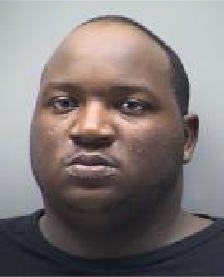
More than two decades have passed, but the silence surrounding the death of Christopher E. Graham lingers in Dayton, Ohio. A 29-year-old Black man, Christopher was killed on Tuesday, March 21, 2000, in a case that has long since gone cold. His name is etched on a memorial list of homicide victims in Montgomery County for that year, a public and lasting testament to a life cut short and a crime that remains a painful, unanswered question for his family and the community.
The specific details of what happened to Christopher on that final day of winter have been held closely by investigators. What is known is that he was found shot and killed within the city limits of Dayton. The hours and events leading up to his death remain shrouded in mystery, with no public information released about a possible motive or the exact location where he was discovered. At the time, authorities reportedly believed his death might have been connected to other violent incidents occurring in the area, but the nature of those connections has never been fully clarified. His death was one of dozens of homicides that afflicted Montgomery County in 2000, a year marked by significant loss for the community.
The investigation into Christopher’s murder was launched by the Dayton Police Department. From the beginning, detectives were faced with the difficult task of piecing together a narrative with few public leads. As the years passed with no arrests, the investigation was officially classified as a cold case. His file, designated as case number 500, is now maintained by the Ohio Attorney General's Office in its Unsolved Homicides database. This statewide initiative aims to bring fresh attention to cases that have exhausted all immediate investigative avenues, hoping that new technologies or a person with long-held information might finally come forward.
For law enforcement, unsolved homicides like Christopher's represent a frustrating challenge. Without witness cooperation or significant physical evidence, the path to justice grows more difficult with each passing year. Investigators often rely on the possibility that relationships and loyalties change over time, and that someone who was once afraid to speak might find the courage to do so. The Dayton Police Department and the state's Bureau of Criminal Investigation continue to seek any piece of information that could provide a new direction for the case and break the long-standing stalemate.
The enduring pain of an unsolved murder is carried most heavily by the victim's loved ones. With no arrest or conviction, there is no sense of closure or finality. The process of grieving is perpetually interrupted by the absence of answers and the knowledge that the person responsible has never been held accountable. While no public statements from Christopher’s family are on record, their loss is acknowledged by the community through memorials like the one established by the Montgomery County Prosecutor's Office, which honors homicide victims and supports their surviving families through the difficult holiday season and beyond.
Today, the homicide of Christopher E. Graham remains an open and active investigation. Decades after his death, his case is a reminder of the devastating impact of violence and the critical importance of community involvement in solving crimes. His family, and the investigators who still seek answers, are left to hope that someone, somewhere, knows what happened on March 21, 2000. The Ohio Attorney General’s Office continues to appeal to the public for help. Anyone with information regarding the murder of Christopher Graham is encouraged to contact the Bureau of Criminal Investigation.