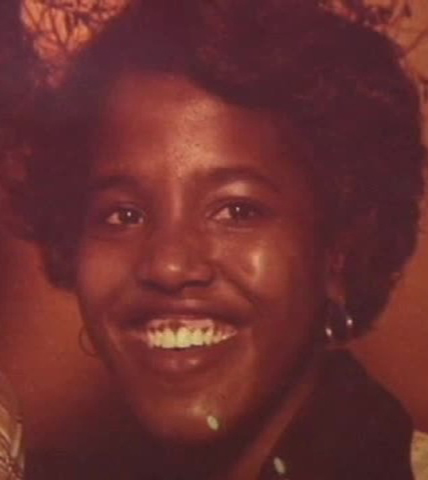
Maria Cole-Johnson was a young African-American woman living in her Cincinnati, Ohio, apartment when her life was tragically cut short at the age of 28. She was the beloved "baby sister" to her older brother, Rickey "Dunnie" Cole Jr., a nickname she had given him years earlier that stuck for life. Maria and her siblings grew up in the Mt. Auburn and Pendleton areas of Cincinnati, two of the city's oldest and most historic neighborhoods, places with deep roots and distinct identities.
Mt. Auburn, one of Cincinnati's famed seven hills, began in the 19th century as a hilltop retreat for the city's elite, a place to escape the summer heat of the basin below. With its ornate mansions and panoramic views, it was a neighborhood of prominence. Pendleton, nestled just east of downtown and Over-the-Rhine, developed as a residential enclave for the artisans and working-class families who powered the city's industrial boom. Its streets are lined with the classic Italianate row houses that define much of Cincinnati's urban core. Growing up between these two areas, Maria would have been surrounded by a rich tapestry of the city's history, architecture, and diverse communities.
The day that ended her story was Sunday, June 6, 2004. Maria was in her home at 515 East 13th Street, in apartment #3. The building is located in the Pendleton neighborhood, a dense and historic urban area just a stone's throw from where she grew up. In an act of violence that has never been publicly explained, an unknown assailant entered her home and shot her. The specific circumstances leading up to the shooting, the time of day it occurred, and whether there were any witnesses have not been released. The Cincinnati Police Department was called to the scene, but by the time they arrived, the perpetrator was gone.
The investigation into Maria Cole-Johnson’s murder was launched immediately by the Cincinnati Police Department's Homicide Unit. Detectives processed the scene at her apartment, searching for clues and evidence that could point to a suspect. However, no arrests were made in the immediate aftermath, and the case quickly grew cold. No suspects or persons of interest have ever been publicly named, and a motive for the shooting remains elusive. The case has remained open for two decades, a lingering source of pain for her family and a statistical marker in the city's history of violence.
Years passed, and with no new leads, Maria’s case was added to the Unsolved Homicides database maintained by the Ohio Attorney General's Office and the Bureau of Criminal Investigation (BCI). This statewide initiative is designed to bring fresh attention to cold cases, leveraging public visibility in the hope that someone, somewhere, will come forward with a crucial piece of information. The BCI assists local law enforcement by providing investigative resources and a platform to ensure that victims like Maria are not forgotten. Her case file, number 1116, remains a stark and brief summary of the tragedy: a 28-year-old woman shot in her own home.
As of today, Maria Cole-Johnson’s homicide remains unsolved. Her family has endured more than twenty years without answers or justice. Her brother Rickey, who she was so close to, passed away in 2019 without ever knowing who took his sister's life. The memory of Maria is now carried on by her surviving relatives, including her mother, Yvonne, her sister, Tracey, and her nephews and niece. For investigators and her loved ones, the hope is that renewed public awareness might finally shake loose a memory or a pang of conscience, bringing forth the information needed to close this painful chapter.
The Cincinnati Police Department continues to hold the primary responsibility for the investigation. Authorities urge anyone with additional information or questions regarding the death of Maria Cole-Johnson to come forward. Tips can be submitted directly to the Cincinnati Police Department's Homicide Unit or through the Ohio Attorney General's Office. No detail is too small, as it could be the key to finally solving this devastating crime and bringing a measure of peace to a family that has waited far too long for justice.