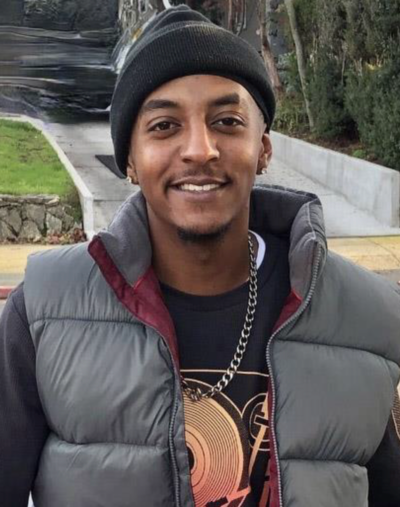
Norris Bennett, a 21-year-old Black man, was a business student at City College of San Francisco who grew up in the city's Bayview-Hunters Point neighborhood. His life was tragically cut short, and in a heartbreaking turn of fate, he became the second brother in his family to be murdered.
On the afternoon of Friday, April 17, 2009, Bennett was back in his old neighborhood, playing a game of dice with others near Griffith Street and Navy Road. For months, a 22-year-old San Francisco State University photojournalism student named Alex Welsh had been following Bennett, documenting his life for a senior project about youth in the community. Welsh aimed to portray the "strength, perseverance and hope" of young people in the area. The day took a violent turn at about 4:40 p.m. when shots were fired. Bennett was struck by a gunshot.
When police and paramedics arrived at the scene, they found Bennett suffering from a gunshot wound. An officer was photographed administering CPR to him as he lay on the ground, but his injuries were too severe. Norris Bennett was pronounced dead at the scene. The photojournalism student, who had been with Bennett earlier, was present and began taking pictures of the aftermath as first responders worked.
The investigation into Bennett's murder was launched by the San Francisco Police Department. The case immediately became complicated by the presence of the student photographer, Alex Welsh. When police tried to interview him at the scene, he declined, invoking California's "shield law," which protects journalists from being compelled to turn over unpublished materials or testify about their reporting. Police later obtained a search warrant for Welsh's apartment and seized cameras, photographs, and other items, believing he might have captured images or information crucial to identifying the killer.
This led to a significant legal battle. Welsh's attorneys argued that he was a freelance journalist covered by the shield law, while the district attorney's office contended he was merely a student working on a school project. In July 2009, a San Francisco Superior Court judge ruled in Welsh's favor, ordering police to return his seized property. The judge sealed the student's name out of concern for his safety. The legal fight brought national attention to the case, but it was focused on the First Amendment debate rather than the search for Bennett's killer.
Months later, in November 2009, Alex Welsh submitted his photo series, "Hunters Point, ‘We Out Here’," to the College Photographer of the Year awards and won a gold medal in the documentary category. One of the photos he submitted and published online was the image of the police officer trying to save Bennett's life. After the photo appeared on the contest's website, SFPD homicide inspectors renewed their efforts to gain Welsh's cooperation. One sergeant expressed frustration, stating, "It was always represented to us that there were no pictures — that they did not exist." Welsh's attorney maintained that his client had only photographed the scene after the shooting and after police had arrived, and did not see who shot Bennett.
No arrests have ever been made in connection with Norris Bennett's murder. The case remains unsolved, overshadowed by the legal controversy that followed. As of late 2009, San Francisco police were still actively investigating the homicide. Anyone with information about the incident is encouraged to call the San Francisco Police Department's anonymous tip line at (415) 575-4444.