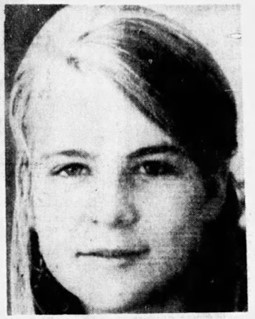
More than half a century has passed, but the questions surrounding the death of Vickie Harbin remain unanswered. For her loved ones, the passage of time has not diminished the pain of her loss or the hope for justice. Vickie, a 50-year-old woman, was killed in the heart of Boston on a late summer day, her life cut short by a violent act that remains a mystery to this day. Her case is one of the city's many cold cases from an era of significant social change and upheaval, a file waiting for the one piece of information that might finally bring a resolution.
The official record of Vickie's death is stark and brief. On Saturday, September 4, 1971, the Boston Police Department received a call reporting a person stabbed at 20-24 Avery Street. When officers arrived at the scene, they found Vickie Harbin. She was pronounced deceased at the location, having suffered fatal stab wounds.
The Office of the Chief Medical Examiner later conducted an autopsy and officially ruled her death a homicide, confirming that she was the victim of a deliberate act of violence.
Avery Street, where the crime occurred, is a short but significant street in downtown Boston, nestled near the historic Boston Common and what was then the city's primary shopping and entertainment district. In 1971, this area, known as the Combat Zone, was a complex and often turbulent part of the city, characterized by a mix of theaters, restaurants, bars, and an increasing number of adult entertainment venues. It was a district in transition, drawing people from all walks of life, day and night. The police investigation would have begun in this challenging environment, with detectives trying to piece together Vickie’s final hours against a backdrop of a busy and anonymous city center.
The investigation into Vickie Harbin's murder was launched immediately by the Boston Police Department's Homicide Unit. In 1971, investigative techniques were a world away from the forensic science of today. Detectives would have relied on traditional methods: canvassing the neighborhood for witnesses, interviewing acquaintances and potential informants, and meticulously examining the crime scene for physical clues like fingerprints or the murder weapon. They would have tried to build a timeline of Vickie’s movements and establish a motive for the brutal attack.
Despite their efforts, the initial investigation did not lead to an arrest. Over the years, Vickie's case, like many others from that period, grew cold. Leads dried up, memories of potential witnesses faded, and the city landscape changed. The once-notorious Combat Zone has since been largely redeveloped, erasing the physical context of the crime and making it even harder to uncover new evidence. The file on Vickie Harbin’s murder remains open, a silent testament to a life taken too soon and a case yet to be closed.
As of today, the murder of Vickie Harbin is still listed as an unsolved homicide by the Boston Police Department. Decades have passed, but investigators believe that it is never too late for justice. They emphasize that the community is often their greatest resource in solving cold cases. Someone, somewhere, may hold a crucial piece of information—something they saw or heard that day, a conversation they remember, or a suspicion they never voiced. Even a seemingly small detail could be the key to unlocking the case and finally providing answers for Vickie's memory. The Boston Police Department urges anyone with information, no matter how insignificant it may seem, to come forward. Tips can be submitted to the Boston Police Homicide Unit at (617) 343-4470 or anonymously through the Crime Stoppers Tip Line at 1 (800) 494-TIPS.