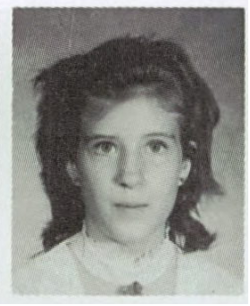
Mary Ann Turner, a 32-year-old woman and mother, was found murdered on November 4, 1986, in Spokane, Washington, while searching for her missing teenage daughter. Her body was discovered in an alley in the East Central neighborhood, near South Ivory Street and East Pacific Avenue. At approximately 7:38 a.m., Spokane police officers responded to a report of someone lying in the roadway. When they arrived, they discovered Turner deceased beside a garage. Her body was partially undressed and covered in dirt, with her scarf and sweater wrapped around her neck. Investigators observed evidence of a struggle in the surrounding area, and an autopsy determined that she had died from asphyxia caused by compression of her neck. Her death was ruled a homicide.
For nearly four decades, the identity of the person responsible remained unknown, leaving her family without answers until a major breakthrough in October 2026 led to the arrest of a suspect.
Turner's life had been marked by considerable hardship long before her death. Originally from California, she entered foster care at approximately 11 years old after her mother experienced a mental health crisis. Her father died after being struck by a train the following year. Turner became pregnant at 13 and placed her first child for adoption. At 15, she became pregnant again and chose to raise her daughter, Manieka. The responsibilities of becoming a mother at such a young age, combined with ongoing personal struggles, contributed to significant difficulties throughout her adult life. According to her sister, Brenda Lee, Turner experienced mental health problems that made maintaining steady employment difficult. She occasionally engaged in prostitution to supplement her limited income, which her family described as a means of survival rather than a regular occupation. Despite these challenges, Turner remained deeply concerned about her daughter's well-being and was determined to find her when she disappeared.
In the weeks before her death, Turner's daughter, then 16, had run away from home in California. After learning that Manieka might have traveled to Washington, Turner followed in hopes of locating her. Her sister later recalled receiving a telephone call from Turner approximately ten days before her body was discovered. During that conversation, Turner expressed desperation about finding her daughter and asked whether family members had heard from her. Brenda's husband also spoke with Turner and believed she sounded as though she had recently been involved in a violent encounter. The circumstances of that possible incident were never clearly established. Tragically, Turner would never complete her search. Her daughter was eventually located in Seattle, but by then her mother had been murdered.
Investigators reconstructed portions of Turner's final hours through witness interviews. According to court documents, her friend Yolanda Snapp told detectives that the two had been working along East First Avenue near South Magnolia Street during the early morning hours of November 4. At approximately 2:45 a.m., Turner was reportedly seen entering a burnt-orange or bronze-colored vehicle that traveled westbound on East First Avenue. Early investigators believed the automobile might have been a mid-1970s Ford Torino. Two Spokane police officers subsequently observed Turner standing alone near the intersection of Sprague Avenue and North Madelia Street. That sighting became one of the last known observations of her alive. Approximately four hours later, her body was discovered in the nearby alley. Investigators believed the person responsible may have transported Turner to the location before fleeing in a vehicle.
The original investigation produced physical evidence and witness statements, but detectives struggled to identify a perpetrator. Turner had no money or driver's license when she was discovered, although her boyfriend was able to identify her. Investigators collected biological evidence from her body, including material beneath her fingernails, along with cigarette butts recovered from the crime scene. At the time, forensic DNA technology was still developing, and the available evidence could not establish the identity of her killer. Detectives also sought information about the distinctive bronze-colored automobile reportedly seen during her final hours. A confidential caller contacted Spokane's Secret Witness program and identified a man named David John Tibbett as a possible suspect. The caller described a copper-brown Ford Elite with body damage and suggested that Tibbett had been intoxicated in the area around the time of the killing. Investigators determined that Tibbett owned a bronze 1976 Ford Elite. Police attempted to question him in November 1986 while he was incarcerated on an unrelated matter, but he declined to speak with investigators. Without sufficient evidence to support murder charges, the investigation continued without an arrest.
Turner's murder occurred during a period when several women were being killed in Spokane, creating concerns about whether some of the deaths might be connected. Among the victims were Ruby Jean Doss, who was found strangled in January 1986, and Kathleen DeHart, who was murdered in July 1987. Investigators examined similarities involving the victims, their injuries, and the circumstances surrounding their deaths. However, authorities did not establish that Turner had been killed by the same person responsible for those other homicides. In 1998, a task force reviewed the unsolved killings of numerous women in the Spokane area, including Turner's case. Although investigators continued examining possible connections and reviewing available evidence, the murder remained unresolved. The passing years brought additional attention through newspaper articles and cold-case investigations, but Turner's family continued waiting for an explanation of what happened to her.
An important development occurred in 2008 when Spokane police Detective Kip Hollenbeck submitted biological evidence collected from Turner's body, along with cigarette butts recovered at the scene, for forensic examination. Scientists analyzed swabs obtained from beneath her fingernails and other biological samples. Testing indicated that DNA recovered from beneath her fingernails and DNA associated with male semen originated from the same unidentified individual. Although the findings established a potentially significant forensic connection, investigators were unable to identify the contributor through available DNA databases. The evidence remained preserved, awaiting further advancements in forensic technology.
The investigation gained renewed momentum in August 2025 when Spokane detectives submitted evidence to Othram, a forensic laboratory specializing in advanced DNA analysis and investigative genetic genealogy. Scientists used forensic-grade genome sequencing to develop a more comprehensive genetic profile from the previously unidentified biological material. Through genetic genealogy research, investigators developed leads pointing toward three brothers: Darrel Robert Tibbett, Daniel Howard Tibbett, and David John Tibbett. Darrel and Daniel were deceased, while David remained alive and living in Spokane. Detectives began examining the possibility that the man identified in the anonymous tip nearly forty years earlier was also the source of the DNA recovered from Turner's body.
In February 2026, investigators devised a method to obtain a DNA sample from David Tibbett without directly requesting one. Police knew that Tibbett had previously reported a stolen automobile that had subsequently been recovered. On February 4, police records personnel mailed him an official-looking letter asking him to confirm that the vehicle was no longer stolen. The correspondence requested that he sign and return the document using an envelope that required moistening its adhesive seal. Tibbett mailed the response, which police received approximately eight days later. Detective Zac Storment forwarded the unopened envelope to the Washington State Patrol Crime Laboratory for examination. Scientists recovered DNA from the envelope's adhesive and compared it with the unidentified genetic material preserved from Turner's fingernails.
The results provided investigators with the strongest forensic evidence developed during the entire investigation. In March 2026, laboratory testing indicated that the DNA obtained from the returned envelope was consistent with the male DNA recovered from beneath Turner's fingernails. According to information presented in court, the statistical analysis showed that the evidence was approximately 4.3 million times more likely under a scenario involving Turner and Tibbett than under the alternative comparison presented by investigators. The findings, combined with the original witness statements, the vehicle information, and the anonymous tip from 1986, gave detectives sufficient grounds to pursue an arrest. The scientific breakthrough transformed a homicide investigation that had remained unresolved for almost forty years into an active criminal prosecution.
On October 21, 2026, detectives with the Spokane Police Department's Major Crimes Unit and Special Investigations Unit executed a search warrant at David Tibbett's residence in Spokane's Whitman neighborhood. Tibbett, then 74, was taken into custody and booked into the Spokane County Jail on suspicion of second-degree murder in connection with Turner's death. Investigators identified him as the principal suspect after connecting the forensic evidence to information gathered during the original investigation. The arrest represented the first major criminal charge directly associated with Turner's murder and marked a significant development for her surviving family members, who had spent decades hoping the case would eventually be resolved.
Following his arrest, additional information emerged concerning Tibbett's criminal history. Historical Spokane County court records showed that he had been charged with second-degree assault and rape in 1970, although he ultimately pleaded guilty to the assault charge. That case involved allegations that he beat a woman with a pistol. Records also documented that he had been classified under an older legal and psychiatric designation of sexual psychopath and was committed to Western State Hospital in 1971. He was discharged in March 1973 after hospital officials determined that he had made sufficient progress to be considered for probation. These historical records became part of the public reporting surrounding his arrest, although they did not independently establish his responsibility for Turner's death.
On October 22, 2026, Tibbett made his first appearance in Spokane County Superior Court. Prosecutors presented information concerning the forensic evidence and the investigation that had connected him to the decades-old homicide. His defense attorney challenged whether the evidence established sufficient probable cause, raising questions about the genetic relationship between Tibbett and his deceased brothers. The court determined that probable cause existed to proceed and set bail at $1 million. Tibbett remained in the Spokane County Jail, with an arraignment scheduled for October 27, 2026. During the initial hearing, Spokane County Prosecutor Preston McCollam read a statement on behalf of Turner's relatives, who participated remotely. Her family urged the court to keep the defendant in custody, emphasizing the extraordinary length of time that had passed since her murder and the injustice of having waited so long for an arrest.
Following the arrest, Spokane police emphasized that their investigation was not complete. Detectives appealed for additional information from anyone who had knowledge of Turner's final hours or the circumstances surrounding her death, including people who had contacted the former Secret Witness program in 1986. Authorities also indicated that they were examining whether Tibbett could have any connection to other unsolved killings involving women in the Spokane area. No established connection to those additional homicides was publicly confirmed. Investigators continued gathering evidence and encouraged witnesses who might have withheld information, forgotten details, or underestimated the significance of their observations to contact the department.
As of November 21, 2026, the publicly available information establishes that David John Tibbett has been arrested and charged with second-degree murder in Mary Ann Turner's death. No trial verdict, conviction, or sentencing outcome has been confirmed, and he remains legally presumed innocent unless proven guilty in court. Although the arrest is an extraordinary development, the criminal proceedings must still determine whether prosecutors can establish responsibility for the killing beyond a reasonable doubt.
Turner's remains were returned to Sacramento, California, where she was laid to rest. Her daughter, whom she had been desperately trying to find before her death, attended the funeral after being located in Seattle. For her family, the murder represented far more than a decades-old unsolved investigation. It was the devastating loss of a mother, sister, and loved one whose life had been shaped by hardship but whose final journey was motivated by concern for her child. Nearly forty years after her body was discovered in a Spokane alley, advances in forensic science and the persistence of investigators finally brought an arrest in the case. Mary Ann Turner's death remains a tragic example of how a family's search for justice can span generations, and how evidence preserved from an earlier era can eventually provide the foundation for a long-awaited criminal prosecution.