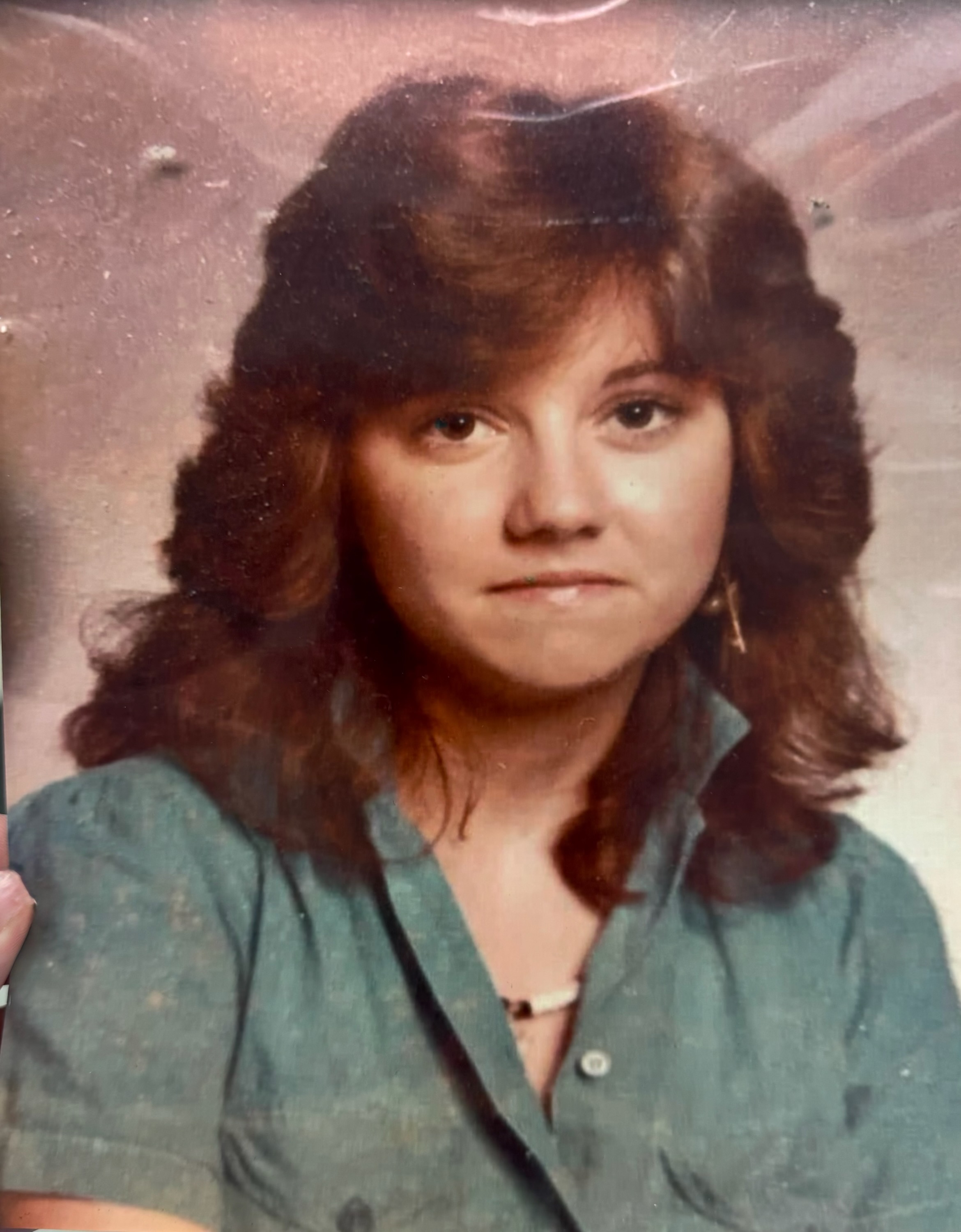
Leslie McCray, a 17-year-old young woman living in Jacksonville, Florida, was brutally murdered on December 24, 1985, after being abducted from her apartment in the Avondale neighborhood during the early morning hours of Christmas Eve. Leslie was a student at the University of North Florida who dreamed of becoming a model. Family members remembered her as a fun-loving, outgoing person with a wonderful sense of humor who enjoyed making others laugh. She was living in a duplex apartment on St. Johns Avenue and had her entire future ahead of her when a violent intruder entered her home. What began as an ordinary holiday season would become a devastating tragedy that haunted her family for more than four decades.
During the early morning hours of December 24, Leslie returned to her apartment after reportedly being seen at a nearby bar around 1:00 a.m. Her 20-year-old male roommate, who had also been romantically involved with her, was asleep in her bedroom.
According to testimony he provided decades later, he had been feeling ill, and Leslie had given him cold medicine before they went to sleep. At approximately 3:00 a.m., he awoke to find an unknown man standing near the bed with a knife. The intruder ordered him to lie on his stomach before binding his hands behind his back and securing his ankles with straps taken from furniture inside the apartment. The roommate recalled hearing Leslie pleading with the attacker not to cut her. He then heard the man escort her downstairs and out of the residence. Unable to immediately free himself, the roommate struggled against his restraints until he managed to escape and contact police at approximately 6:00 a.m.
Officers with the Jacksonville Sheriff's Office launched a search for Leslie, but their worst fears were realized only a few hours later. At approximately 9:00 a.m., her body was discovered along Old Middleburg Road near Wiley Road and a Jacksonville Electric Authority substation on the city's Westside, several miles from her apartment. She had been sexually assaulted, severely beaten, and stabbed multiple times. Investigators determined that a fatal stab wound to her neck had caused her death. The discovery established that Leslie had been forcibly taken from her home, transported to another location, and subjected to a violent attack before her body was abandoned near the roadway. Detectives collected physical evidence from the scene and arranged for forensic examinations, but the investigation faced significant obstacles almost immediately.
One of the earliest challenges involved the circumstances surrounding the abduction. Investigators found no obvious signs of forced entry at Leslie's apartment, raising questions about how the attacker had gained access. Her roommate became a central person of interest because he was the only known surviving witness to the intrusion. Detectives questioned his account, including his description of the attacker and the circumstances surrounding his escape. He maintained that an unknown man had entered the home, restrained him, and kidnapped Leslie. Another individual who eventually became significant to the case was David Nelson Austin, a man who had previously lived in the same duplex before Leslie moved into the residence. Although Austin was mentioned as a person of interest in the original investigation, authorities lacked sufficient evidence to charge him. Despite extensive investigative efforts, no arrest was made, and the case was suspended in 1986 after detectives exhausted their available leads.
For decades, Leslie's family endured the uncertainty of not knowing who had murdered her or whether anyone would ever be held accountable. Her mother, Sarah Adams, remained determined to obtain justice, even after being diagnosed with amyotrophic lateral sclerosis, commonly known as ALS, in 2010. The illness eventually affected her ability to speak, but it did not diminish her determination to keep her daughter's case alive. Leslie's cousin, Joey Bray, became an important advocate for the family, frequently speaking publicly about the murder and sharing memories of Leslie's personality and aspirations. The family sought renewed attention to the investigation over the years, including requests for additional forensic testing. In 2018, Leslie's mother submitted the case to Project: Cold Case, a Jacksonville-based organization dedicated to assisting families of unsolved homicide victims. A renewed awareness campaign in 2019 helped prompt the Jacksonville Sheriff's Office Cold Case Unit to reexamine the evidence.
The renewed investigation eventually produced the breakthrough that had eluded detectives for decades. Investigators worked with the Florida Department of Law Enforcement to evaluate evidence preserved from the original investigation using advancements in DNA technology. In April 2020, forensic testing identified a DNA profile matching David Nelson Austin, who was incarcerated in Michigan. The evidence included biological material recovered during Leslie's autopsy and preserved as part of a sexual assault examination. Cold case investigators subsequently traveled to Michigan, interviewed Austin, and obtained a direct DNA sample to confirm the forensic match. At the time, Austin was serving two life sentences following convictions for sexual offenses committed in Michigan. Those convictions stemmed from crimes committed years after Leslie's murder, and he had been imprisoned since 1991. Investigators also obtained DNA from Leslie's former roommate, allowing them to eliminate him as a suspect. The new scientific evidence dramatically changed the direction of the investigation and gave prosecutors a basis to pursue charges against Austin.
In May 2021, authorities obtained an arrest warrant charging Austin with second-degree murder and kidnapping. The investigation then advanced to a Duval County grand jury, which returned a more serious indictment on August 19, 2021. Austin was formally charged with first-degree murder, two counts of armed kidnapping, and one count of armed sexual battery. Officials announced the development during a news conference attended by members of Leslie's family, who had waited nearly 36 years for an arrest in the case. Because Austin was already incarcerated in Michigan, authorities had to arrange his extradition to Florida. That process took more than a year, and he was eventually transferred to Jacksonville and booked into the Duval County Pre-Trial Detention Facility in September 2022. Tragically, Leslie's mother died in 2023, having lived long enough to learn that a suspect had been identified and charged but not long enough to witness the eventual conviction.
The criminal proceedings culminated in October 2026, when Austin appeared before Duval County Circuit Judge Meredith Charbula for a bench trial, meaning the judge rather than a jury would determine the verdict. Prosecutors presented forensic testimony, original investigative evidence, and testimony from Leslie's surviving roommate. Assistant State Attorneys Lauren Anderson and Chyna Makarowski prosecuted the case, emphasizing that the DNA evidence recovered during Leslie's sexual assault examination connected Austin directly to the crime. The prosecution argued that the forensic findings were particularly significant because Austin had repeatedly denied knowing Leslie or having any contact with her. Investigators also established that Austin had lived in her apartment before she moved there, demonstrating his familiarity with the residence.
Austin's defense attorney, Joshua Beard, challenged the prosecution's interpretation of the evidence and questioned the reliability of the investigation after so many years. The defense raised concerns about missing evidence, unavailable witnesses, deteriorating memories, and whether the lengthy delay had compromised Austin's ability to defend himself. His attorneys also pointed to inconsistencies in the former roommate's statements and argued that investigators had focused on the wrong person during the original inquiry. Austin had denied involvement in Leslie's death, and his defense maintained that the prosecution had not established his guilt beyond a reasonable doubt. Austin elected not to testify during the trial, and the defense did not call any witnesses. Prosecutors countered that the DNA evidence, particularly its recovery from the sexual assault examination, established Austin's involvement regardless of the passage of time.
On October 22, 2026, Judge Charbula delivered the decision Leslie's family had waited decades to hear. David Nelson Austin was found guilty on all four counts: first-degree murder, two counts of armed kidnapping, and armed sexual battery. The verdict established his criminal responsibility for Leslie's abduction, sexual assault, and murder on Christmas Eve 1985. Family members became emotional in the courtroom as the guilty verdict was announced. Joey Bray later described the overwhelming relief of finally seeing someone held accountable after nearly 41 years of unanswered questions. Leslie's former roommate also expressed gratitude to the investigators and prosecutors who continued working on the case, acknowledging that both he and Leslie's family had spent decades living with the uncertainty surrounding her death.
On November 18, 2026, Austin returned to court for sentencing. Judge Charbula sentenced him to life imprisonment without the possibility of parole for Leslie's murder, ensuring that the conviction would carry a permanent prison sentence in Florida. During the hearing, Leslie's relatives addressed Austin directly and described the lasting devastation his crimes had caused. Joey Bray spoke about the experiences Leslie never had the opportunity to enjoy, including marriage, motherhood, and raising a family. Austin expressed condolences to Leslie's relatives and spoke about changes he claimed to have made during his years of incarceration. His statements did little to ease the pain of those who had spent decades seeking justice. At the time of sentencing, authorities were still determining whether Austin would remain in Florida or be returned to Michigan, where he had previously been serving life sentences with parole eligibility.
Leslie McCray's murder remains a devastating example of a life taken through an act of extreme violence and the lasting consequences experienced by surviving family members. For nearly 41 years, her loved ones continued seeking answers while investigators struggled to resolve a case that had initially produced insufficient evidence for prosecution. Advances in forensic DNA testing, the preservation of evidence, the efforts of cold case investigators, and the persistence of Leslie's family ultimately transformed a decades-old unsolved homicide into a successful prosecution. Although the conviction and life sentence cannot restore the future Leslie lost or erase the suffering endured by her relatives, the judicial outcome finally established accountability for her murder. Her story is remembered not only for the brutality of the crime committed on December 24, 1985, but also for the determination of those who refused to allow her death to remain unanswered.