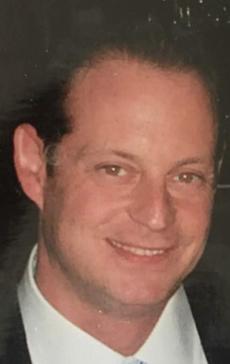
Reggie Lee Holman was a 25-year-old Black / African American man whose life was cut short on a Sunday evening in Boston’s Roxbury neighborhood. The winter of 2004 was just beginning when violence shattered the community, leaving a family without a loved one and a case that remains a painful, unanswered question more than two decades later. While the public record of Reggie’s life is sparse, his death is a stark reminder of the dozens of unsolved homicides in the city, each representing a person whose story was silenced before its time.
On December 5, 2004, at approximately 7:45 p.m., officers from the Boston Police Department were called to the intersection of Degauthier and Eustis Streets. The area, a mix of residential buildings and local businesses, became the scene of a tragedy. Upon arrival, police discovered Reggie suffering from gunshot wounds. He was pronounced deceased at the scene, his life ending on the cold pavement of a neighborhood street.
The Office of the Chief Medical Examiner later conducted an autopsy and officially ruled the death a homicide.
The investigation into Reggie’s murder was launched immediately by the Boston Police Department’s Homicide Unit. Detectives would have canvassed the area for witnesses and searched for physical evidence, working to piece together the final moments of Reggie’s life. Who was he with? What were the circumstances that led to the fatal encounter? These are the questions that investigators have pursued, yet the answers have remained elusive. In the years that followed, the case grew cold, and no arrests have ever been announced.
The intersection of Degauthier and Eustis Streets is part of a historic neighborhood that has seen generations of change. It is an area with a deep sense of community but one that has also contended with periods of violence. For a homicide to occur on a Sunday evening suggests a brazen act, one that someone in the community may have witnessed or heard. Fear of retaliation, a lack of trust, or the simple tragedy of not seeing enough to identify a perpetrator can often stall investigations, leaving police to rely on a future tip or a new look at old evidence.
As years turned into decades, Reggie’s case was placed on the Boston Police Department’s list of unsolved homicides. This official acknowledgment ensures that he is not forgotten by the department, but for his family and friends, the lack of resolution is a continuous source of pain. The silence surrounding his case is profound; there are no public appeals from his family, no news articles detailing their grief or their memories of him, and no vigils or anniversary memorials covered by the press. He exists in public records only as a name, an age, and the victim of an unsolved crime.
The Boston Police Department continues to list the murder of Reggie Lee Holman as an open and active investigation. Detectives believe that someone, somewhere has the information that could finally bring justice for Reggie. Even a small, seemingly insignificant detail could be the key to breaking the case open. The department urges anyone with information to come forward, emphasizing that the passage of time does not diminish the need for answers or the possibility of solving the crime. The case remains a stark, unresolved chapter in the city's history, waiting for a witness to provide the final piece of the puzzle.