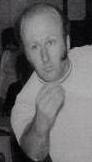
On a cold winter night in Boston, a man named Paul Bartel was shot and killed, his life ending on a residential street in the city’s largest neighborhood. More than two decades later, key questions about his murder remain unanswered. Who was he? Why was he targeted? Who was the person who pulled the trigger and vanished into the night? With very little information ever released to the public about Paul’s personal life, his case is a stark reminder of the human stories that can be lost to time and violence, leaving only the unyielding facts of a crime and the lingering hope for justice.
The attack happened on Saturday, February 6, 1999. That evening, Boston Police Department officers were called to 88 Bailey Street in Dorchester following a report of a person shot. When they arrived, they found Paul Bartel. He was pronounced deceased at the scene.
The Office of the Chief Medical Examiner later confirmed that the manner of death was a homicide, the result of the gunshot wound he had sustained.
Detectives with the Boston Police Department's Homicide Unit were tasked with the investigation. They would have canvassed the Dorchester neighborhood, a dense community of triple-decker homes and small businesses, searching for witnesses and any shred of evidence that could point them toward a suspect. They would have worked to piece together Paul’s final hours, trying to establish a timeline and uncover a motive for the fatal shooting. In 1999, the city of Boston recorded 31 homicides, a significant decrease from the peak of violence earlier in the decade, but each case represented a unique tragedy for the community.
Despite the immediate investigation, Paul's case grew cold. No arrests were ever announced, and no public information was released about potential suspects or the circumstances that led him to Bailey Street that night. For years, his name has remained on the list of Boston's unsolved homicides, a file waiting for the one crucial tip that could change everything. For the families of victims, the silence surrounding a cold case can be an enduring pain, a lack of closure that compounds their grief.
The Boston Police Department’s Homicide Unit includes a dedicated Cold Case Squad that reviews unsolved murders, hoping that new technology or a witness's change of heart can provide a breakthrough. Advances in forensic science, particularly DNA analysis, have become a powerful tool in resolving decades-old crimes. In a testament to this persistence, Boston police announced in early 2026 that they had solved the May 1999 murder of Caryn Bonner, another Dorchester homicide from the same year as Paul's. DNA evidence was instrumental in identifying her killer, offering a glimmer of hope that other cold cases from that era might also one day be solved.
As of today, the murder of Paul Bartel remains an open and active investigation. Detectives believe that even after so many years, someone in the community has information that could be vital to understanding what happened and holding the person responsible accountable. Allegiances shift and fears fade over time, and the police urge anyone with knowledge of the crime, no matter how insignificant it might seem, to come forward.
The Boston Police Department Homicide Unit can be contacted at (617) 343-4470. For those who wish to provide information anonymously, the Crime Stoppers Tip Line is available at 1-800-494-TIPS.