Crime Solvers Central
307 Cases Solved. Advancing justice for missing persons, unsolved homicides, unidentified and unclaimed remains.

Case Description

Any updates on this case? Let us know!
Summary based on 6 sources
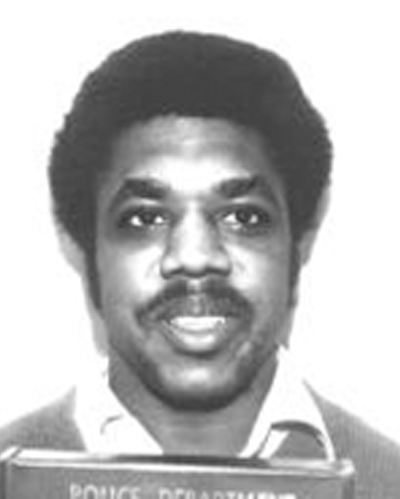
Anthony "Tony" Adams was a man of conviction and community in Salt Lake City, Utah. At 25 years old, the African American bus driver was a passionate activist, dedicating his time to the Socialist Workers Party (SWP), the NAACP, and advocating for gay rights. Friends and fellow activists remember him as a bright and engaged individual who wasn't afraid to make his voice heard, often writing letters to the editor of local newspapers to discuss important social and political issues. He protested against apartheid in South Africa and was a visible presence in Salt Lake City’s burgeoning LGBTQ community.

The vibrant life of Tony Adams came to a brutal end in early November 1978. After he failed to show up for a political rally, two concerned friends from the SWP went to check on him at his apartment at 125 1st Avenue in the Avenues neighborhood on November 6. They found the door ajar and the apartment in disarray. In the bedroom, they made a horrifying discovery: Adams's naked body was crumpled between a television set and a radiator. He had been viciously stabbed multiple times in the throat, neck, and chest, with one wound cutting deep into the muscles along his spine.

Salt Lake City Police Department investigators descended on the scene, case number 1978-86442. The evidence suggested a violent struggle that began while Adams was in the bathtub. A bloody ring around the tub, a 15-inch gouge on the wall above it, and bloody handprints on a towel rack pointed to the start of the attack. The struggle appeared to have moved into the bedroom, where blood was pooled on the bed and splattered on the wall. A large, wooden-handled butcher knife stained with blood was found on a pile of sheets. During a second search, investigators found a paring knife that also appeared to have dried blood on it inside a kitchen drawer. Cash was missing from Adams's wallet, but police could not confirm if robbery was the primary motive.

The investigation was challenging from the start. Detectives canvassed the apartment building but found few residents who knew Adams well. They interviewed friends, co-workers, and colleagues, and scoured some 200 names in his address book for leads. The detective who spent the most time on the case, Ron Millard, later recalled the investigation was hampered by an early reassignment of the original detectives. He believed the crime was likely a "bar pickup-turned-bloody," noting a witness saw Adams at the Comeback Bar with an unknown man the weekend he was killed. Millard theorized the presence of a second potential weapon found in the kitchen suggested a spontaneous crime of passion rather than a premeditated act.

Adams's friends and fellow activists, however, feared a more sinister motive. Given his identity as a Black, gay, socialist man, many believed he was targeted for his politics or sexuality. Syd Stapleton, an SWP official from New York, called the killing a political "assassination." In the weeks following the murder, leaders from the local gay community met with the police chief to express their fear of growing violence, worried that a "slasher" might be targeting them. The SWP accused the police of attempting to intimidate them by demanding a full membership list during the investigation.

Decades passed with no resolution. A significant break seemed to appear in 2010 when new technology matched a fingerprint from the crime scene to Mickey Henson. At the time of the murder, Henson was a 16-year-old woman living on the streets. However, she had died in 2004, and with no other evidence to connect her to the crime, investigators could not definitively name her as a suspect. The case suffered another major setback when it was revealed that crucial forensic evidence—blood samples sent for testing decades earlier—had gone missing from storage. This lost evidence, if found, could potentially be tested with modern DNA analysis.

As of December 2023, more than 45 years after he was killed, the murder of Anthony Adams remains unsolved, and there are no official suspects. The U.S. Department of Justice officially closed its file on the case in June 2020, citing insufficient evidence to identify the assailant. For the family and friends who lost a passionate advocate and loved one, the question of who killed Tony Adams, once spray-painted across Salt Lake City, still echoes without an answer. The Salt Lake City Police Department asks anyone with information about the murder of Anthony Adams to call them at 801-799-3000.