Crime Solvers Central
302 Cases Solved. Advancing justice for missing persons, unsolved homicides, unidentified and unclaimed remains.

Case Description

Any updates on this case? Let us know!
Summary based on 2 sources
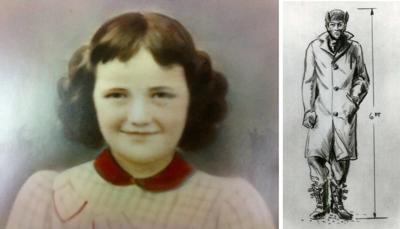
In the spring of 1971, Christine Walkowiak was a 16-year-old girl living in the Glebe, a historic and close-knit neighbourhood in Ottawa, Ontario. Like many teenagers, she balanced school with a part-time job on Carling Avenue. It was a time when a youth culture of freedom and mobility was blossoming across Canada, and for many young people, hitchhiking was a common and accepted way to get around. Christine was known to occasionally thumb a ride to get where she was going.

On the evening of Thursday, May 13, 1971, Christine finished her shift at work but never made it back to her family's home in the Glebe. When she failed to return, she was reported missing. For three months, her family and friends waited with dwindling hope as the vibrant Ottawa spring turned into a long, anxious summer. The search for the missing teenager came to a devastating end on Sunday, August 15, 1971. A group of hikers, making their way through a wooded area near the rural community of North Gower, south of Ottawa, made a grim discovery. They found the decomposing remains of a young female, soon identified as Christine Walkowiak.

The investigation into Christine’s death revealed a brutal and violent end to her young life. An autopsy determined that she had been sexually assaulted and killed with a heavy, sharp weapon, such as an axe or a machete. The attack was ferocious, leaving her with a fractured skull and jaw. The discovery sent a shockwave through the capital region, a place that was then, as now, considered a relatively safe city. The case became a priority for police, who were faced with the difficult task of piecing together the final hours of Christine's life.

Detectives noted her habit of hitchhiking as a likely point of vulnerability, a common thread in an era before the dangers were fully understood. The investigation, however, struggled to gain traction. In the decades that followed, Christine's murder became one of Ottawa's most haunting cold cases. Police would later draw parallels between her death and two other unsolved homicides from that era. Two years later, in August 1973, the body of 16-year-old Betsy Lancaster was found in a landfill in Hull, Quebec, just across the river from Ottawa. Then, in November 1979, the remains of 15-year-old Lori Zwicker were discovered in a creek in Nepean. Police noted that all three teenage girls were known to hitchhike, and all three had suffered fractures to their skulls and jaws, a chillingly specific similarity.

Despite this potential pattern, no definitive link was ever publicly confirmed, and no suspect was ever charged in connection with Christine’s murder. The years turned into decades, and while the city of Ottawa grew and changed, the file on Christine Walkowiak's homicide remained open, a quiet testament to a life cut short and a crime unsolved. There is no public record of memorials or rewards offered in the case.

As of a report in December 2025, the 1971 killing of Christine Walkowiak is still officially classified as an unsolved murder. The identity of the person who committed this horrific act remains unknown, and the case is a cold, silent file in the archives of the Ottawa Police Service. More than half a century later, the questions of who was responsible for the violence inflicted upon a 16-year-old girl in a quiet wood, and why, remain unanswered.