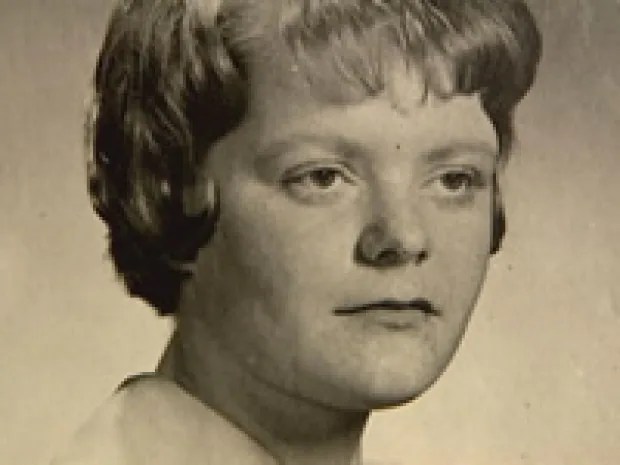
In the summer of 1973, Huguette Boucher-Villeneuve was a 34-year-old woman living in the vibrant, sprawling metropolis of Montreal, Quebec. It was a city still basking in the afterglow of Expo 67, a place of cultural and social change. But the decade also held a darker side, a period in Quebec’s history marked by a troubling number of violent, unsolved crimes, particularly against women. Huguette’s life, about which few public details remain, was tragically drawn into this grim chapter of the province’s past.
The last time anyone is known to have seen Huguette alive was on the night of Tuesday, July 17, 1973. She was in the Montreal area, her home, going about her evening. What happened in the hours that followed remains a mystery that has endured for more than half a century. The next morning, as the sun rose around 6:00 a.m. on Wednesday, July 18, a passerby made a devastating discovery nearly 70 kilometers away from the city.
In the rural municipality of St-Thomas de Joliette, a quiet farming community in the Lanaudière region known for its sandy soils and tobacco fields, Huguette’s body was found. She had been left along the edge of Rang Madon, a quiet country road. The Sûreté du Québec, the provincial police force responsible for the jurisdiction, was called to the scene. A forensic examination quickly confirmed the worst: Huguette Boucher-Villeneuve had been the victim of a homicide. She had been taken from the city and left in the countryside, her life violently cut short by an unknown assailant.
The investigation into Huguette’s murder was launched immediately by the Sûreté du Québec. In 1973, police work relied on traditional methods of investigation, without the benefits of DNA technology or the extensive digital databases available to modern detectives. The case was one of many that detectives faced during a decade when Quebec saw a significant spike in homicides. Despite their efforts, the trail went cold. No suspects were publicly identified, and no arrests were ever made. Huguette’s murder became another statistic in a string of unsolved cases from that era that left families grieving without answers and communities on edge.
Over the years, her file has remained open, passed down through generations of investigators at the Sûreté du Québec. The force has since established a dedicated cold case unit, which was significantly expanded in 2018 to apply modern techniques to hundreds of unresolved deaths dating back decades. These investigators periodically review cases like Huguette’s, hoping that a fresh look, a forgotten memory, or a scientific breakthrough might finally provide the missing piece of the puzzle. The challenge in these historical cases is immense, with witnesses who may have passed away, memories that have faded, and physical evidence that may have degraded over time.
As of May 2026, the murder of Huguette Boucher-Villeneuve remains an active and unsolved cold case. Her story was featured in a roundup of Montreal-area cold cases, a public reminder that behind the case number and the date is a woman whose life had meaning and whose death caused irreparable pain. The hope is that someone, somewhere, still holds a crucial piece of information. Perhaps someone saw a vehicle on Rang Madon that night, or remembers a conversation from long ago that seemed insignificant at the time. The Sûreté du Québec continues to ask for the public’s help, believing that even after so many years, justice for Huguette is still possible.
Any person with information regarding the homicide of Huguette Boucher-Villeneuve is urged to contact the Sûreté du Québec's Centrale de l’information criminelle at 1-800-659-4264.