For nearly four decades, she was known only as "Unknown Victim 2," a nameless girl whose body was found discarded in a wooden chest. It wasn't until April 2017 that she was finally given her name back: Maria Dolores Brava. A 17-year-old female from the Saint-Michel neighbourhood of Montreal, she was known to some as "Lolita." Her story is a haunting glimpse into a time in Quebec's history when numerous young women and girls vanished or were killed, their cases growing cold with the passing years.
On the evening of Friday, May 18, 1979, Maria was getting ready for a night out. Like many teenagers of the era, she was headed to a disco in Montreal's West Island, a popular destination for music and dancing. She left her home on 21st Avenue and was never seen alive by her family again. For two weeks, her whereabouts were a mystery. Then, on Saturday, June 2, 1979, the search came to a devastating and perplexing end in an industrial park miles from her home.
Around 1:30 p.m. that day, a truck driver for a company called Lansing Bagnall in the city of Dorval made a grim discovery. Near a dumpster at 10255 Côte-de-Liesse, he found a wooden chest, approximately three feet by two feet. Inside lay the naked body of a young woman. Investigators from the Montreal Urban Community (MUC) police, Richard McGuinnis and Gilbert Gagnon, were called to the scene. The victim had no obvious signs of violence, but there was blood around her face, leading them to speculate she had been strangled. An autopsy was performed, but the official cause of death remained inconclusive, though the coroner agreed that strangulation was a strong possibility.
With no identification, the young woman became a Jane Doe. Police records described her as 5'4" and 122 pounds, but for 38 years, that was all anyone knew. Her case was filed away, one among a disturbing number of unsolved homicides involving young women in and around Montreal during the 1970s. The hope of identifying her faded with each passing year, and the trail for her killer went cold. Her file carried the designation "Unknown Victim 2," a stark label for a life cut short.
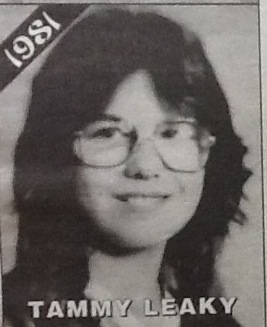
The location where Maria’s body was found became tragically significant less than two years later. On March 12, 1981, the body of 12-year-old Tammy Leakey was discovered off Lindsay Street in Dorval, less than a mile from where the wooden chest had been abandoned. Tammy had also been strangled. While police have not officially linked the two murders, the proximity in both time and location remains a chilling coincidence in the landscape of Quebec's cold cases.
Then, in April 2017, a breakthrough occurred, and "Unknown Victim 2" was identified as Maria Dolores Brava. The specific details of how investigators finally made the identification after so many decades have not been publicly released. The news brought a name to the victim but did not bring her killer to justice. Her homicide remains unsolved, a case file passed from the MUC police to its successor, the Service de police de la Ville de Montréal (SPVM).
As of June 2017, Maria’s case was officially indexed as one of Quebec's unsolved murders from the 1970s, with no suspects ever having been arrested. The investigation is now in the hands of the SPVM's cold case unit, which was formed in 2019 to tackle the hundreds of unsolved murders in the city. For investigators, solving a crime from so long ago presents immense challenges, including the potential loss or degradation of evidence over time. For the family of Maria Dolores Brava, the decades of not knowing who she was have been replaced by the ongoing pain of not knowing who took her life.