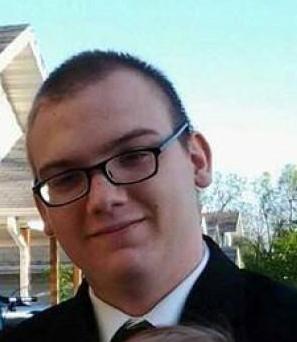
In a quiet, new subdivision in Springfield, Missouri, the Feeney family was seen by many as picture-perfect. John (Jon) Feeney was a high school science teacher, and his wife, Cheryl, aged 35, was a registered nurse. They had two children: a bright six-year-old boy named Tyler Feeney and his 18-month-old sister, Jennifer. They lived in a comfortable home on West Nottingham Street, building a life that seemed idyllic from the outside.
The illusion of suburban peace was shattered on Monday, February 27, 1995. When Cheryl failed to show up for her shift at a local medical center, a concerned coworker went to the house with Jon’s mother to check on the family. Inside, they walked into a scene of unimaginable horror. Cheryl and her two young children had been brutally murdered in their bedrooms. Cheryl and Tyler had been bludgeoned to death, and a pillow was found placed over Tyler’s face. Little Jennifer had been strangled in her crib with a cord. The house was in disarray, with drawers pulled out and their contents dumped on the floor, but investigators would soon question if the messy scene was a genuine burglary or a deliberate attempt to mislead them.
At the time of the discovery, Jon Feeney was 90 miles away, attending a weekend teachers' conference at the Tan-Tar-A Resort at the Lake of the Ozarks. He told authorities he had last spoken to his family on Saturday. Investigators from the Greene County Sheriff's Office and the South-Central Missouri Major Case Squad were confronted with a crime scene that was both brutal and bizarre. Family photographs had been turned to face the wall, the glass panel on the front door was painted over from the inside, and the words "die" and "bitch" were reportedly splattered in paint on a wall. The heat on the master bedroom’s waterbed had been turned to its highest setting, which accelerated the decomposition of Cheryl’s body and complicated efforts to pinpoint an exact time of death.
Despite his alibi, suspicion quickly fell on Jon Feeney. The drive from the resort to his home was only about 90 minutes each way, leaving a window of time during the night when he was unaccounted for. The investigation into his life revealed he had engaged in numerous extramarital affairs and had taken out a significant life insurance policy on his wife just months before the murders. In April 1996, more than a year after the killings, Jon Feeney was indicted on three counts of first-degree murder.
The trial began in September 1996. The prosecution built a circumstantial case, arguing that Jon had driven home from the conference, killed his family to gain freedom and insurance money, staged the scene, and returned to the resort before morning. However, the defense pointed to a profound lack of physical evidence connecting Jon to the crime. Furthermore, they presented troubling evidence that suggested another person could be responsible. Shoe prints left in paint at the scene were reportedly a size smaller than Jon's feet, and unidentified hairs were recovered from Cheryl's nightgown.
The most shocking revelation came from Tyler's autopsy. The six-year-old was found to have contracted hepatitis B, a sexually transmitted disease that neither of his parents had. This discovery raised the horrifying possibility that Tyler was being abused by an unknown individual, providing a powerful alternative motive for the murders—that someone had killed the family to silence the boy. After deliberating for less than five hours, the jury acquitted Jon Feeney of all charges on October 5, 1996.
Following his acquittal, Jon Feeney collected on the insurance policies. His in-laws filed a wrongful death lawsuit against him but later dropped it. The murders of Tyler, Jennifer, and Cheryl Feeney officially became a cold case, leaving a cloud of suspicion and unanswered questions over the Springfield community. As of recent podcast coverage from 2025 and 2026, the case remains unsolved, a tragic and deeply disturbing mystery with no justice for a mother and her two innocent children.