Crime Solvers Central
302 Cases Solved. Advancing justice for missing persons, unsolved homicides, unidentified and unclaimed remains.

Case Description

Any updates on this case? Let us know!
Summary based on 8 sources
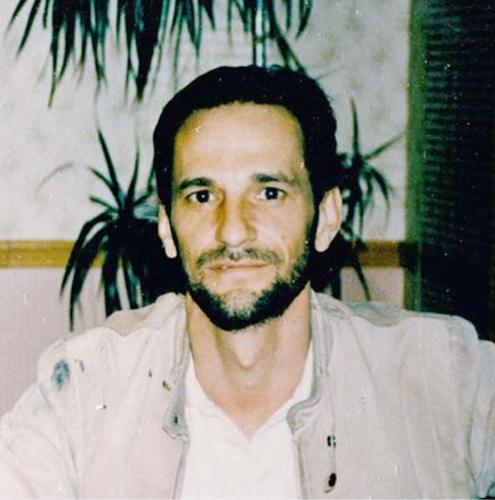
In the weeks leading up to Christmas in 1990, Robert Wagner confided a chilling premonition to his brother-in-law, Roy Bartlett. Wagner, a 31-year-old man known as Robbie to his family, predicted he would be dead in three weeks. He gave Bartlett his Lincoln Town Car but offered no explanation for his grim forecast. On January 22, 1991, his words became a tragic reality. Robert, a male welder, was found brutally murdered in his third-floor apartment on Woodside Avenue in Cambridge, Ontario.

A concerned friend discovered Wagner's body after he failed to show up for his job at Babcock & Wilcox and didn't answer his phone. He had been stabbed multiple times in a vicious attack that police believe occurred sometime between the late afternoon of January 21 and noon on January 22. The assault was so severe that his family had to hold a closed-casket funeral. No weapon was ever recovered from the scene at apartment 320, leaving a painful void for his loved ones, who were originally from Brantford.

The Waterloo Regional Police investigation soon uncovered a secret side to Wagner's life. Three months after the murder, investigators revealed that he was a small-time drug dealer, selling hashish and cocaine. The prevailing theory was that he was likely killed by one of his customers. However, his family has always believed his involvement in the Cambridge drug scene was far more serious than the police acknowledged. His sister, Phyllis Bartlett, said he was "really deep" into it and had told her husband he was "tripping on other people’s toes." She believes it was a professional "hit." This suspicion was later bolstered when drugs were found hidden in the wheels of the car he had given to his brother-in-law after the vehicle was scrapped.

The investigation was initially hampered by a record number of homicides in the region that year, and the case went cold by the summer of 1991. Two detectives were assigned full-time in 1992, managing to eliminate some co-workers, friends, and customers as suspects, but the trail eventually evaporated. The case lay dormant for years, a source of constant pain for Wagner’s mother, Marilla, who persistently pushed police for answers.

In 1999, the case was officially reopened based on new information. Investigators Stefan Eszes and Peter Osinga were assigned, and a $10,000 reward was offered for information leading to an arrest and conviction. This new push generated a significant lead suggesting that more than one person may have participated in the killing. Wagner's sister, Brenda Kants, recalled police mentioning three possible suspects around that time. Despite the renewed effort, no arrests were made. The family has expressed frustration over the years, feeling the police could have done more. "It's been so long, and honestly, it's Cambridge, and people talk," Kants said in an interview. "I'm thinking people know something and someone's hiding it."

Decades later, the murder of Robert Wagner remains one of Ontario's most haunting cold cases. Police have acknowledged that specimens from the crime scene could potentially yield new results with advancements in forensic technology. In March 2025, Waterloo Regional Police Inspector Mark Crowell stated that all unsolved homicide investigations undergo recurring reviews, and as technologies evolve, cases are continually reassessed. For a family that has waited more than thirty years for justice, there is a lingering hope that someone will finally break their silence. "They were out to get him, and they got him," Phyllis Bartlett said, echoing the fear her brother lived with in his final days. The $10,000 reward for information remains available.