Crime Solvers Central
302 Cases Solved. Advancing justice for missing persons, unsolved homicides, unidentified and unclaimed remains.

Case Description

Any updates on this case? Let us know!
Summary based on 3 sources
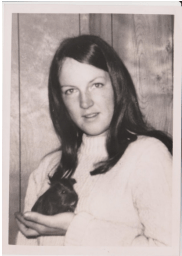
Joanne Lee Reynolds was a 24-year-old White woman whose life was tragically cut short on February 16, 1980, when she was brutally murdered inside her rented cottage at 1185 Ten Rod Road in North Kingstown, Rhode Island. A lifelong resident of the area, Joanne had graduated from North Kingstown High School in 1973 and was working toward building a future for herself. She had previously worked as a receptionist at a law office before leaving that position to pursue her education. She was attending Rhode Island Junior College, where she studied music, and reportedly hoped to continue her education at the University of Rhode Island. Joanne had aspirations of becoming a singer and was described by those who knew her as a gentle young woman. Her future appeared full of possibilities, but those dreams were destroyed during a violent attack that would become one of North Kingstown's most enduring unsolved homicide investigations.

On the night before her body was discovered, Joanne had reportedly spent time with a friend before returning to her residence, a small cottage situated behind a larger, two-story apartment building. A neighbor reported seeing her return home alone. Investigators would later determine that she was killed sometime between approximately 12:30 a.m. and 10:00 a.m. on February 16. That morning, Joanne's landlord arrived at her cottage for a previously scheduled meeting. When he knocked and received no response, he became concerned and entered the residence. Inside, he discovered Joanne's lifeless body lying in bed. She had suffered more than a dozen stab wounds, and investigators believed the attacker had used a long-bladed hunting knife. The wounds and damage to the bedsheets suggested that Joanne had been attacked while lying in bed, possibly while asleep. The brutality of the assault was particularly disturbing because there was little evidence of a struggle, raising questions about whether she had any opportunity to defend herself.

The circumstances surrounding the murder immediately presented investigators with a troubling mystery. There were no obvious signs of forced entry, and nothing significant appeared to have been stolen from the residence. Although the door lock could reportedly be pried open relatively easily, investigators initially suspected that Joanne may have known the person responsible. Detective Lieutenant Louis Narciso expressed the belief that the killer was likely someone familiar to her, particularly because Joanne was known to be careful about keeping her doors locked. Investigators also considered the possibility that the perpetrator had watched her movements before the attack. Neighbors reported that they had not heard screams, suspicious noises, or any disturbance during the hours when the killing was believed to have occurred. The secluded arrangement of the cottages behind the larger apartment building may have allowed the attacker to approach and leave without attracting attention. Investigators found no murder weapon at the scene, and the available physical evidence offered few immediate clues about the killer's identity.

North Kingstown detectives began interviewing Joanne's friends, acquaintances, neighbors, and others who might have encountered her during the days leading up to her death. More than 25 people were reportedly questioned during the first several days of the investigation, including the landlord who discovered her body. At least a dozen individuals eventually underwent polygraph examinations, but the reported results did not establish deception or provide investigators with the breakthrough they needed. Detectives worked to reconstruct Joanne's final movements and determine whether she had experienced any troubling encounters or personal disagreements. They also examined the possibility that the attack had been committed by someone she encountered socially. Despite the extensive interviews, investigators struggled to establish a motive. There was no clear evidence of robbery, and the circumstances suggested a deeply personal or deliberately targeted act of violence, although neither theory could be conclusively established.

Several days after Joanne's murder, authorities in Barrington, Rhode Island, received a disturbing telephone call from a man believed to be approximately 23 or 24 years old. According to reports, the caller calmly claimed responsibility for a murder in North Kingstown and indicated that he might kill again because he was feeling violent. The call immediately attracted the attention of investigators working Joanne's case, and detectives attempted to determine whether the caller possessed information that only the actual perpetrator would know. However, the man reportedly could not provide details beyond information already publicly available. Investigators consequently concluded that the confession was not credible. Although the telephone call initially appeared to offer a possible lead, it ultimately failed to bring authorities closer to identifying Joanne's killer.

In 1981, approximately a year and a half after the murder, investigators pursued another potentially significant development involving hair evidence recovered from Joanne's bed. The samples were submitted to the FBI laboratory for comparison with hair obtained from a man who had reportedly been seen at the same local bar as Joanne. This individual also attracted investigative attention because of a suspected connection to another Rhode Island homicide. Laboratory examination reportedly found similarities in the color and texture of the hair samples, but the findings did not establish a conclusive match. Investigators subsequently obtained a search warrant for the man's apartment, hoping to uncover additional physical evidence connecting him to Joanne's death. The search did not produce evidence sufficient to establish his responsibility. Although the man was investigated as a possible suspect, publicly available records do not establish that he was charged in connection with Joanne's murder. With no definitive forensic evidence and no reliable eyewitness identification, the investigation again reached an impasse.

The mystery surrounding Joanne's death became even more unsettling several years later when another young woman, Peggy Flynn, moved into the same apartment complex on Ten Rod Road. In January 1984, Peggy was murdered, and her body was discovered in a wooded area of North Kingstown. Her family had been aware of Joanne's unsolved murder, and Peggy's sister later recalled warning her against living in the complex because of the earlier tragedy. Investigators arrested Raymond E. McWilliams in connection with Peggy's killing, and he subsequently entered a no-contest plea to a murder charge. He was sentenced in August 1984. The fact that two young women associated with the same apartment property had been murdered only a few years apart raised understandable concerns and renewed attention to Joanne's case. However, the crimes remained legally separate, and there has been no publicly established evidence proving that McWilliams was responsible for Joanne's death. No conviction in Peggy's case resolved the questions surrounding Joanne's murder.

As the years passed, Joanne's case remained open but increasingly difficult to investigate. Witnesses grew older, memories faded, and advances in forensic technology did not produce a publicly announced identification of her killer. Meanwhile, the North Kingstown Police Department experienced significant institutional changes during the early 1980s. A Rhode Island State Police investigation into departmental misconduct eventually led to a 1983 grand jury report recommending improvements in police training, investigative procedures, and evidence handling. Although these findings raised broader concerns about the department's operations during that period, no publicly established evidence demonstrates that those problems directly compromised Joanne's homicide investigation. The apartment buildings associated with her death were eventually demolished, removing the physical setting of the crime but not the questions that continued to trouble her family and the community.

On October 18, 2012, more than three decades after Joanne was murdered, the North Kingstown Police Department issued a public appeal for assistance in solving the case. Detective John Urban took an unusual approach for the time by creating a Facebook page dedicated to Joanne's memory and the investigation into her death. Rather than limiting the appeal to people who had witnessed something suspicious, investigators sought information about virtually every aspect of her life. They wanted to hear from former classmates, friends, coworkers, acquaintances, and anyone who remembered where Joanne spent time or whom she associated with before her murder. Detective Urban emphasized that information appearing insignificant to an individual might help investigators identify relationships, reconstruct events, or uncover previously overlooked connections. The department assured potential witnesses that their identities could remain anonymous, hoping that the passage of time might encourage someone who had previously remained silent to come forward.

The renewed public attention brought Joanne's story to another generation and demonstrated that investigators had not abandoned the search for answers. Her case continued to appear in discussions of Rhode Island's longstanding unsolved homicides, and the circumstances of her death remained a source of concern among those familiar with the history of North Kingstown. In December 2025, renewed reporting about Peggy Flynn's murder also revisited Joanne's case, examining the earlier investigative leads and the unsettling history of the Ten Rod Road property. That reporting confirmed that no suspects had been publicly identified through a successful prosecution and that no arrests had been announced in connection with Joanne's death. Despite investigative attention spanning decades, authorities had not publicly established who entered her cottage, why she was targeted, or what happened during her final moments.

More than 46 years after Joanne Lee Reynolds was killed, her murder remains an unsolved homicide. No one has been publicly charged, tried, or convicted for taking her life, and the available evidence has not produced a conclusive identification of the perpetrator. The North Kingstown Police Department has continued to encourage anyone with information about Joanne's personal relationships, activities, or circumstances surrounding February 16, 1980, to contact its Detective Division at 401-294-3316. Joanne's story is more than an account of a violent crime; it is the story of a young woman pursuing an education, nurturing her love of music, and preparing for a future that she never had the opportunity to experience. Her death devastated those who loved her and left a community confronting unanswered questions about how such a brutal attack could occur without a witness coming forward with the information needed to solve it. The central mystery remains unchanged: someone entered Joanne's home during the early morning hours, stabbed her repeatedly, and escaped without being brought to justice. Until the person responsible is identified, her case remains an enduring reminder of a life taken far too soon and a family still deserving of answers.