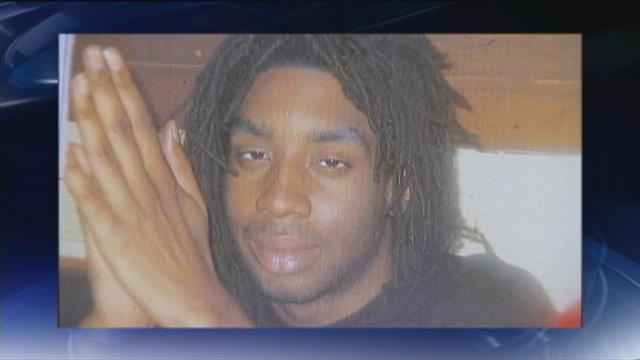
In the spring of 1986, the life of 18-year-old Jason B. McColley, a young Black man, was cut tragically short in Atlanta, Georgia. His death was one of a series that cast a shadow over the city, revealing a pattern of violence that targeted some of its most vulnerable residents. The initial response to these killings was muted, with the deaths of young, poor Black men often dismissed as street violence, their stories barely registering in the news.
On April 6, 1986, McColley’s body was discovered in an alleyway near Kennesaw Avenue in northwest Atlanta. The scene was disturbing; he had been stabbed multiple times in the neck. Tragically, this was the same location where another man, 31-year-old Alvin George, had been found dead with similar injuries just weeks earlier, on March 20. Investigators immediately noted the chilling similarities between the two cases—the location, the cause of death, and the fact that both victims were found partially undressed—pointing to the work of a single, predatory killer.
Atlanta police began to connect McColley's murder to a string of other unsolved homicides that had occurred between December 1985 and October 1986. The victims were all young Black men, and their bodies were found in alleys, parks, and abandoned buildings. The other victims were identified as Richard Williams, 24; Curtis Lee Brown, 21; George Willingham, 30; and Daryl Williams, 20. A grim pattern emerged: five of the six men, including McColley, had been found nude from the waist down, suggesting the killings occurred after a sexual encounter. Some of the men were known to be involved in street-level sex work.
The investigation gained crucial momentum when witnesses reported seeing McColley with a large, stocky man known in the area as "Big Mike" on the night he was killed. This description matched a man seen with another victim, Curtis Brown, before his death. The tips led detectives to Michael Devern Terry, a 26-year-old who lived in a rooming house on Kennesaw Avenue, near where the bodies of McColley and George were found. Terry, who also went by the name Michael James Potts, was described by those who knew him as a loner.
On November 26, 1986, police arrested Terry at the tire recapping shop where he worked in Lithonia. During questioning by Detective Marcellus Head, Terry confessed to killing all six men. He told police the deaths occurred after he had sex with the men and became angry during disputes over money. Terry claimed he acted in self-defense, alleging the men had threatened him. However, the consistent method of operation, witness statements, and physical evidence pointed to a calculated series of murders rather than acts of self-defense.
A Fulton County grand jury indicted Michael Terry on six counts of murder on December 5, 1986. The courts decided to try the cases separately. In February 1987, Terry was convicted for the murders of Richard Williams and Curtis Brown and received two consecutive life sentences. He was later tried and convicted for the murder of George Willingham, receiving a third life sentence in April 1988 after the jury deadlocked on the death penalty. To avoid further trials, in June 1988, Terry pleaded guilty to the remaining three murders, including that of Jason McColley. He received additional consecutive life sentences for these killings.
The conviction of Michael Devern Terry brought a legal end to a series of crimes that had taken six young lives. The case highlighted the dangers faced by marginalized communities whose deaths often go overlooked. Jason McColley was more than a statistic in a serial killer's spree; he was a teenager, a son, and a young man whose future was stolen from him. His case, along with those of the other five victims, serves as a solemn reminder of the lives lost and the importance of seeking justice for every member of a community. As of his last convictions, Michael Terry is serving multiple life sentences in prison.