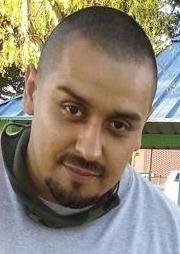
Frank Floyd Reed was a 36-year-old White man whose life came to a violent end on November 12, 1978, in downtown Los Angeles, California. Reed was fatally stabbed in a parking area at 237 East Fifth Street, becoming one of several victims in a terrifying series of killings that swept through the city's Skid Row district during the final months of 1978. His murder was linked to an unidentified attacker who became known as the "Skid Row Stabber," a suspected serial killer who targeted vulnerable individuals in the downtown area. Reed's death occurred during a particularly violent period in Los Angeles history, when investigators were struggling to identify the person responsible for a growing number of seemingly connected knife attacks.
The violence had begun weeks earlier, on October 23, 1978, with the murder of Jesse Martinez. Other victims followed, including Jose Cortez, Bruce Emmett Drake, J.P. Henderson, David Martin Jones, and Francisco Perez Rodriguez. On November 11, Rodriguez was stabbed to death in a parking lot on South Main Street. The following day, Reed was killed, along with Augustine Luna, who was found stabbed behind a building at 448 South Main Street. The two killings on November 12 intensified concerns that a single offender was moving through downtown Los Angeles, attacking individuals in parking lots, alleys, sidewalks, and other relatively exposed locations.
Investigators identified similarities among the murders, particularly the use of a knife and the concentration of attacks within a relatively small section of the city. Many of the victims were experiencing homelessness or spent time in the Skid Row neighborhood. Their bodies were frequently discovered in public or semi-public areas, and the attacks often involved stab wounds to the upper body. Although Reed's death was included in the suspected serial murder investigation, publicly available accounts provide limited information about his personal background, the circumstances immediately preceding his stabbing, or whether anyone witnessed the attack.
The violence continued after Reed's death. On November 17, another victim, Melford Fletcher, also known as Jimmy White Buffalo, was murdered. On Thanksgiving Day, November 23, Frank Garcia was found stabbed to death on a bench near Los Angeles City Hall. Investigators recovered a palm print from the bench, a discovery that would later become an important part of the investigation. Another killing attributed to the same series occurred in January 1979, when Luis Alvarez was stabbed to death. By that time, detectives were investigating a succession of murders that had generated considerable fear among people living in and around downtown Los Angeles.
Attention eventually turned to Bobby Joe Maxwell, who was familiar with the Skid Row neighborhood. Maxwell had previously been stopped by police while carrying a knife, and investigators believed the weapon was consistent with the type that could have caused wounds suffered by several victims. Detectives also connected him to the palm print recovered near Garcia's body. Maxwell was arrested on April 4, 1979, and subsequently charged in connection with the killings, including Reed's murder.
Investigators also examined property recovered during searches associated with Maxwell. Years later, retired Los Angeles Police Department detective Tom Lange, who had worked on the original investigation, reported that officers had recovered a commemorative coin and a set of nail clippers belonging to Reed from the residence of Maxwell's sister, Geraldine Maxwell. Lange maintained that the discovery was among the circumstances supporting the investigation into Maxwell. However, the prosecution's overall evidence would become the subject of considerable controversy, particularly because no conclusive forensic evidence established that Maxwell had personally committed Reed's murder.
Maxwell's trial began in January 1984 in Los Angeles County Superior Court. Prosecutors accused him of multiple murders and robberies and advanced a theory that the killings had a connection to Satanic beliefs. Among the evidence presented was a notebook containing references to Satan, along with testimony from a jailhouse informant named Sidney Storch. Storch claimed that Maxwell had made incriminating statements while they were incarcerated together. Maxwell denied involvement in the murders, and his attorneys challenged the reliability of the prosecution's witnesses and physical evidence.
On July 12, 1984, the jury convicted Maxwell of murdering David Martin Jones and Frank Garcia. However, jurors could not agree on a verdict in Reed's murder or four other killings, resulting in a mistrial on those counts. Maxwell was acquitted of three additional murders. Although prosecutors sought the death penalty, he received a sentence of life imprisonment without the possibility of parole for the convictions. The prosecution initially chose not to pursue another trial for Reed's murder, leaving that specific charge unresolved.
Over the following decades, the case became entangled in a major controversy surrounding the use of jailhouse informants in Los Angeles County. Investigations revealed that Storch had repeatedly provided unreliable testimony and fabricated claims about confessions supposedly made by fellow inmates. Evidence also emerged that he had received favorable treatment in exchange for cooperating with prosecutors. These revelations raised serious questions about whether Maxwell had received a fair trial and whether the evidence used to secure his convictions was trustworthy.
In 2010, the United States Court of Appeals for the Ninth Circuit overturned Maxwell's convictions and ordered a new trial. The court found serious constitutional problems involving Storch's false testimony and the prosecution's failure to disclose important information about his credibility and agreements with authorities. The ruling did not establish the identity of the person who murdered Reed, but it substantially undermined the criminal case that had kept Maxwell incarcerated for decades.
The investigation into Reed's death returned to the courtroom in 2013, when Los Angeles County prosecutors obtained new grand jury indictments against Maxwell for the murders of Reed, Jose Cortez, and Bruce Emmett Drake. Those were three of the cases in which the original jury had failed to reach a verdict. Prosecutors also intended to retry Maxwell for the murders of David Martin Jones and Frank Garcia following the reversal of his earlier convictions. The new charges meant that, more than three decades after Reed's death, authorities were again attempting to obtain a conviction in his murder.
However, the planned trial never took place. In December 2017, Maxwell suffered a massive heart attack that left him severely incapacitated and unable to participate meaningfully in legal proceedings. Medical evaluations indicated that his condition was unlikely to improve. On August 10, 2018, prosecutors dismissed all remaining criminal charges against him. Maxwell died in April 2019, bringing an end to the lengthy legal proceedings without a final conviction for Reed's murder.
Despite the extensive investigation, multiple arrests of potential suspects during the early stages of the case, and decades of legal proceedings against Maxwell, no individual ultimately received a sustained criminal conviction for killing Frank Floyd Reed. Maxwell remained the principal publicly identified suspect, but his involvement was never conclusively established in court. His attorneys maintained that another person was responsible for the murders, while investigators involved in the original case continued to defend their belief that Maxwell was the killer.
Reed's death remains part of one of Los Angeles's most troubling historical serial murder investigations. What began as a fatal stabbing in a downtown parking area became connected to a broader pattern of violence, a controversial prosecution, and a decades-long struggle over the reliability of criminal evidence. Although the investigation produced a suspect, criminal charges, and renewed attempts at prosecution, the legal proceedings ended without a definitive resolution of Reed's individual homicide. His killing stands as a reminder of the lives lost during the Skid Row stabbing series and the unanswered questions that remain about who was responsible.