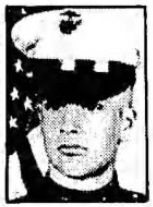
Wayne Joseph Dukett was a 30-year-old resident of Long Beach, California, who worked as a bartender in the fall of 1971. He was employed at The Stables, a gay bar located in the coastal community of Sunset Beach, a neighborhood known for its eclectic nightlife and beach-town atmosphere. Friends and patrons of the bar knew him from behind the counter, but the story of his life, his family, and his passions remains largely untold. His life was cut short in a crime that would not be understood for more than a decade, becoming the first chapter in one of California's most notorious serial murder cases.
On September 20, 1971, Wayne was last seen alive at his workplace. After his shift, he seemingly vanished. His car was later found abandoned in The Stables' parking lot, an early and ominous sign that something was wrong. For over two weeks, his whereabouts were a mystery. The search came to a tragic end on October 5, 1971, when two surveyors working in a remote area of southern Orange County discovered human remains. The nude body of a man was found in a rugged ravine alongside the Ortega Highway, a winding and often desolate road that cuts through the Santa Ana Mountains. There was no clothing or identification found with the body.
The Orange County Sheriff's Department launched a homicide investigation, and the deceased was soon identified as Wayne Joseph Dukett. An autopsy was performed, but the advanced state of decomposition made it impossible for the coroner to determine a precise cause of death or identify clear signs of foul play. The one notable finding was a high blood-alcohol content, which led to an initial conclusion of possible alcohol poisoning. With few leads and no immediate suspects, the investigation into Wayne's death stalled, and the case grew cold.
Years later, a chilling breakthrough would reframe the case entirely. In May 1983, the arrest of a computer programmer named Randy Steven Kraft for a murder in progress led investigators to uncover a horrifying secret. In Kraft's car, they found a coded list containing 61 cryptic entries. Believing it to be a "scorecard" of his victims, detectives began the painstaking process of linking the entries to unsolved homicides across California and beyond. The very first entry on the list read "STABLE." Investigators quickly made the connection to The Stables bar and its missing bartender from 1971, Wayne Dukett. At the time of Wayne's death, Kraft had reportedly been a customer at the bar and worked next door at another establishment called the Broom Hilda.
This evidence led prosecutors to name Wayne Dukett as the first known victim of the man who would become known as the "Scorecard Killer" and one of several "Freeway Killers" who terrorized Southern California during the 1970s and early 1980s. Kraft targeted young men, often hitchhikers or Marines, whom he would drug, torture, and kill, frequently leaving their bodies along highways.
Although Randy Kraft was convicted in 1989 for 16 murders and is suspected of dozens more, he was never formally charged with or tried for the murder of Wayne Joseph Dukett. The decomposition of Wayne's body had destroyed the kind of evidence that proved essential in Kraft's other convictions. As of the late 1980s, prosecutors felt they had a strong case but ultimately focused on the murders with more definitive forensic links. The case of Wayne Dukett's death remains officially unsolved, a quiet beginning to a long and brutal reign of terror. No other suspects have ever been identified, and no arrests have been made.