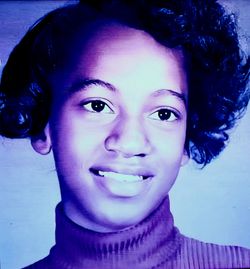
In the fall of 1989, a shadow of fear fell over Kansas City, Missouri, as a series of brutal murders began to unfold, ultimately claiming the life of Tresa Williams, a 21-year-old Black woman. Her life was violently ended on October 22, 1989, a victim of a predator who would come to be known as the "Gillham Park Strangler." While few details of Tresa’s personal life are publicly known, her death became a tragic and significant part of a case that exposed deep-seated community concerns and led to the capture of a serial killer.
Tresa was the third of six women murdered by Ray Shawn Jackson over a terrifying seven-month period between September 1989 and April 1990. The victims were all Black women, mostly in their twenties and thirties. On that Sunday in October, Tresa’s body was discovered at a property located at 4136 Euclid Avenue, a short distance from Gillham Park, the area that became central to the string of killings. Her death by strangulation fit a grim pattern that had begun to emerge, spreading fear among residents, particularly women in the midtown area.
The series of murders began on September 16, 1989, with the discovery of 33-year-old Annette Stewart. Four days later, 22-year-old Kimberly Creer was found in Gillham Park. After Tresa’s murder in October, Janice Berryman, 36, was found in the park just six days later. The killings seemed to pause for nearly three months before 23-year-old Tonya Ward was found in the park on January 18, 1990, followed by 22-year-old Michelle Mitchell on April 5. The Kansas City Police Department faced mounting pressure as the body count rose.
As the investigation intensified, many in Kansas City's Black community voiced anger and frustration, arguing that the police and media were not giving the cases the attention they deserved because the victims were Black and some were believed to be involved in prostitution or struggling with drug addiction. The Ad Hoc Group Against Crime, a local advocacy organization, became a prominent voice for the victims and their families. Ron Finley of the group publicly stated, "Gillham Park has become a death trap for black women," highlighting the community's sense of crisis and abandonment.
The crucial break in the case came on the night of April 9, 1990. A man walking his dog in Gillham Park witnessed what he initially thought was a couple in the bushes. As he got closer, he realized a woman was being violently raped and choked. His intervention caused the attacker to flee, saving the woman's life. She was able to provide a detailed description of her assailant to the police and later identified Ray Shawn Jackson from a photograph. The police, already focusing on the geography of the crimes, found that Jackson, a 22-year-old laborer who could barely read, lived only a few blocks from the park.
Taken into custody, Jackson confessed to the six murders. He detailed his method to detectives: he would walk the streets at night and lure women to secluded spots with the promise of crack cocaine. Once they were isolated, he would choke them from behind until they were unconscious, rape them, and then strangle them to death, often leaving their bodies posed. On April 13, 1990, Jackson was charged with six counts of first-degree murder and one count of first-degree assault for the attack on the survivor.
To avoid a potential death sentence, Ray Shawn Jackson pleaded guilty to all charges in December 1991. He offered an apology in court to the families of his victims but claimed he did not know why he committed the murders. He was sentenced to six consecutive life terms in prison without the possibility of parole, ensuring he would never again threaten the community. He was incarcerated at the South Central Correctional Center in Licking, Missouri. The case of the Gillham Park Strangler was officially closed, but the loss of Tresa Williams and the other five women left an indelible mark on Kansas City.