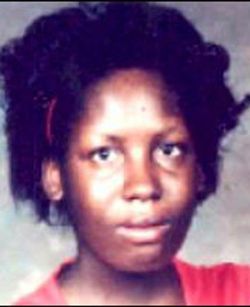
In the late summer of 1989, a seven-month reign of terror began in Kansas City, Missouri, with the tragic death of Annette Stewart, a 33-year-old Black woman. Her life was the first of six taken by a man who would come to be known as the Gillham Park Strangler. The discovery of Annette's body on September 16, 1989, near the intersection of 31st and Oak streets, marked the start of a dark and fearful period for the city, particularly for women in the midtown area.
Annette had been brutally strangled, her body left in a secluded spot. At the time, investigators with the Kansas City Police Department treated her death as an isolated homicide. However, just four days later, the body of a second victim, 22-year-old Kimberly Creer, was found in nearby Gillham Park. The similarities in the method of killing began to create a terrifying pattern that would escalate over the following months, spreading fear throughout the community.
As autumn settled over the city, the killer struck again. Tresa Williams, 21, was found on October 22, and just six days later, 36-year-old Janice Berryman was discovered. After a pause through the early winter, the killings resumed with the discovery of 23-year-old Tonya Ward on January 18, 1990, and 22-year-old Michelle Mitchell on April 5. All the victims were Black women, and their bodies were found in or around the wooded, secluded areas of Gillham Park, a place that had transformed from an urban oasis into a hunting ground.
The killer, Ray Shawn Jackson, was a local laborer who preyed on vulnerable women. He would approach them on the street, sometimes offering to share crack cocaine to lure them into isolated locations. Once they were out of public view, he would attack from behind, choking his victims before sexually assaulting and strangling them. The consistent method and location eventually helped police connect the series of murders, leading to a public grievance that not enough attention was being paid to the cases because the victims were marginalized women.
The break in the investigation came just a week after the final murder. On April 12, 1990, Jackson attacked a seventh woman near the park. His assault was interrupted by a man walking his dog, which caused Jackson to flee. The woman survived and was able to provide a crucial description of her attacker to the police. She later identified Ray Shawn Jackson from a photo lineup. With this identification and his known connections to the Gillham Park area, police brought him in for questioning.
During interrogation, Jackson confessed to the murders of Annette Stewart and the five other women. He was charged with six counts of first-degree murder and one count of first-degree assault for the attack on the survivor. To avoid a potential death sentence, Jackson pleaded guilty to all charges in December 1991. He offered an apology to the families of his victims in court but claimed he did not understand why he had committed the murders. He was sentenced to six consecutive life sentences without the possibility of parole. The case was officially closed, bringing an end to the fear that had gripped Kansas City. Ray Shawn Jackson is currently incarcerated at the South Central Correctional Center in Licking, Missouri.