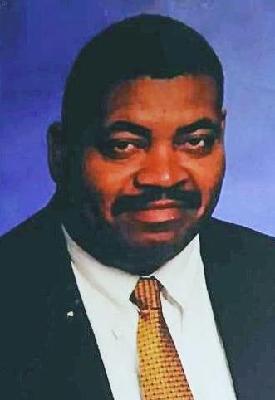
Steven Lynn Elliott was a young man from Indianapolis, Indiana, born on February 8, 1963. At 26 years old, his life was marked by personal struggle. According to his father, Steven had come out as gay a decade earlier, and after leaving the family home, he fell into a difficult life involving prostitution and alcohol addiction. The full picture of who Steven was—his hopes, his personality, his interests—remains largely private, a detail that adds another layer of tragedy to the violent end of his life.
On August 12, 1989, a grim discovery was made in a rural corner of Preble County, Ohio. Steven's body was found on the side of a bridge on Cox Road in Jackson Township, a quiet area not far from the constant hum of Interstate 70. He was clad only in his underwear, and it was determined that he had been strangled to death, likely with a rope. The exact date of his death could not be pinpointed, but the discovery of his body marked the start of a homicide investigation that would soon connect to a terrifying pattern of killings across two states.
The investigation into Steven's murder was handled by the Preble County Sheriff's Office, with assistance from the Ohio Bureau of Criminal Investigation. His case was quickly recognized as having alarming similarities to a string of other homicides. Investigators saw a pattern: young men, often with connections to the gay community or living transient lifestyles in Indianapolis, were being found strangled and left in remote, rural locations along the I-70 corridor in both Indiana and Ohio. This unknown perpetrator became known as the "I-70 Strangler."
The series of murders, which began in the early 1980s, cast a shadow of fear over communities along the interstate. At least eleven young men and boys were believed to be victims of this one killer. In April 1999, law enforcement publicly named their prime suspect: Herbert Baumeister, an Indiana businessman who led a double life. While presenting the image of a successful family man, Baumeister was known to frequent the same Indianapolis gay bars where some of the victims were last seen.
Investigators theorized that Baumeister was the I-70 Strangler. They noted that the discovery of victims dumped in the open countryside ceased in 1991, the year Baumeister purchased Fox Hollow Farm, an 18-acre property in Westfield, Indiana. It is believed he began using the secluded estate as a private burial ground for his subsequent victims. In 1996, as the investigation closed in on him and thousands of human bone fragments were being unearthed on his property, Baumeister fled to Canada. There, he died by suicide on July 3, 1996, leaving behind a note that mentioned his failing business and marriage but offered no confession or answers for the families of the men he was suspected of killing.
Though Herb Baumeister was never charged in connection with Steven Elliott's death, he remains the only significant suspect. The case is a chilling chapter in a much larger story of a predator who exploited vulnerable young men for more than a decade. As of today, the murder of Steven Lynn Elliott remains officially unsolved, his case file still open with the Ohio Attorney General's office. His death, and the unanswered questions that surround it, serve as a somber reminder of a life cut short and the long shadow of a killer who took his secrets to the grave.