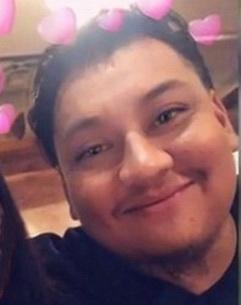
For 48 years, James Blanks and his wife, Kay, were best friends. She was outgoing, while he was more reserved, a classic case of opposites attract. "He had my back, and I had his," Kay remembered. Together, they shared what she called a "great love affair," and he taught her to take chances and live without fear. James, a 73-year-old man from Rockwall, Texas, was a hard worker who had owned his own car lot and body shop by the age of 17. He enjoyed playing poker with his wife, traveling, and shooting pool.
In early January 2017, James went to the Christus Trinity Mother Frances Louis and Peaches Owen Heart Hospital in Tyler, Texas, for heart surgery. The procedure, performed on January 5, went well, and his recovery was astonishingly fast. His wife was amazed to see him awake and alert without the assistance of any machines. A nurse, Kaitlyn McKenna, later testified that James was talking and even attempting to walk.
Feeling confident in his recovery, Kay went home for the night. Later, she noticed four missed calls from the hospital. When she called back, a nurse delivered the devastating news that her husband had died 30 minutes earlier. "I was shocked out of my mind," she later recalled in court. "I think I screamed, ‘What happened?’" Doctors told her they didn't know the cause of his sudden death, and she consented to an autopsy. James Blanks, a male patient, died on January 6, 2017.
His death was one of a string of unexplained medical emergencies and fatalities in the hospital's cardiovascular intensive care unit between 2017 and 2018. Hospital staff and doctors grew increasingly alarmed by the trend of postsurgical patients who were recovering well suddenly "crashing" with catastrophic neurological injuries. An internal and then police investigation eventually focused on William George Davis, a registered nurse who was frequently on duty and often the last person seen entering a patient's room just before the unexpected decline. The series of tragic events ceased after Davis was suspended from the hospital in February 2018. The Tyler Police Department arrested him in April 2018.
Prosecutors for Smith County charged William Davis with capital murder. On October 19, 2021, a jury found him guilty of killing four patients—John Lafferty, Ronald Clark, Christopher Greenaway, and Joseph Kalina—by injecting air into their arterial systems, causing fatal brain damage. The trial then moved to the punishment phase, where jurors would decide between a sentence of life in prison or death. During this phase, prosecutors presented evidence that Davis was a serial killer responsible for more deaths and injuries than the four for which he was convicted.
The prosecution argued that Davis had killed a total of seven patients and attempted to murder five others. James Blanks was one of the three additional murder victims they presented to the jury. Dr. William Yarbrough, a pulmonologist serving as an expert witness, testified that after a thorough review of the medical records, he concluded that James Blanks’s death was caused by an intentional injection of a large amount of air into his venous system. This act, he explained, led to his sudden and fatal collapse while he was recovering well from his surgery.
During the sentencing, Kay Blanks took the stand to testify about the husband and best friend she had lost. She also made the difficult decision to deliver a victim impact statement directly to Davis. After her son encouraged her to speak "with the holy spirit," she faced her husband's killer in the courtroom. "Will Davis, I’m Kay Blanks," she said, standing at the witness stand. "I want you to know I forgive you."
On October 27, 2021, after deliberating for about two hours, the jury sentenced William George Davis to death. He was transferred to the Polunsky Unit in Livingston, Texas, to await his execution. The case is subject to an automatic appeal process. As of late 2021, the case against the man responsible for James Blanks's death was officially closed, though the legal appeals process continues.