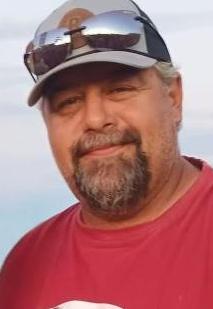
Timothy Bull Bear Sr., a 47-year-old Native American man from the town of Allen on the Pine Ridge Reservation, was known as an educator. His life was cut short in the summer of 1999, part of a disturbing series of deaths that cast a long shadow over Rapid City, South Dakota. His family, including his wife Madeline Mary Bull Bear, and numerous children and stepchildren, were left to mourn a man whose death became entangled in a much larger, unresolved mystery that continues to trouble the community.
On July 8, 1999, Timothy Bull Bear's body was pulled from the shallow waters of Rapid Creek. He was the last of eight men whose bodies were recovered from or near the creek over a 14-month period beginning in May 1998. An autopsy determined he had drowned, and his blood alcohol content was found to be 0.26%, more than twice the legal limit for driving. Like most of the other victims, six of whom were Native American, he was known to sometimes be homeless and spend time along the creek, which flows through a parkland in the center of the city.
The cluster of deaths prompted a joint investigation by the Rapid City Police Department and the Pennington County Sheriff's Office. The FBI was also consulted and asked to review the cases. Officially, investigators found no evidence of foul play. The bodies showed no signs of trauma, such as bullet holes or stab wounds, and there were no witnesses to any of the deaths. The prevailing theory from law enforcement was that the men, most of whom were severely intoxicated, had tragically and accidentally drowned. The deaths were not categorized as unsolved homicides, but rather as a string of unfortunate accidents.
This conclusion was met with profound skepticism and fear within Rapid City's Native American community. Many found it impossible to believe that so many men, the majority of them Native American, could accidentally drown in a shallow creek in such a short period. Rumors circulated that the men were victims of racially motivated attacks, possibly by a group of young white men or skinheads who targeted vulnerable individuals along the creek. One community member, Stacy Low Dog, said her cousin told her he had escaped an attack where white boys grabbed him and held his head underwater. The belief that the men were murdered took firm root, fueling a long-standing mistrust of the justice system.
In response to the deaths and what they perceived as an inadequate official investigation, members of the Native American community organized volunteer patrols to improve safety along Rapid Creek. They sought to protect others and find answers that they felt law enforcement was not providing. The string of deaths, happening in a city where Native Americans faced disproportionate rates of poverty, homelessness, and incarceration, heightened racial tensions and led to accusations that the investigations were not taken seriously because the victims were mostly Native American and homeless.
Despite the community's outcry and the persistent belief that the men were murdered, no arrests were ever made. A task force created to look for links between the cases was unable to find any physical evidence of a crime. A reward of $4,000 was offered for information, but the cases grew cold. Former Pennington County Sheriff Don Holloway later stated that he did not believe all the deaths were accidental, given that so many happened in a short time and then abruptly stopped. The families of Timothy Bull Bear and the other victims were left without closure, their grief compounded by unanswered questions. As of June 2020, Timothy's family and the families of the other men were still mourning and waiting for justice. The deaths along Rapid Creek remain a dark and unresolved chapter in the city's history.