Crime Solvers Central
302 Cases Solved. Advancing justice for missing persons, unsolved homicides, unidentified and unclaimed remains.

Case Description

Any updates on this case? Let us know!
Summary based on 14 sources
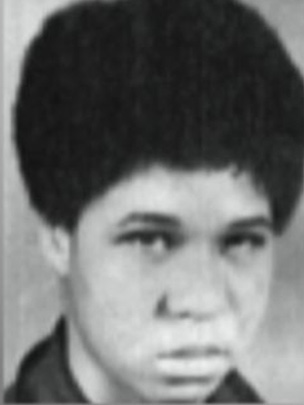
Debbie Ackerman was a bold and magnetic 15-year-old girl who loved the water. A lifelong resident of Galveston, Texas, known to locals as a "BOI" (born on the island), she was a passionate and competitive water-skier who often made the local news for her competitions. Surfing was her favorite pastime, and friends remembered her as fun and endlessly outgoing. Debbie, who had one brown eye and one blue-green eye, was a student at Ball High School. She was inseparable from her best friend, Maria Johnson, also 15, who had moved to Galveston and quickly bonded with Debbie over their shared love of the beach and water sports.

On Monday, November 15, 1971, the two friends decided to hitchhike from Galveston to Houston for a day trip. They were last seen together outside an ice cream shop on the island. Witnesses later reported seeing the two girls getting into a white van after a man agreed to give them a ride. When they failed to return home, their families reported them missing, launching a frantic search. Two days later, on November 17, their bodies were discovered in Turner's Bayou, a marshy waterway near Texas City. The girls were found partially nude and bound. An autopsy later confirmed they had both been shot to death.

The Galveston Police Department launched a homicide investigation, but the case quickly grew cold due to a lack of physical evidence and strong leads. The murders of Debbie and Maria were among a string of slayings of young women and girls in the area during the 1970s, a series of crimes that led the desolate stretch of land along Interstate 45 to become known as the "Texas Killing Fields." For decades, investigators struggled to connect the numerous cases, and the families of Debbie and Maria were left without answers or justice.

Years later, a potential suspect emerged. In 1998, a convicted murderer named Edward Harold Bell, who was serving a 70-year sentence for a separate 1978 killing, began writing confession letters to prosecutors in Harris and Galveston counties. In these letters, Bell claimed responsibility for the murders of 11 young women, whom he chillingly referred to as "The Eleven Who Went to Heaven." He specifically named Debbie Ackerman and Maria Johnson as two of his victims. Bell knew the girls, as they were frequent visitors to a surf shop in Galveston where he was a silent partner. His detailed knowledge of the crimes led investigators to consider him the primary suspect.

Despite his confessions, which he would later recant at times, Bell was never charged with the murders of Debbie Ackerman and Maria Johnson. Investigators could not find enough corroborating evidence, such as DNA or the murder weapon, to build a prosecutable case against him. The Galveston District Attorney's office officially reopened the girls' cases in the wake of Bell's letters and the renewed attention brought by a 2017 documentary series called "The Eleven," which focused on retired Galveston detective Fred Paige's investigation into Bell.

The investigation into the murders of Debbie Ackerman and Maria Johnson remains officially unsolved. Edward Harold Bell, the man who confessed to ending their lives, died in a Texas prison from natural causes in April 2019 at the age of 79. He died without ever being held legally accountable for their deaths. For the families, the death of the main suspect brought a complicated sense of closure. Maria Johnson's sister, Rita Brestrup, said she had no words for Bell but was happy that he "no longer walks this earth and will never be paroled." As of April 2019, the case is considered closed, with the prime suspect deceased.