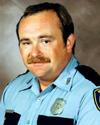
Daryl Wayne Shirley was a dedicated 34-year-old detective with the Houston Police Department and a family man. He was married to his wife, Donna, and together they had three children: a daughter, Sarah Michelle, and two sons, Steven Wayne and Jason Allan. He was the son of Mr. and Mrs. Willard Shirley. His commitment to law enforcement was a central part of his life, a path that would ultimately lead him into a fatal confrontation.
On the afternoon of April 28, 1982, Detective Shirley, who was working in plain clothes, went to an apartment complex on Rolido Drive in Houston, Texas. He was there to serve an arrest warrant on a 23-year-old man named Arthur Lee Williams. Williams was a fugitive who had fled from a halfway house in Minnesota where he was on parole for aggravated assault. When Detective Shirley attempted to take Williams into custody outside his apartment, a struggle ensued. During the altercation, Williams managed to gain control of a weapon and shot Detective Shirley. Williams then hid the detective's body under a canopy in a parking garage and fled the scene.
The Houston Police Department launched an immediate and intensive investigation into the disappearance and murder of one of their own. Two days after the shooting, a friend of Arthur Williams contacted authorities and turned him in. Williams was arrested and charged with the murder of Detective Daryl Shirley.
In 1983, a Harris County jury convicted Arthur Williams of capital murder. During the trial, Williams claimed he didn't believe Shirley was a police officer, alleging he had been robbed months earlier by someone impersonating law enforcement. The jury was not swayed by this argument. Based on the Texas sentencing laws at the time, which focused on the deliberateness of the act and the potential for future dangerousness, the jury answered the required questions in a way that mandated a death sentence.
For decades, Williams remained on death row, pursuing numerous appeals. His case eventually hinged on a 1989 Supreme Court ruling, *Penry v. Lynaugh*, which found that Texas's sentencing statute was unconstitutional because it did not allow juries to give sufficient consideration to mitigating evidence. Williams' defense argued that the jury in his original trial was not able to properly consider evidence of his remorse. Witnesses had testified that Williams was crying after the shooting and repeatedly apologized for the killing. In June 2016, a federal judge agreed, finding the original jury instructions were flawed. U.S. District Judge Nancy Atlas granted Williams habeas relief, ordering that Texas must either grant him a new punishment phase trial or commute his sentence to life in prison.
The Harris County District Attorney's office reviewed the case. Due to the passage of time, key witnesses had died, laws had changed, and evidence such as a 911 call had been taped over. In December 2018, nearly 37 years after the murder, the case concluded with a plea deal. Arthur Lee Williams, then 59, was re-sentenced for the fatal shooting of Detective Shirley. He received two consecutive sentences: life in prison with the possibility of parole for the murder, and 60 years for the prior aggravated assault. Under the terms of the agreement, Williams will not be eligible for parole until he is nearly 100 years old. The conviction for the murder of Detective Daryl Shirley stands, though the sentence was changed.