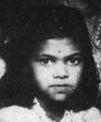
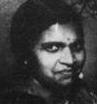
In the small East Texas town of Gilmer, the Patel family, immigrants from India, owned and operated the Upshur House Motel on Henderson Street. Gandabhai Motibhai Patel and his wife, Bhikhibev, who was 35, ran the business and lived on the premises with their three children: 9-year-old Jayaben Patel, a young girl of Southwest Asian heritage, her 6-year-old sister Shila, and their 2-year-old brother, Jayesh. By all public accounts, Gandabhai was known as a quiet and capable businessman whom acquaintances had never seen angry.
This image was shattered on Tuesday, October 25, 1983. That day, after concerns were raised by residents, Gilmer police and motel employees entered the family's private apartment. Inside, they made a horrific discovery. The bodies of Bhikhibev and her three children, Jayaben, Shila, and Jayesh, were in the living quarters. Each of them had been killed by a single gunshot wound to the abdomen.
Their lives were ended in the place that was both their home and their livelihood.
The children's father, Gandabhai Patel, was not at the scene. He had fled in the family car, sparking a search by law enforcement. Later that same evening, a Department of Public Safety trooper found Patel at a roadside park near Marshall, Texas, about an hour's drive from Gilmer. As the trooper approached the vehicle and tried to get him to exit, a shot was fired. Patel had turned the gun on himself, sustaining a serious gunshot wound to his own abdomen.
After being treated for his self-inflicted injury at a hospital in Marshall, Patel was arrested and transferred back to Upshur County. He was indicted by a grand jury on four counts of capital murder for the deaths of his wife and three children. The case that followed was complex, marked by extensive legal maneuvering centered on Patel's mental state at the time of the killings. His attorney filed a notice of intent to use an insanity defense, arguing that Patel was not legally responsible for his actions.
The legal proceedings were delayed when Patel was examined by psychiatrists and deemed incompetent to stand trial. An Upshur County jury agreed, and he was committed to Rusk State Hospital for treatment. After a period of medical care, doctors determined that his competency was restored, and the legal process resumed. Due to significant publicity surrounding the case in Upshur County, a change of venue was granted, and the trial for the murder of one of the children was moved to neighboring Marion County.
In this trial, the defense presented psychiatric testimony suggesting Patel was suffering from a "delusional system" and paranoia, and that he did not know that killing his family was wrong. One psychiatrist speculated the killings were incidental to a planned suicide, born from a distorted belief that he could not leave his family without support. The prosecution countered with twelve lay witnesses—including police officers and business acquaintances—who all testified that Patel had always appeared normal and was a good businessman. The jury ultimately rejected the insanity defense. Gandabhai Patel was found guilty of the murder of one of his minor children and was sentenced to fifteen years in the Texas Department of Corrections. His conviction was affirmed on appeal in 1986.
The tragic and violent deaths of Jayaben, her mother, and her younger siblings were a profound shock to the Gilmer community. The case left a somber chapter in the town's history, highlighting the hidden struggles that can exist within a family. The ultimate disposition of the other three murder charges filed against Gandabhai Patel is not detailed in available public records. The case, while legally closed with a conviction, leaves behind the heartbreaking loss of a mother and three young children.