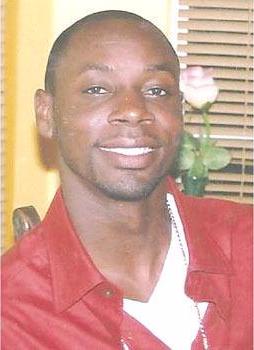
On a summer day in Detroit, Michigan, the life of 34-year-old Dorian Anderson, a Black man, was brought to a violent and tragic end. The fatal encounter occurred on Friday, August 24, 2012, at a residence on Stout Street, in the 17500 block on the city's far west side. That year, the city of Detroit would record 386 homicides, a significant increase from the year prior, and Dorian Anderson would become one of that grim statistic. His death left a void for those who knew him and set in motion a determined police investigation and a lengthy legal battle to secure justice in his name.
Officers from the Detroit Police Department were called to the scene on Stout Street, a residential road in a neighborhood of modest single-family homes. Inside one of the houses, they discovered Dorian Anderson, who had been fatally shot. The circumstances that led to the shooting were not immediately clear to the public, but investigators worked quickly to piece together the events of that day. Their efforts soon focused on a single suspect, a man named Salathiel Rezar Brown.
The investigation led to Brown's arrest, and the Wayne County Prosecutor's Office brought a slate of serious charges against him. He was charged with first-degree murder for Dorian's death, along with two counts of felonious assault, one count of being a felon in possession of a firearm, and one count of possessing a firearm during the commission of a felony. The charges indicated a violent confrontation that not only claimed a life but also allegedly endangered others. The case then moved into the court system, where the evidence gathered by detectives would be presented before a jury.
The trial laid out the prosecution's case against Salathiel Brown. After hearing testimony and reviewing the evidence, the jury deliberated on the charges. They ultimately acquitted Brown of the two felonious assault charges but found him guilty of a lesser charge of second-degree murder in the death of Dorian Anderson. The jury also convicted him on both weapons charges, felon in possession of a firearm and felony firearm. The convictions carried the promise of a long and severe punishment for the violent crime.
The court handed down a sentence that reflected the gravity of the murder. For the second-degree murder conviction, Brown was ordered to serve 100 to 150 years in the Michigan Department of Corrections. He also received a concurrent sentence of approximately three to five years for being a felon in possession of a firearm. Crucially, he was given a mandatory additional two-year sentence for the felony-firearm conviction, which was ordered to be served consecutively to the much longer murder sentence, ensuring he would spend at least two years imprisoned on that charge before the 100-year minimum began.
Following his conviction, Brown sought to have the verdict overturned. He filed an appeal, arguing that his due process rights had been violated during the trial. The basis of his appeal was an assertion that the court had not adequately questioned the jury after one juror had a minor, brief social interaction with an assistant prosecutor who was not involved in the case. In September 2014, the appellate court issued its ruling. After reviewing the trial records, the court noted that the juror in question had been dismissed and affirmed that the trial had been fair. Brown’s convictions and his lengthy sentences were upheld. As of the court's 2014 decision, Salathiel Brown remains incarcerated, with a maximum sentence that extends into the next century, held accountable for the 2012 killing of Dorian Anderson.