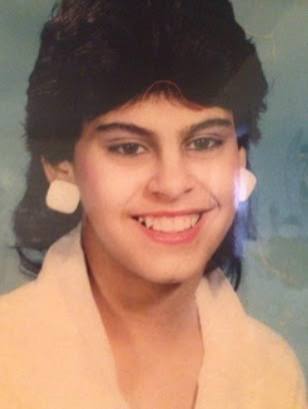
What happened to Celestina Perez? Celestina Perez was a 24-year-old Hispanic woman and devoted mother of four young children whose life was tragically cut short on June 2, 1995, in Springfield, Massachusetts. Her brutal murder would remain unsolved for more than three decades, leaving her children, relatives, and loved ones struggling with unanswered questions about who was responsible for her death. For 31 years, investigators pursued leads while her family waited for answers. It was not until July 22, 2026, that authorities finally announced a breakthrough, identifying the man responsible for her killing through advances in forensic DNA technology.
On the afternoon of June 2, 1995, two men walking through Gurdon Bill Park in Springfield's Lower Liberty Heights neighborhood made a horrifying discovery. They found Celestina's lifeless body lying in a ravine near the intersection of Genesee and Warwick streets. The discovery prompted an immediate response from Springfield police officers, homicide detectives, personnel from the Massachusetts Office of the Chief Medical Examiner, and Massachusetts State Police forensic investigators. What they encountered was evidence of an exceptionally violent attack.
Investigators determined that Celestina had endured a desperate physical struggle before her death. Evidence suggested the confrontation began near the top of the ravine and continued down the slope, with her attacker dragging her at various points toward the location where her body was ultimately discovered. Blood was found on nearby twigs, vegetation, and soil along the hillside. Two buttons believed to have been torn from her blouse were recovered, indicating the force of the struggle. Her right shoe was discovered along a park pathway approximately four feet from her body. These details helped investigators reconstruct portions of the attack and suggested that her assailant might also have suffered injuries during the confrontation.
An autopsy confirmed that Celestina died from asphyxia caused by manual strangulation, with additional blunt-force injuries to her head. Her death was officially classified as a homicide. The physical evidence painted a disturbing picture of her final moments, but investigators could not immediately establish who had attacked her or why. Detectives interviewed relatives, friends, and individuals who had been with Celestina during the hours preceding her death. They canvassed the surrounding neighborhood, examined potential leads, and collected forensic evidence from the crime scene. Despite these efforts, no suspect could be definitively connected to the murder.
As the years passed, Celestina's killing became one of Springfield's longstanding unsolved homicide investigations. Her family was left to endure the devastation of losing her without knowing the identity of the person responsible. Her four children were forced to grow up without their mother, while other family members continued to carry the grief and uncertainty surrounding her death. Although investigators preserved her clothing and other evidence, forensic science in 1995 lacked many of the capabilities that would eventually make identifying her killer possible.
In 2009, authorities conducted additional forensic examinations, concentrating primarily on samples obtained during Celestina's autopsy. Unfortunately, the material did not yield enough DNA for the type of genetic testing needed to identify a suspect. The investigation consequently remained unresolved. However, the evidence collected during the original investigation was preserved, allowing future detectives to revisit the case as scientific techniques improved.
A significant turning point came in 2024, when the Hampden District Attorney's Office Unresolved and Unidentified Case Investigation Unit identified Celestina's murder as a promising candidate for renewed forensic examination. Working alongside the Springfield Police Department and Massachusetts State Police, investigators reconsidered the significance of the blood evidence recovered from her clothing. Because the original crime scene suggested that the attacker may have injured himself during the struggle, detectives believed that some of the preserved bloodstains could potentially contain the killer's DNA rather than Celestina's.
The Massachusetts State Police Crime Laboratory conducted new examinations of her preserved clothing, including her underwear and socks. Technicians detected blood on her underwear and successfully developed a major male DNA profile suitable for comparison against the Combined DNA Index System, commonly known as CODIS. This national database allows investigators to compare forensic DNA evidence against profiles associated with individuals previously entered into the system. The resulting comparison produced a match to Joseph James Ceravolo Jr., a Springfield resident who had lived near the park when Celestina was murdered.
The discovery represented the first major forensic breakthrough in the decades-old investigation. Authorities determined that Ceravolo had been living within walking distance of Gurdon Bill Park in 1995. Investigators also established that he was not incarcerated or known to have been hospitalized or confined to a treatment facility at the time of the murder. A review of his criminal history revealed a pattern of assaultive behavior, including a violent domestic assault committed just weeks after Celestina's death. That separate incident had resulted in his arrest, prosecution, and conviction.
Rather than relying solely on the initial DNA match, Hampden District Attorney Anthony D. Gulluni authorized additional independent forensic testing to ensure that the identification could withstand scrutiny. DNA Labs International examined a separate bloodstain from a different area of Celestina's underwear and independently obtained the same major male DNA profile. Scientists determined that the probability of a randomly selected, unrelated individual being included as a contributor to that genetic profile was approximately one in 130 million.
Further testing of another bloodstain recovered from the outside pocket of Celestina's jeans produced a DNA mixture from which Ceravolo could not be excluded as a contributor. With two independent laboratories identifying the same genetic profile from separate areas of her clothing, investigators concluded that the combined forensic and circumstantial evidence established Ceravolo's responsibility for the killing.
Unfortunately, authorities discovered that Ceravolo had died of natural causes in 2013, long before investigators were able to connect him to Celestina's murder. Because he was deceased, he could not be arrested, charged, or brought before a jury for the crime. Despite this limitation, investigators continued their examination to make certain that the evidence was sufficiently reliable before publicly identifying him as her killer. Prosecutors ultimately concluded that the evidence would have supported a murder charge against Ceravolo had he still been alive.
On July 22, 2026, Hampden District Attorney Anthony Gulluni formally announced that Joseph James Ceravolo Jr. had been identified as the person responsible for Celestina's murder. The announcement followed extensive investigative work by the district attorney's cold case unit, Springfield police detectives, Massachusetts State Police investigators, and forensic specialists. Authorities stated that the evidence established Ceravolo had assaulted and killed Celestina during the early morning hours of June 2, 1995. Although the precise circumstances leading to the attack and the motive remain unknown, investigators concluded that the case was solved and officially closed the homicide investigation.
The announcement was particularly emotional for members of Celestina's family, who had endured decades without an explanation for her death. Before making their findings public, investigators met privately with relatives to share the results. During the subsequent news conference, Celestina's nephew, Jose Reyes, spoke about the years of uncertainty, grief, and unanswered questions that the family had experienced. He explained that although learning the truth could never bring Celestina back or erase their suffering, knowing who was responsible allowed the family to begin finding a measure of peace.
Springfield Police Superintendent Lawrence Akers, who had personally responded to the original crime scene as a detective in 1995, also addressed the family. He expressed regret over the extraordinary length of time required to reach a resolution and emphasized that investigators had never forgotten Celestina or abandoned their responsibility to seek justice. The successful identification also demonstrated the importance of carefully preserving physical evidence, even when the technology necessary to analyze it may not yet exist.
Although authorities have identified Celestina's killer, the case will never result in a murder trial or conviction because Ceravolo died before the evidence against him could be presented in court. His earlier conviction for an unrelated violent domestic assault remains separate from the determination that he was responsible for her murder. The distinction is significant: investigators have declared the homicide solved based on forensic and investigative findings, but no court has adjudicated his guilt in Celestina's death.
For Celestina's family, the July 2026 announcement brought an end to more than three decades of uncertainty, but it could not undo the devastating consequences of her murder. Four children grew up without their mother, relatives spent years wondering what had happened during her final hours, and an entire generation lived without the answers they deserved. Celestina was more than the victim of a violent crime. She was a daughter, sister, aunt, mother, and friend whose absence left a lasting impact on those who loved her.
Her case stands as a powerful example of how advances in forensic science can provide answers long after an investigation has seemingly reached a dead end. The painstaking collection and preservation of evidence in 1995 ultimately made it possible to identify her killer 31 years later. Although the opportunity for criminal prosecution was lost with Ceravolo's death, the investigation established the identity of the man authorities determined had taken Celestina's life. Her family finally received the answer they had sought for decades, allowing her story to be remembered not simply as an unsolved murder, but as the life of a loved woman whose death was never forgotten.