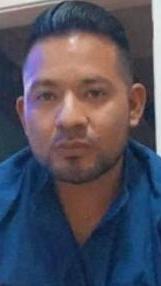
On a summer day in Chicago, on August 18, 1998, the life of Juan Morales, an 18-year-old Hispanic man, was cut short by gun violence. For more than two decades, the specific details of what happened to Juan on that Tuesday have remained locked away, leaving a family without answers and a case without closure. Publicly available information about the circumstances of his death is scarce, and the trail for investigators has long gone cold.
The year 1998 was a complex time for the city of Chicago. While the nation was experiencing a period of economic prosperity, and the city itself was seeing a decline in its unemployment rate, a persistent struggle with violent crime continued to plague its neighborhoods. The decade had been one of the most violent in the city's history, and though the homicide rate was trending downward from its peak in the early 1990s, the numbers were still tragically high.
In 1998, Chicago recorded nearly 700 homicides, a figure that, despite being a 10-year low, surpassed New York City's total for the first time and earned it the grim title of the nation's "murder capital." Juan Morales became one of those statistics, his death contributing to a homicide rate that was more than double that of New York's when measured per capita. His story is a somber reminder that behind the numbing effect of statistics are individual lives, each with its own unrealized future.
At the time, the Chicago Police Department was several years into its community policing strategy, known as CAPS (Chicago Alternative Policing Strategy), an initiative aimed at building partnerships between officers and neighborhood residents to solve local crime problems. The program was showing some signs of success, as overall index crime had been declining for seven consecutive years. However, the sheer volume of violent crime, particularly gun violence, presented an overwhelming challenge for law enforcement and the communities they served.
The investigation into Juan Morales’s murder was handled by the Chicago Police Department. In a year with hundreds of homicides, detectives were stretched thin, and many cases struggled to gain traction without immediate leads or witnesses willing to come forward. For Juan’s case, it appears that no significant breaks ever materialized. There have been no public announcements regarding suspects, persons of interest, or arrests in the many years since his death. The silence in the public record speaks to the difficulties of solving violent crimes from that era, where forensic technology was less advanced and community trust in law enforcement could be fraught.
Decades have passed, and the city has continued to evolve, yet the case of Juan Morales remains an open and unresolved homicide. For his family and anyone who knew him, the passage of time does not diminish the loss. An 18-year-old on the cusp of adulthood was taken, and the reasons why, and by whom, are still unknown. His case is a quiet but enduring testament to the long-lasting pain of unsolved violence and the many lives that were irrevocably altered on the streets of Chicago in the late 1990s. As of today, the investigation into the murder of Juan Morales is inactive, pending new information.