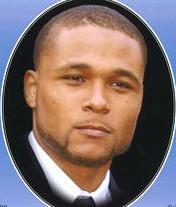
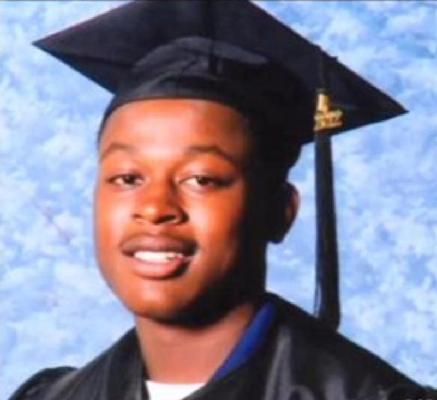
On a winter night in Oakland, California, Raheim Brown Jr., a 20-year-old Black man, was remembered by his mother as a "very beautiful, loving, bright, intelligent, respectful human being." His life was cut short on January 22, 2011, in a confrontation with Oakland Unified School District (OUSD) police officers that has left a legacy of disputed facts and community outrage.
That evening, Brown and his friend, Timesha Stewart, also 20, were sitting in a Honda with its hazard lights blinking near Skyline High School, where a winter ball was being held. Around 9 p.m., two OUSD police sergeants, Barhin Bhatt and Jonathan Bellusa, approached the car. The officers would later say they were investigating why the car was parked in a strange spot; they did not know at the time that it had been reported stolen.
What happened next is the subject of starkly different accounts.
According to the police narrative, as the officers engaged with the occupants, Brown, who was in the passenger seat, resisted and tried to stab Sgt. Bellusa with a screwdriver. In response, Sgt. Bhatt opened fire. An autopsy would show Brown was shot multiple times. Sgt. Bellusa claimed he saw a gun in the car and yelled "Gun!" before Bhatt fired. However, Timesha Stewart, the only civilian witness, has always maintained that the screwdriver never left the ignition, which Brown was using to try and start the car. She insisted there was no gun in the car and that Brown never posed a threat to the officers. Stewart recalled her friend's last words were, "Help me, sis." Raheim Brown Jr. died in the passenger seat, his hands resting on his lap.
The aftermath of the shooting was fraught with controversy and legal battles. An independent investigation hired by the school district concluded that Sgt. Bhatt was "in reasonable fear" and "justified in shooting Brown." The district's own internal investigation found no violation of its policies. This outcome did not satisfy Brown's family or community activists, who had called for a truly independent inquiry. Brown's mother, Lori Davis, called her son's killing an "assassination."
The case grew more complex when Sgt. Bellusa, Bhatt's partner, contradicted the official account. Bellusa stated that Bhatt fired an initial two shots, paused when his gun jammed, and then, after Brown was already incapacitated, fired a second volley of about five more shots. Bellusa later filed a lawsuit against the school district, alleging that officials tried to coerce him into changing his testimony to match Bhatt's and retaliated against him when he refused. He claimed he was threatened with jail time and economic ruin if he did not conform his story.
In the months following the shooting, the OUSD made a move that stunned and angered many in the community: Sgt. Bhatt was promoted to interim school police chief after the previous chief resigned amid a racism scandal. The appointment was short-lived, lasting only a month before a new chief was brought in from another agency. Bhatt later left the force and started a private security firm. Brown's parents, Lori Davis and Raheim Brown Sr., filed a lawsuit against the school district. In October 2013, the district settled the suit for nearly $1 million, paying $995,000 to be split between his parents and the mother of his unborn child.
The killing of Raheim Brown Jr. galvanized a movement in Oakland that had long questioned the necessity of a police force within the school system. Protesters demonstrated outside OUSD headquarters, calling for the department to be disbanded. The case highlighted statistics showing that Black students were disproportionately arrested by school police. Years later, in June 2020, in the wake of George Floyd's murder, the Oakland school board voted to abolish its school police department entirely, a victory that activists traced back to the fight for justice for Raheim Brown Jr.