Crime Solvers Central
302 Cases Solved. Advancing justice for missing persons, unsolved homicides, unidentified and unclaimed remains.

Case Description

Any updates on this case? Let us know!
Summary based on 6 sources
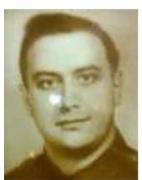
In the pre-dawn hours of April 9, 1982, the life of John Aratico, a 22-year-old Hispanic man, was violently ended in Brooklyn, New York. His death would unravel a dark story of organized crime, a compromised police investigation, and a family connection that shielded a killer for years. John was known to be an associate of the Colombo crime family, a path influenced by his family history; his grandfather, Lorenzo Lampasi, and his stepfather, Lorenzo "Larry" Lampasi Jr., were both members of the notorious organization.

On that Friday morning, around 4:30 a.m., John was found near his residence on 21st Avenue in the Bensonhurst neighborhood. He had been shot five times in the chest with a 9mm automatic weapon. The killing was not a random act of violence but a calculated execution with roots deep in the criminal underworld. Confidential informants later identified the perpetrators as Colombo soldier Nicholas "Nicky Black" Grancio and his nephew, associate Joseph Tolino. The murder was likely sanctioned by the family's boss, Carmine "Junior" Persico.

The investigation into John Aratico’s murder was immediately fraught with controversy. The case was assigned to NYPD Detective Louis Scarcella, who, in a shocking conflict of interest, was Nicholas Grancio's nephew. Years later, on a true-crime podcast called "The Burden," Scarcella admitted he was tipped off early on that his own uncle was the prime suspect. He even recounted interviewing Grancio at his home, where his uncle claimed John "was not a good kid." The rumored motive was that John had introduced Grancio’s daughter to drugs, a scenario Scarcella said he was never able to prove.

Despite the familial connection and the strong suspicion of his uncle's guilt, Scarcella made no arrests in the case. An internal affairs inquiry was conducted, but Scarcella faced no serious consequences at the time, later claiming he came out of it "smelling like a rose." However, journalists who later reviewed the internal report found that key details were missing. On the podcast, Scarcella chillingly referred to his uncle's alleged act as a "public service killing," a phrase he claimed was used for certain murders. While he attempted to walk back the statement out of respect for Aratico's family, he also admitted that if his own daughter had been hooked on drugs, he "would have probably did the same thing."

For years, the case remained officially unsolved, a cold file in the NYPD's records. John's family was left without justice, and the truth of his death was buried under a shroud of silence and corruption. Nicholas Grancio, however, would not escape the violent world he inhabited. His allegiance would be tested during the third Colombo family war, a bloody internal conflict that erupted in 1991 between factions loyal to the imprisoned Carmine Persico and acting boss Victor Orena.

Grancio sided with Orena, a decision that marked him for death. On January 7, 1992, nearly a decade after he allegedly murdered John Aratico, Grancio was ambushed as he sat in his car at Avenue U and McDonald Avenue in Gravesend, Brooklyn. He was killed by a shotgun blast, a hit carried out by a crew loyal to the Persico faction. His killer was identified as Gregory Scarpa Sr., one of the family's most feared enforcers, who was simultaneously working as an FBI informant.

The death of Nicholas Grancio brought a final, violent end to the primary suspect in John Aratico's murder. While no one was ever prosecuted or held legally accountable for killing John, Grancio's own demise in a mob war closed the book on any future legal proceedings. As of March 2024, the case is considered solved, with the primary suspect deceased, leaving behind a troubling legacy of a compromised investigation and justice denied.