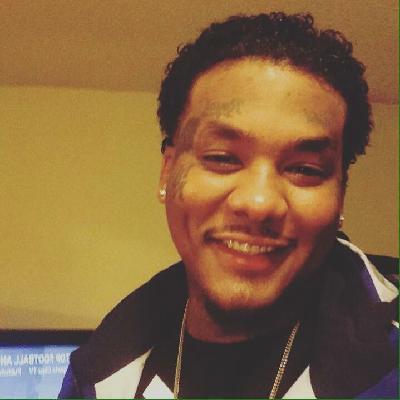
Andre Louis Hicks, the 34-year-old Black man known to the world as the rapper Mac Dre, was a foundational figure in Bay Area hip-hop. Born in Oakland, California, on July 5, 1970, and raised primarily in Vallejo, Hicks became a pioneering voice of the "hyphy" movement, a high-energy subgenre that defined the region's sound in the early 2000s. His mother, Wanda Salvatto, remembered him as an outspoken and individualistic child. He began his career in the late 1980s, gaining a local following with his clever, often playful rhymes about life in his Country Club Crest neighborhood. Through his independent labels, Romp Productions and later Thizz Entertainment, he released dozens of albums and created a platform for other local artists. His career was briefly derailed in 1992 when he was sentenced to five years in federal prison for conspiracy to commit robbery, a charge he denied. He famously recorded an album over the prison telephone while incarcerated. Upon his release, he moved to Sacramento and rebuilt his career, becoming a beloved local hero and an influential figure for a generation of artists.
In late October 2004, Hicks traveled to Kansas City, Missouri, for a performance. After a show on Halloween night, reports circulated about a financial dispute with a club promoter that may have led to a canceled appearance. In the early morning hours of November 1, 2004, Hicks was a passenger in a white van traveling north on U.S. Highway 71. As the van drove near the intersection with 85th Street, another vehicle, believed to be a stolen black Infiniti, pulled alongside. An occupant opened fire, riddling the van with bullets. The van’s driver lost control, swerving across the median and crashing into a muddy embankment. Andre Hicks was thrown from the vehicle during the crash and was pronounced dead at the scene. An autopsy determined he died from a single gunshot wound to the back of his neck.
The Kansas City Police Department’s investigation into the homicide was immediately met with challenges. The driver of the van survived the attack but, like others associated with Hicks’s entourage, was uncooperative with detectives. Lead investigator Everett Babcock and his team believed the motive was rooted in the financial dispute from earlier in the evening, rather than a larger coastal rap feud. With little physical evidence and no forthcoming witnesses, the case quickly stalled. To this day, no arrests have ever been made, and no suspects have been officially named by law enforcement in the murder of Andre Hicks.
Despite the police investigation pointing to a monetary conflict, rumors began to spread with force in the hip-hop community, claiming that a Kansas City rapper named Anthony “Fat Tone” Watkins was responsible. Kansas City police questioned Watkins, who denied any involvement and had an alibi. Detective Babcock formally cleared Watkins as a suspect and, fearing for his safety, warned him that he was the subject of retaliation rumors. The street narrative, however, proved more powerful than the official police conclusion. The belief that Watkins had killed Mac Dre set in motion a tragic and violent chain of events.
Six months later, on May 23, 2005, the feud turned deadly in Las Vegas, Nevada. Associates of Mac Dre, including San Francisco rapper and promoter Andre “Mac Minister” Dow and his friend Jason Mathis, lured Watkins, 24, and his friend Jermaine “Cowboy” Akins, 22, to Las Vegas under the false pretense of a meeting with superstar rapper Snoop Dogg. Instead, Dow and Mathis drove Watkins and Akins to a deserted construction site, where they shot both men multiple times with an AK-47, killing them. After a 10-month manhunt that saw him featured on "America's Most Wanted," Dow was arrested in March 2006. In 2008, both Dow and Mathis were convicted of two counts of first-degree murder and conspiracy. They were sentenced to life in prison without the possibility of parole.
While justice was served for the revenge killings in Las Vegas, the original crime—the murder of Andre Hicks—remains unsolved. His mother, Wanda Salvatto, later said of the violent aftermath, "If Andre were here, he'd be shaking his head." The case is a painful example of how street rumors can spiral into further tragedy, ultimately leaving three families grieving.
In the years since his death, Mac Dre's legacy has only grown. He is remembered as a creative force who gave the Bay Area a unique sound and style. His funeral was held on November 9, 2004, at Mt. Calvary Baptist Church, and he was buried in Mountain View Cemetery in Oakland. In September 2026, his hometown of Vallejo honored him by unanimously voting to give the honorary name "Mac Dre Way" to Taper Avenue, the street where he grew up. Fellow artists and community members celebrated the decision, remembering a man who supported his community and inspired countless young people. As of November 2026, more than two decades after he was killed, the investigation into the homicide of Andre "Mac Dre" Hicks is still open but inactive.