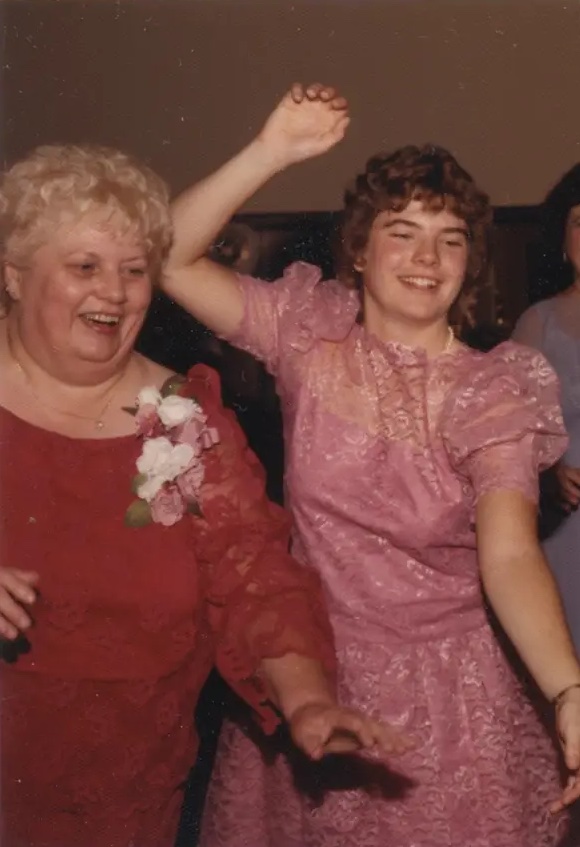
Many photographs and at least one source indicate that Carmen had a condition known as Heterochromia, meaning her eyes were two different colors. They appear to be hazel (right eye) and blue (left eye
A 19 year old is killed inside her apartment when an unidentified man visits Carmen Hope Van Huss was a 19-year-old White female whose life was brutally taken on March 23, 1993, inside her apartment on the northwest side of Indianapolis, Indiana. A young woman with dreams of building a future, Carmen was attending college and working at Pizza Hut while living independently. Her death would become one of Indianapolis's most disturbing cold cases, leaving her family searching for answers for more than three decades before advances in forensic DNA technology finally identified the man responsible.
On the evening of March 22, 1993, Carmen spent time with family members before returning to her apartment in the 8200 block of Harcourt Road. According to investigative records, she had driven her father and younger brother home that evening. It would be the last time her father saw her alive. During the early morning hours of March 23, a resident living directly beneath Carmen's apartment heard disturbing noises coming from above. The witness reported hearing screams, crying, banging, slamming sounds, and what appeared to be a man's voice arguing. The commotion reportedly continued for approximately 30 minutes. Although the sounds suggested a violent confrontation, no intervention prevented the tragedy unfolding inside the apartment.
On March 24, 1993, Carmen failed to report to her job at Pizza Hut, prompting a concerned coworker to contact her father, James Van Huss. He attempted to telephone his daughter but received no answer. Worried about her unexpected absence, he went to her apartment to check on her. Upon arriving, he discovered that the front door was unlocked. Inside, he encountered a horrifying scene that would remain with him for the rest of his life. Carmen was lying dead on the floor near her bed, having suffered an exceptionally violent attack.
Marion County Sheriff's deputies responded to the apartment and began investigating her death as a homicide. Investigators discovered evidence of a significant struggle, including an overturned table, clothing scattered across the floor, bloodstains throughout the apartment, and a large pool of blood near Carmen's head. Her body had sustained numerous stab wounds to the head, face, and torso. An autopsy determined that she had been stabbed 61 times and had been sexually assaulted. The condition of the apartment indicated that Carmen had endured a violent confrontation before her death. Investigators found no obvious evidence of forced entry, raising questions about how her attacker had gained access to the residence.
Detectives collected physical and biological evidence from the apartment, including DNA recovered from Carmen's body and blood discovered on a paper bag inside the residence. These materials would eventually become instrumental in identifying her killer. However, forensic testing capabilities in 1993 were far more limited than those available decades later. Investigators interviewed numerous individuals, examined potential suspects, and pursued hundreds of leads, but none resulted in sufficient evidence to make an arrest. Despite the extensive investigation, Carmen's murder remained unsolved.
For Carmen's family, the years following her death were marked by grief, unanswered questions, and frustration. Her younger brother, Jimmy Van Huss Jr., had been a freshman in high school when his sister was murdered. He later spoke publicly about the devastating effect of her death on the family, particularly their father, who had been forced to discover his daughter's body. Jimmy remembered Carmen as someone surrounded by relatives and friends who loved her deeply. He reflected on the milestones she never had the opportunity to experience, including graduating from college, getting married, and building a life of her own. As the years passed, her family continued seeking justice and hoping that advances in investigative technology might eventually identify her killer.
The investigation received renewed attention as forensic DNA analysis improved. In 2013, investigators submitted a DNA profile associated with the unidentified perpetrator to the Combined DNA Index System, commonly known as CODIS. Unfortunately, the national law enforcement database produced no matching profile. Five years later, in 2018, an Indianapolis Metropolitan Police Department detective submitted biological evidence from the crime scene to Parabon NanoLabs, a company specializing in advanced DNA analysis and forensic genetic genealogy.
Using specialized technology, Parabon developed investigative information from the unidentified individual's genetic profile. Forensic genetic genealogy allows investigators to examine familial relationships through DNA databases and genealogical research, potentially identifying suspects who have never personally submitted their DNA to a law enforcement database. The process generated new investigative leads, and by the summer of 2023, detectives had identified a possible suspect named Dana Jermaine Shepherd.
Investigators discovered that Shepherd had lived in the same apartment complex as Carmen at the time of her murder. Records established that he had occupied a nearby apartment only months before the killing. The two residences were connected through an interior common area that included a laundry room, and investigators determined that a person could travel between the apartments in approximately 30 seconds. This geographical connection placed Shepherd in close proximity to Carmen's residence at the time of the homicide.
By the time detectives identified Shepherd, he had relocated to Columbia, Missouri, where he was employed as a custodian at the University of Missouri. Investigators obtained a judicial warrant in February 2024 authorizing the collection of his DNA. According to the probable cause affidavit, Shepherd appeared visibly shaken when detectives presented him with the warrant. His biological sample was subsequently submitted for comparison against evidence preserved from the 1993 crime scene.
In June 2024, forensic scientists with the Marion County Forensic Services Agency confirmed that Shepherd's DNA profile matched biological evidence recovered from Carmen's body and the crime scene. The findings included a connection to DNA associated with the sexual assault and blood evidence recovered from the apartment. The results provided investigators with the evidence they needed to move forward with criminal charges after more than three decades of uncertainty.
On August 29, 2024, authorities obtained an arrest warrant charging Shepherd with murder, felony murder, and rape. The following morning, August 30, investigators working with the Boone County Sheriff's Office arrested him in Columbia, Missouri. Shepherd was initially held in the Boone County Jail while authorities arranged his extradition to Indiana. When Indianapolis detectives attempted to interview him following his arrest, he invoked his constitutional right to legal representation and declined to answer questions.
The arrest represented a major development in a case that had remained unresolved for approximately 31 years. Indianapolis police officials credited the persistence of cold-case detectives, forensic scientists, prosecutors, and advancements in genetic genealogy. The investigation also benefited from financial assistance provided by Season of Justice, a nonprofit organization supporting advanced DNA testing in unsolved violent crimes. The organization's funding helped investigators pursue forensic examinations that had previously been difficult to obtain.
For Carmen's family, the arrest brought a complicated combination of relief and renewed grief. Jimmy Van Huss Jr. publicly acknowledged that the development could not undo what happened to his sister or restore the years his family had spent waiting for answers. He also expressed hope that the same forensic techniques could help other families whose loved ones had been murdered. His father's experience discovering Carmen remained an especially painful part of the family's history, and the arrest came too late for him to witness the breakthrough.
The criminal proceedings eventually produced a conviction without a jury trial. In January 2026, Dana Jermaine Shepherd entered into a plea agreement with Marion County prosecutors, admitting guilt to one count of murder in connection with Carmen's death. Under the agreement, prosecutors dismissed the remaining charges, including the separate rape and felony murder counts. Although those additional charges were dismissed as part of the negotiated resolution, the forensic evidence and original investigative findings documented the sexual assault that accompanied the homicide.
On February 13, 2026, Shepherd was sentenced to 45 years in the Indiana Department of Correction for Carmen's murder. Marion County Prosecutor Ryan Mears recognized the significance of obtaining a murder conviction more than three decades after the crime, while acknowledging that the legal resolution could never erase the family's suffering. The sentence concluded the criminal prosecution and transformed a case that had remained unsolved for generations into one with an identified and convicted perpetrator.
The murder of Carmen Hope Van Huss remains a devastating example of the lasting consequences of violent crime. What began as a terrifying attack inside a young woman's Indianapolis apartment on March 23, 1993, became a decades-long search for accountability. Her family endured the loss of a daughter, sister, and loved one whose future was taken before she had the opportunity to experience much of adult life. Through preserved forensic evidence, determined investigators, and the eventual application of genetic genealogy, authorities identified and convicted the individual responsible. Shepherd's 2026 conviction and prison sentence provided a measure of long-awaited justice, while Carmen's story continues to demonstrate the importance of preserving evidence and revisiting unsolved homicides as investigative technology advances.